

In short
- PRP for hair is plasma from your own blood, concentrated in platelets, that is injected into the weakened areas of the scalp. The growth factors in the platelets stimulate the follicles and extend their growth phase12.
- A meta-analysis of 43 controlled trials and 1,877 participants found that PRP increases hair density and reduces shedding, with high patient satisfaction3.
- The recommended series: three treatments one month apart, followed by maintenance every three to six months4.
- PRP and minoxidil work well together: the combination gave a better result than either one alone5, and in a head-to-head comparison satisfaction with PRP was higher6.
- Earlier is better: PRP strengthens follicles that are still active, so the best time to start is while hair is still visible, even if it is thin.
- There is no clear head-to-head comparison between PRP and medications: in a network analysis of non-surgical methods, PRP, finasteride and minoxidil appeared close in the average change in hair count, with low-quality evidence33.
At a glance
- What it is: a platelet concentrate from your own blood (PRP, known in Hebrew as "pi ar pi" or plasma treatment for hair), injected into the scalp.
- Duration: one clinic visit: blood draw, separation in a centrifuge and injection.
- Number of treatments: usually three, one month apart, followed by maintenance every three to six months.
- First results: gradual. In a follow-up study, shedding calmed down around the third month.
- Recovery: you return to your routine the same day. Tenderness and mild swelling usually last a day or two.
- Comfort: local anesthesia and, as needed, cooling, a vibration device or nitrous oxide ("laughing gas").
- Who it is for: men and women with early to moderate hereditary hair loss, while active follicles remain.
- Combines with: minoxidil, finasteride, mesotherapy, MCT and hair transplant.
- Who treats you: Dr. Dana Buchbut herself, a physician (M.D.) who has been treating hair loss since 2010.
More hairs in the sink and in the brush. A part that looks wider in daylight. A crown that shows through under strong lighting. If this sounds familiar, you are probably asking yourself whether it can be stopped, and whether you need surgery at all. The good news: every follicle that still produces hair is an opportunity, and PRP gives those follicles the support they need.
This page focuses on PRP for the scalp. For PRP in general, including the differences between preparation methods, see the main PRP page.
How does PRP work on the follicle?
Think of the scalp as a garden: the follicles are the plants, and PRP is a biological fertilizer from your own body that goes straight to the root. Platelets are the blood cells responsible for tissue healing. Inside them, in tiny granules, they store proteins called growth factors. When platelet-rich plasma is injected into the scalp, the growth factors are released near the follicle and signal it to get back to work2.
- They stimulate the follicle: in a laboratory study, activated PRP increased cell division in the dermal papilla, the "engine" at the base of the follicle, and switched on known growth signals such as FGF-7 and beta-catenin. In mice, PRP accelerated the transition of follicles from the resting phase to the growth phase1.
- They thicken the layer around the follicle: scalp biopsies taken two weeks after a series of treatments showed thicker skin, more follicles, more dividing cells in the follicle's stem cell area, and an increase in small blood vessels around it78.
- They extend the growth phase: growth factors such as PDGF, VEGF, IGF-1 and FGF support the formation of new blood vessels and the supply of oxygen and nutrients to the follicle, and help it stay longer in the growth phase2.
PRP was not invented for hair: it has been used in medicine for years for tissue healing, and in hair it was first described in 2006, when surgeons added it to hair transplants9.
Plasma treatment for hair (PRP): how is it done, step by step?
The treatment is done in a single clinic visit: blood draw, separation in a centrifuge and injection into the scalp. You return to your routine the same day.

- Assessment before treatment. The type of hair loss is diagnosed with a trichoscopic examination, and you are asked about blood disorders and medications. Anticoagulant or anti-inflammatory medications are stopped before treatment only in coordination with the doctor who prescribed them102.
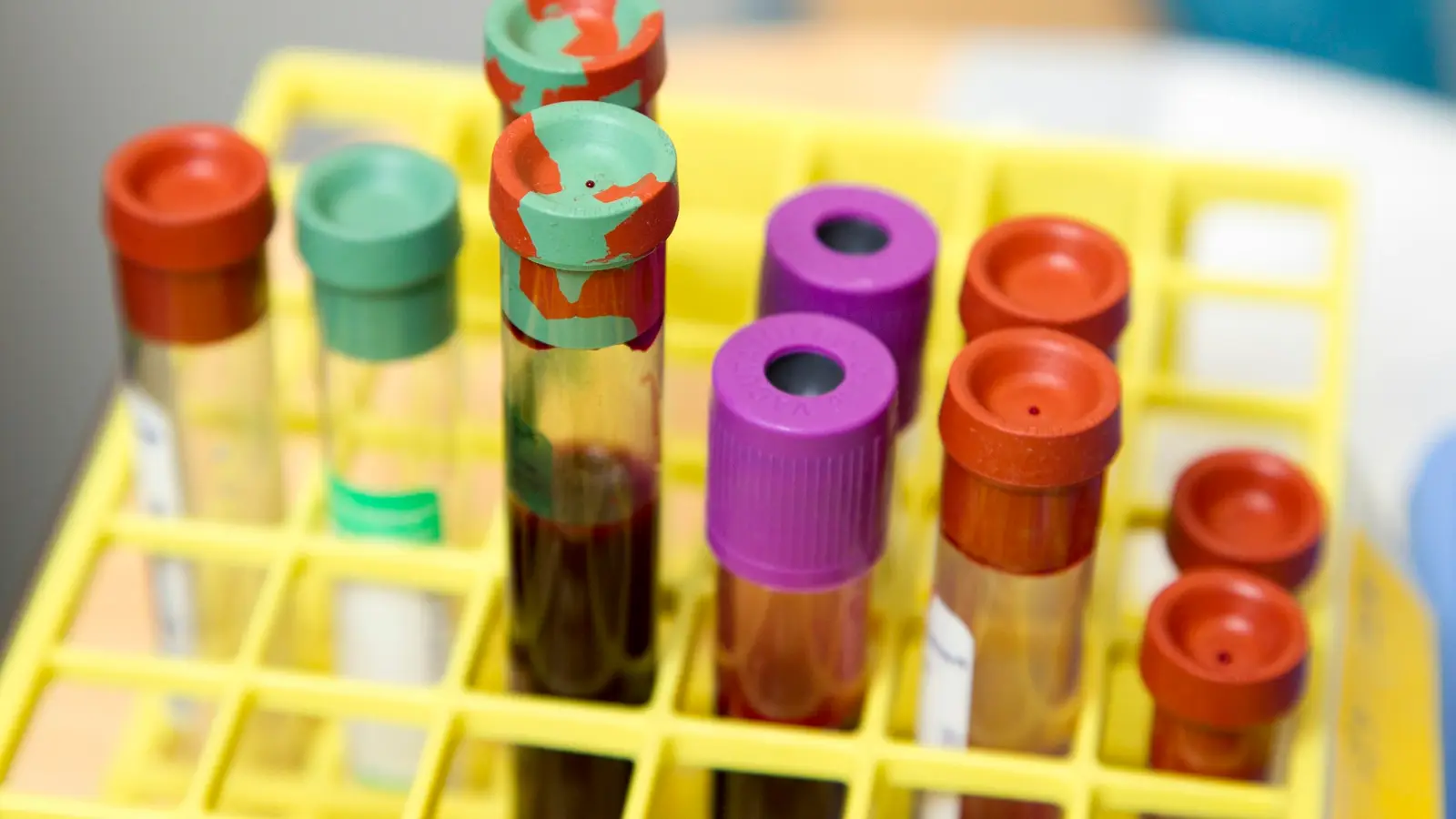
- Blood draw. A small amount, in a few tubes, as in a routine blood test10.
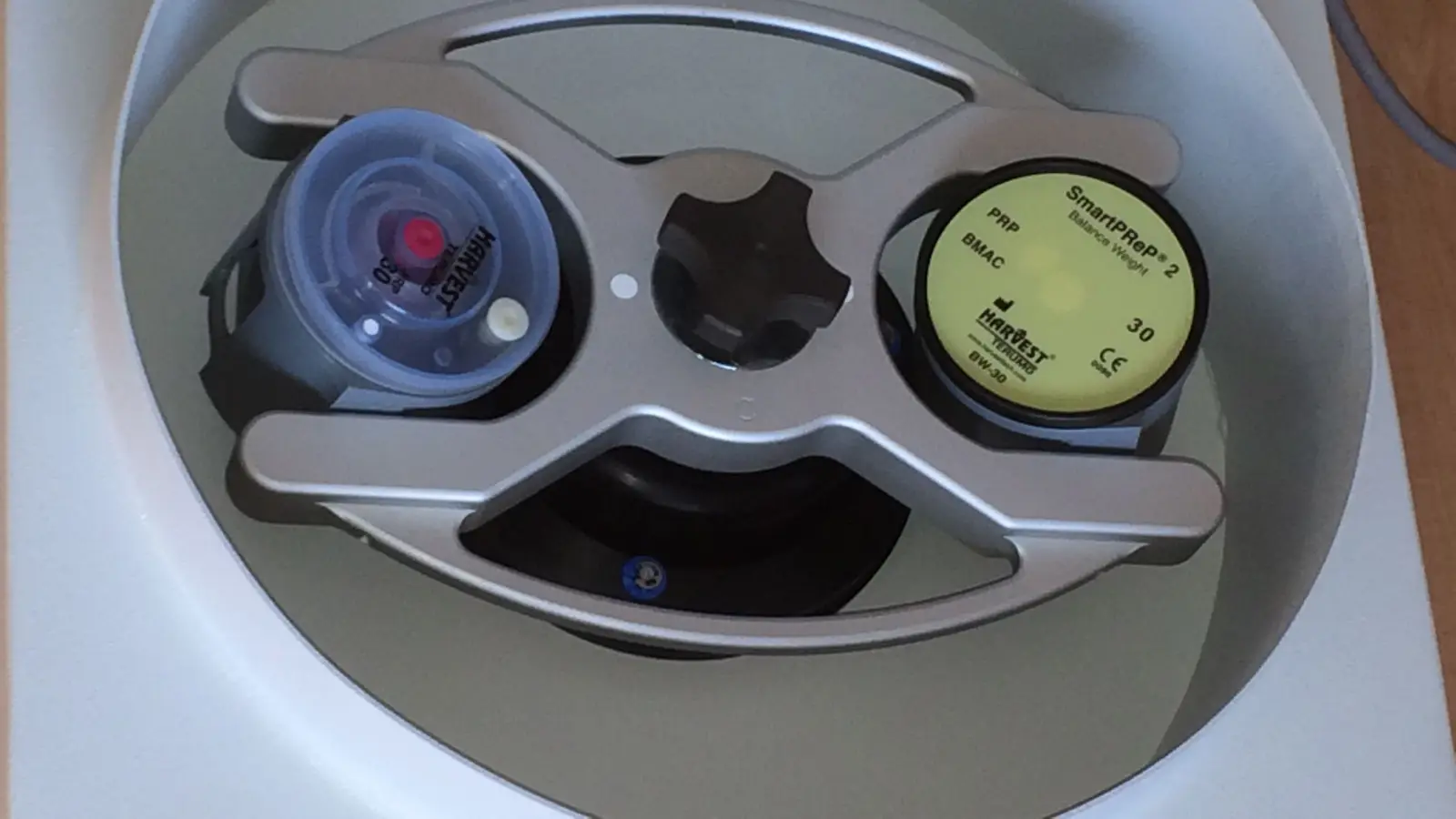
- Separation. The tubes spin in a centrifuge, which separates the blood components by weight and concentrates the platelets in the plasma1011.
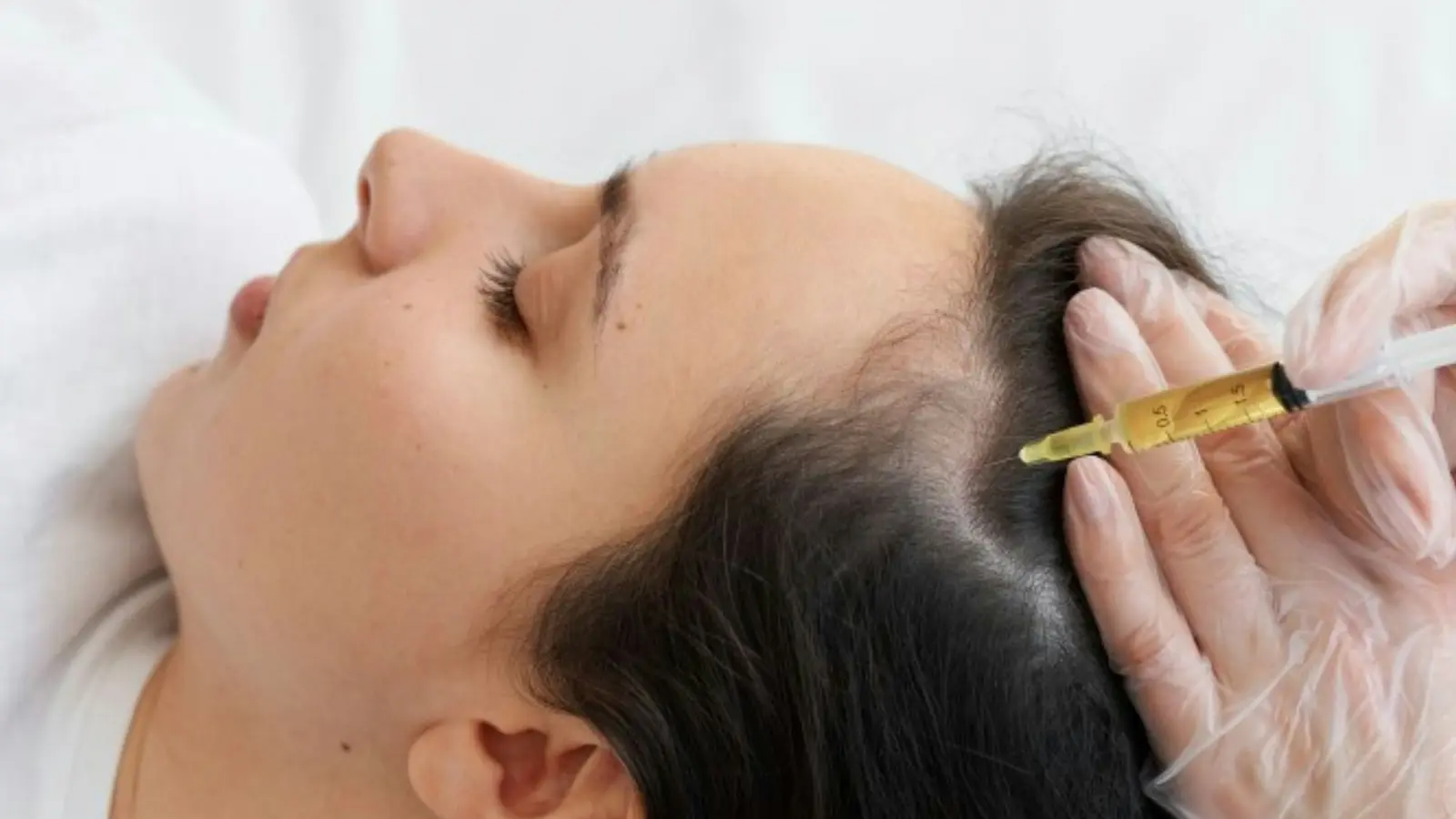
- Injection. The plasma is injected with small, superficial needle pricks, at the depth where the hair roots sit, both in the weakened areas and in the areas next to them, to preserve the hair that is still growing. Most patients describe a feeling of pressure with little pain1112.

Not all PRP is the same: what affects the quality of the plasma?
PRP is not a single product. The preparation method, platelet concentration and technique make the difference. The preparation methods described in the literature differ greatly from one another, so it is important to work with a fixed, carefully followed protocol that gives a consistent product13.
- The right concentration, not the maximum: in a laboratory study, a concentration of about 1.5 million platelets per microliter best stimulated the formation of new blood vessels, and a higher concentration actually stimulated it less14.
- Activation: in the large meta-analysis, activated PRP increased density and reduced the return of shedding, and non-activated PRP was associated with more side effects3. One way to activate the platelets is light and temperature activation (MCT).
- The preparation system matters: in a small study comparing two different preparation systems, hair density results after six months differed greatly between the systems15.
- A closed, controlled kit: preparation in a closed, sterile system, with each kit used for one patient only, keeps the product clean and the concentration predictable13.
Medical PRP is not cosmetic "PRP". What matters is the platelet concentration, the injection depth and correct distribution over the entire weakened area, which is why the treatment is performed by a physician, after diagnosis.
What does the research say about PRP for hair?
Since 2006, dozens of trials on PRP for hair loss have been published, and the overall picture is encouraging: PRP increases hair density and reduces shedding.
Reviews and meta-analyses, the highest level of evidence:
- A 2025 meta-analysis, 43 controlled trials and 1,877 participants: PRP increased hair density, reduced shedding and improved patient satisfaction. Its efficacy was often similar to, and even better than, standard treatments3.
- A 2019 meta-analysis by a group of physicians and researchers: PRP improved hair density both compared with baseline and compared with placebo, and it recommended three monthly treatments and maintenance every three to six months4.
- A systematic review of 12 trials: 84% of the studies reported a positive effect of PRP in hereditary hair loss, without significant side effects16.
- Further meta-analyses found an increase of about 25 hairs per cm² compared with saline injection17, and an increase in density after three and six months18.
Controlled trials, half-head versus half-head:
-
23 men, three treatments one month apart: half of the scalp received PRP and the other half a placebo. On the treated side, there was an average increase of 33.6 hairs in the target area, and of 45.9 hairs per cm² in total density compared with baseline, without side effects8.
-
25 patients, a double-blind trial: after three monthly treatments, density on the PRP side rose more than on the control side. The improvement in density was associated with being male, age 40 or younger, and a family history of hair loss19.
-
40 patients, a comparison of two protocols: a monthly series of three treatments with a booster treatment after three months increased hair count by about 30% after six months, compared with about 7% with spaced-out treatments. 82% of patients were satisfied or very satisfied12.
-
30 women, PRP versus saline in different areas of the scalp: density and hair thickness improved in the PRP area compared with the control area, the pull test was normal at the end of treatment in 83% of the women, and the improvement was maintained at six-month follow-up20.
Follow-up studies:
- Even when pills and topical products were not enough: 11 patients who had not responded to six months of minoxidil and finasteride received four PRP treatments. Follicular unit count rose on average from 71 to 93 per cm², and the pull test was normal in 9 of them21.
- One-year follow-up: shedding calmed down by the third month, and density remained higher than baseline even after a year, with a booster treatment in the sixth month. Average satisfaction was 7.1 out of 1022.
- 64 patients, two independent assessors: some improvement was seen in almost all of them, and clinically significant improvement in 41%–55% of them23.
What else is important to know: the studies differ from one another in preparation methods, and not every trial found a difference compared with saline24. That is why the 2018 European guideline made no recommendation for or against25, while the 2025 Canadian consensus already includes PRP among the recommended treatments26, and the American Academy of Dermatology describes it as a treatment that can be safe and effective27.
What's new in research (updated November 2026)
Work published in the last two years deals less with whether PRP works and more with how to perform it correctly. Three examples:
- One centrifugation spin or two? (2025): a systematic review and meta-analysis of randomized controlled trials compared PRP prepared with a single centrifugation spin with PRP prepared with two spins. Only three small trials were found, with 90 participants in total, and no significant difference was found between them in hair density or platelet concentration. The practical meaning: the number of spins alone does not determine the quality of the plasma; the entire preparation protocol does39.
- PRP added to minoxidil (2024): a meta-analysis of five randomized trials compared topical minoxidil alone with minoxidil combined with PRP injections. In all the trials the combination produced better results in hair density, and the rate of side effects was similar in both groups. The researchers stress that the certainty of the evidence is low, because of the small number of studies, risk of bias and different PRP preparation methods40.
- Injection or microneedling? (2025): in a randomized half-head trial, 20 patients with hereditary hair loss received PRP by intradermal injection on one side of the scalp and by microneedling on the other side, three treatments one month apart. Six months after the last treatment, no difference in hair density or thickness was found between the sides, and pain on the microneedling side was lower. This is a small trial, and its findings need to be confirmed in larger studies41.
These summaries describe the design of the studies and the researchers' conclusions, and are not a personal recommendation. The decision on treatment is made only after an examination.
PRP and minoxidil: competitors or partners?
Partners. In a meta-analysis of 9 randomized trials and 451 participants, PRP and 5% minoxidil showed similar improvement in hair density, and satisfaction with PRP was higher.6 And the good news: you can, and it is worth it, to combine them. In a trial of 93 men, the hair pull test was normal at the end of treatment in 87% of those who received minoxidil with PRP and microneedling, and in 65% of those who received minoxidil with PRP5. And in a follow-up of patients who added further treatments, the response to PRP was maintained during the combined treatment28.
Why does the combination work? Because each treatment acts on a different part of the problem: PRP brings growth factors to the follicle, minoxidil extends the growth phase, and medications that block the hormone DHT stop the follicle from shrinking252.

- Prefer a treatment without a daily routine? PRP lets you come to the clinic a few times a year and give your follicles a significant boost.
- Already using minoxidil or hair loss medications? Don't stop. PRP joins your existing treatment and strengthens it.
- Want an extra boost? Microneedling and mesotherapy combine well with PRP.
When do you see results?
Hair grows slowly, so the change builds up gradually. The first sign is usually fewer hairs in the sink and on the pillow.

- Around the third month: in a one-year follow-up, shedding calmed down and density reached a first peak as early as the third month22.
- After six months: in the randomized trial, the increase in hair count after six months was about 30% in those who received a monthly series12.
- After a year: with a booster treatment, density remained higher than baseline22.
The first sign of success is usually less shedding, followed by thickening and growth. We measure, we don't guess. The change is checked with trichoscopic photography at the same fixed points on the scalp, so the change in hair density and thickness is seen in numbers, not just by how it feels in the mirror. Rarely, there is mild temporary shedding in the first weeks, which resolves on its own25.
How many treatments are needed, and at what interval?
The protocol with the broadest support: three treatments one month apart, followed by maintenance every three to six months.427 In a randomized trial, the monthly series gave faster and greater improvement than spaced-out treatments12, and a meta-regression found that more treatments at shorter intervals are associated with higher efficacy29.

Why is maintenance needed? Hereditary hair loss keeps working in the background. In a two-year follow-up, most patients maintained the result for a full year after the series, and those who began shedding again were treated again8. Once the hair has strengthened, a few maintenance treatments a year preserve what has been achieved.
A plan tailored to your response, not a fixed package. Based on the follow-up measurements, we decide whether to add a treatment to the first series, and whether maintenance can be spaced out once the result is stable.
Who is PRP especially suitable for?
PRP excels in the early and moderate stages of hair loss, when there are still many hairs that have thinned but whose follicles are still alive. The key word is "existing": the treatment strengthens follicles that are still active, so the earlier you start, the more there is to work with.
- Men with hereditary hair loss in the early and intermediate stages of the Norwood scale, including receding temples and thinning at the crown. In a double-blind trial, the improvement in density was associated specifically with men and with age 40 or younger19. A table by stage and combination with finasteride is on the PRP for men page.
- Women with female pattern hair loss: two randomized trials in women showed improvement compared with placebo3020. What is checked first and how PRP is combined with medication is on the PRP for hair in women page.
- People who prefer a treatment from their own body, without a daily pill, or who stopped medication because of side effects.
- People already in treatment who want an extra boost to their medication.
- People who have had a hair transplant, or are planning one (details below).
- Hair loss runs in your family and you haven't started losing hair yet? This is exactly the time for an examination, and for a plan aimed at preserving your hair for years to come.
What PRP does, and what it doesn't:
- It does: strengthen follicles, calm shedding, thicken thin hairs, and support the hair around a transplant.
- It doesn't: grow hair on a completely smooth scalp where there are no follicles left. There, the right tool is a hair transplant.
If the examination shows that PRP is not the right tool for you, we will say so plainly and suggest a different direction.
Who is PRP less suitable for?
Suitability is checked at the examination, but it is good to know the contraindications in advance.2
- We do not treat when there is a severe drop in platelet count, a platelet function disorder, an active infection or a bloodstream infection, or unstable blood pressure.
- We take care or postpone after taking anti-inflammatory medications in the days before treatment, after a steroid injection into the area in the past month, after oral steroids in the past two weeks, and in cases of fever, anemia, certain types of cancer and smoking.
- Pregnancy and breastfeeding: the decision is made directly with the treating physician.
What does it feel like, and how is it made easier?
Most patients describe small pricks and a feeling of pressure. In a randomized trial, the average pain score was only 2.1 out of 10.12 Still, there are many ways to make the treatment even more comfortable:
- Cooling the scalp before and during the injection11.
- Numbing cream applied before the treatment.
- A vibration device that distracts from the pricking sensation. In scalp injections it reduced pain in a controlled trial31.
- Nitrous oxide ("laughing gas"), for those who are afraid of needles or especially sensitive. You stay awake, calm and relaxed.
After the treatment
You usually return to your routine the same day. Tenderness and mild swelling of the scalp are an expected reaction and usually last a day or two.1025 Exact instructions about washing your hair, exercise, sun and hair products are given in writing at the clinic.
When to contact the clinic: spreading redness, local warmth or discharge at the injection site, fever, or pain that gets worse instead of fading. Infection is a rare complication, and contacting us quickly allows it to be treated early25.
PRP and hair transplant: before, during and after
PRP and transplantation are natural partners. In fact, the first described use of PRP for hair was within hair transplants9. A transplant moves follicles to the bald area, but the native hair around it continues to be affected by hereditary hair loss. PRP strengthens that hair and preserves the overall look. When to start after the transplant and what studies have found: see PRP after hair transplant.
- Before a transplant: to strengthen the existing hair, and sometimes to discover that the transplant can be postponed.
- After a transplant: a systematic review of three controlled trials and 217 participants found improvement when PRP is added to the transplant32.
- Had a transplant abroad? You can get follow-up and support here, close to home. On recovery itself: instructions after a hair transplant and shock loss after a transplant.
PRP, iPRF, CGF, MCT or stem cells: what's the difference?
All of these are based on material from your own body, and each one brings the follicle something slightly different. PRP is the most studied in the family. A full comparison table is on the comparison of hair restoration treatments page.
- iPRF and CGF: blood concentrates without an anticoagulant, which form a fibrin network and release the growth factors gradually. The full comparison is on the iPRF and CGF page.
- MCT: the same PRP, with a light and temperature activation step before the injection.
- Stem cells - Regenera Activa: micrografts from your own scalp tissue, which also bring living cells to the follicles, usually in a single treatment.
- Nanofat for hair: processed fat from your own body that improves the environment in which the follicle grows.
- From an external source: exosomes for hair and growth factors in mesotherapy.
What are the side effects?
PRP is made from your own blood, so it contains no foreign substance and carries no risk of an allergic reaction to the material itself. Most side effects are mild and temporary. The common ones are tenderness, redness and mild swelling at the injection site. Less common effects include persistent scalp tenderness, a temporary skin reaction and temporary shedding, and very rare ones are infection and scarring25. In meta-analyses of hair trials, no serious side effects were reported17183.
Does PRP help with alopecia areata?
For alopecia areata, an autoimmune disease completely different from hereditary hair loss, there are dedicated treatments with a broader research base. The British guideline states that there is not enough evidence to recommend PRP for this condition, and the German guideline makes no recommendation for or against it. Full details are on the alopecia areata treatment page.
5 things to check before starting a PRP series
- Diagnosis before treatment: a trichoscopic examination confirming that this is a type of hair loss PRP is suitable for.
- A closed kit and a fixed preparation protocol, which keep the product clean and consistent13.
- A physician who performs the injection and knows your hair loss map.
- Documentation and measurement at the same fixed points, at every follow-up visit.
- A complete plan: a series, maintenance and combination with medication, not a single treatment.
What makes up the cost, and do the health funds cover it?
The cost of a PRP plan depends on several factors: the number of treatments in the series, the type of kit and separation system, combination with additional treatments such as MCT or mesotherapy, and trichoscopic follow-up. That is why the plan and its cost are put together after the examination. PRP for hair is an aesthetic-medical treatment, and in most cases it is not covered by the national health basket. It is worth checking with your supplementary insurance whether there is partial coverage.
PRP versus finasteride and minoxidil: what's the difference and what is the evidence?
Today it is not possible to say with confidence which treatment is better: PRP, finasteride and minoxidil work through different mechanisms, so in many cases they are combined. Minoxidil is a topical product applied to the scalp, finasteride is an oral medication that reduces conversion to the hormone DHT, and PRP is a treatment based on your own blood that is injected into the scalp.
- Finasteride. In a systematic review of 12 randomized trials with about 3,900 men, finasteride increased hair count and improved patient and physician assessments, with evidence rated as moderate quality34.
- Minoxidil. A systematic review of randomized trials found that minoxidil is better than placebo in men35.
- PRP. A meta-analysis of nine randomized trials found an increase in hair density compared with placebo after 3 and 6 months18. Another meta-analysis rated the quality of the evidence as low, because of differences between studies in preparation methods and schedules17.
- Head-to-head comparison. In a network analysis of six non-surgical methods, PRP, finasteride, minoxidil and dutasteride appeared close in the average change in hair count, but the quality of the evidence was mostly low to very low, and the researchers called for higher-quality head-to-head trials33.
- Combination. A meta-analysis of six randomized trials with 343 participants found that PRP together with minoxidil improved hair density and diameter more than either one alone36.
The risks and convenience also differ. With finasteride, an increased risk of sexual dysfunction was found3437, and in 2025 the European Medicines Agency decided to add to finasteride 1 mg products a warning about mood changes, depression and suicidal thoughts, and a patient card in the package38. Minoxidil requires regular, continuous use. PRP requires several sessions with scalp injections, and systematic reviews reported no serious side effects1718. Details on the medications are on the pages about finasteride and minoxidil.
PRP, minoxidil and finasteride: the differences at a glance
| Treatment | How it is given | How it works | What it requires | Safety considerations |
|---|---|---|---|---|
| PRP | Scalp injection at the clinic | Growth factors from your own blood platelets strengthen active follicles | Three treatments one month apart, followed by maintenance every three to six months | Material from your own body; mild tenderness and swelling that pass, and reviews reported no serious side effects |
| Minoxidil | Applied to the scalp | Extends the follicle's growth phase | Regular, continuous use | Details on the minoxidil page |
| Finasteride | Oral tablet | Reduces conversion to the hormone DHT | Daily intake over the long term | Increased risk of sexual dysfunction, and a 2025 EMA warning about mood changes |
The three treatments work through different mechanisms, so in many cases they are combined.
PRP for hair as part of a combined plan: what does it look like at the clinic?
At the clinic, PRP for hair is almost always given as part of a combined protocol, not as a stand-alone treatment. Hereditary hair loss relies on several mechanisms at once, and each component of the plan acts on a different mechanism. After the trichoscopic diagnosis, we choose the treatment level together:
- Basic: scalp PRP alone, as a series with follow-up.
- Combined: PRP with an add-on chosen according to the diagnosis, for example MCT or Trichofat.
- Advanced combined: in the same visit, PRP, a scalp mesotherapy cocktail that includes minoxidil and dutasteride (off-label use), and finally LED phototherapy.
Every treatment is done under local anesthesia. The level is matched to your condition, goal and preference, and can be changed based on the follow-up measurements. In most cases, home or medication treatment continues in parallel, because PRP strengthens the follicle from one direction only. When home treatment is enough and when you need the clinic: home treatment or clinic treatment.
Where can you see patient results and reviews?
The best way to judge the treatment is measurement in your own case, but you can also get an impression from other patients. The hair gallery has before and after photos of clinic patients on different treatment plans. Every case is different, and the photos are not a promise of a result. Patient reviews, including from those who had a PRP series or PRP after a hair transplant, appear on the clinic's Google profile.
At the clinic itself, every series is documented with follow-up photos and trichoscopic imaging of the same areas, so the change is seen in numbers and not just by feel. Answers to more questions are gathered on the PRP questions and answers page.
What does PRP treatment for hair look like with Dr. Dana?
With Dr. Dana Buchbut, who has been treating hair loss for 16 years, every PRP series is built after a precise trichoscopic diagnosis and with close follow-up, so the plan is tailored exactly to the pace at which your follicles respond.
Terms on this page: hair density · minoxidil · finasteride · nitrous oxide · androgenetic alopecia · scalp mesotherapy · Full glossary
Frequently asked questions
Does PRP grow new hair or only slow shedding?
PRP strengthens follicles that are still active: shedding calms down and density sometimes increases. No significant change in hair shaft thickness was found in trials. In controlled trials, an increase in hair density was measured compared with the side that received placebo. In a completely bald area, where there are no follicles left, the right tool is a hair transplant.
Who is PRP for hair suitable for?
For men and women with early to moderate hereditary hair loss, while there is still hair, even if it is thin. This is the stage with the most follicles to strengthen, so earlier is better. PRP is less suitable when there is a severe drop in platelets, a platelet function disorder or an active scalp infection. Suitability is checked at a personal examination.
How many treatments are needed, and at what interval?
A consensus of physicians and researchers recommends three treatments one month apart, followed by maintenance every three to six months. In a randomized trial, such a monthly series gave an increase of about 30% in hair count after six months, compared with about 7% with spaced-out treatments.
When do you see results?
Hair grows slowly, so the change builds up gradually. In a one-year follow-up study, shedding calmed down and density increased as early as around the third month, and the improvement was maintained even after a year with a booster treatment. The change is measured with trichoscopic photography of the same areas, not just by feel.
Do I need to stop minoxidil or finasteride during a PRP series?
No. On the contrary: combining them is the standard approach. Stopping medication may bring the shedding back, and trials found that adding PRP to minoxidil treatment gave a better result than minoxidil alone. Any change in medication is made only in coordination with your doctor.
Minoxidil or PRP, which is better?
In a meta-analysis of 9 randomized trials, PRP and minoxidil showed similar improvement in hair density, and patient satisfaction was higher with PRP. PRP is especially suitable for people who prefer a treatment from their own body in a few visits a year, instead of daily application. In most cases, both are combined.
Does it hurt, and how is it made easier?
Most patients describe small pricks and a feeling of pressure. In a randomized trial, the average pain score was 2.1 out of 10. It can be eased with cooling, numbing cream, a vibration device and nitrous oxide, and together we choose the combination that suits you.
How is the treatment done and how long does recovery take?
A small amount of blood is drawn, as in a routine blood test, separated in a centrifuge to concentrate the platelets, and the plasma is injected with superficial pricks into the weakened areas. You return to your routine the same day, and mild scalp tenderness usually passes within a day or two.
How long does the result last?
It varies from person to person, because hereditary hair loss keeps working in the background. In a two-year follow-up after a series of three treatments, most patients maintained the result for a full year, and those who began shedding again were treated again. That is why, after the series, a short maintenance plan is built to preserve the gains.
I've had a few PRP treatments and saw no change. What now?
First, the diagnosis and measurements are reviewed again, because sometimes the first change, less shedding, happens before it is visible in the mirror. Then complementary treatments are added, such as medication, mesotherapy or activation of the PRP. In most cases there is room for improvement.
Is PRP suitable for women? Is it allowed during pregnancy or breastfeeding?
Yes, PRP has also been studied in women with female pattern hair loss, and two randomized trials showed improvement compared with placebo. PRP is especially suitable for women who prefer a treatment without a daily pill. Regarding pregnancy and breastfeeding, the decision is made directly with the treating physician.
Is PRP good for receding temples and the crown?
Yes. During treatment, injections are given both in the weakened areas and in the areas next to them, to preserve the hair that is still growing. At the temples and crown, the best response is when thin hair is still visible in the area, so it is worth starting early.
PRP or hair transplant?
These are two tools that complement each other. A transplant moves follicles to a bald area, and PRP strengthens the existing hair. So PRP is suitable both as a first step, which may postpone the need for a transplant, and before and after the transplant, to support the transplanted hair and the hair around it.
Is PRP done after a hair transplant?
Yes. A systematic review of controlled trials found improvement when PRP is added to the transplant. This is especially relevant for those who had a transplant abroad and want follow-up and support close to home.
Side effects and risks
PRP is made from your own blood, so it contains no foreign substance and carries no risk of an allergic reaction to the material. The common effects are tenderness, redness and mild swelling for a few hours to two days. Rarely, there is temporary shedding that passes. In meta-analyses, no serious side effects were reported.
What makes up the cost, and does the health fund cover it?
The cost depends on the number of treatments in the series, the kit and separation system, combination with additional treatments, and trichoscopic follow-up. PRP for hair is an aesthetic-medical treatment, and it is usually not covered by the national health basket. It is worth checking with your supplementary insurance.
Which comes first: PRP, finasteride or minoxidil?
There is no single answer. The evidence-based European guidelines for hereditary hair loss assess the available treatments and lead to recommendations according to the level of evidence25, and the decision depends on the diagnosis, age, medical history and preferences. PRP can be combined with medications or considered when a medication is not suitable or not preferred.
Is there enough evidence to be sure PRP will work?
Who performs the PRP treatment at the clinic?
The injections are performed by Dr. Dana Buchbut herself, a physician (M.D.) who has been treating hair loss for 16 years. Before treatment, she performs a trichoscopic diagnosis at the clinic, builds the treatment series for each patient and follows it up with photos of the same areas.
"Pi ar pi", plasma and PRP: is it the same treatment?
Yes. PRP stands for Platelet-Rich Plasma, and in Hebrew the treatment is also called "pi ar pi" or plasma treatment for hair. All the names describe the same principle: a platelet concentrate from your own blood that is injected into the scalp. The real differences are in the preparation method, for example standard PRP, iPRF or CGF.
Are blood tests needed before PRP treatment for hair?
Not always. The tests are determined according to the situation. In a hair loss workup, a blood count, iron tests and thyroid function tests are usually considered, to identify a cause that requires a different or additional treatment (details in blood tests for hair loss). The workup also identifies situations in which PRP is not given, such as a severe drop in platelet count or a platelet function disorder. The decision is made at the consultation.
Is anesthesia used before PRP treatment for hair?
Yes. At the clinic, the treatment is done under local anesthesia that wears off within about a quarter of an hour. For those who are especially sensitive, cooling, a vibration device or nitrous oxide can be added, and you stay awake and calm throughout the treatment.
Can PRP for hair be combined with mesotherapy in the same visit?
Yes, and this is often what is recommended. At the advanced combined treatment level, you receive in the same visit PRP, a scalp mesotherapy cocktail that includes minoxidil and dutasteride (off-label use), and LED phototherapy at the end. The combination is chosen after a trichoscopic diagnosis.
PRP treatment
What PRP is, how it is prepared and the difference between preparation methods.
Read moreLight-activated PRP (MCT)
An extra step that activates the platelets before injection.
Read moreiPRF for hair
A blood concentrate without an anticoagulant, with gradual release of growth factors.
Read moreU225 injection gun
What the automatic injection device is, who it suits and what the literature says.
Read moreManual injection or the U225 gun
The difference between the two approaches, and why Dr. Dana recommends manual injection.
Read moreStem cells - Regenera Activa
Micrografts from your own scalp tissue, in a single treatment.
Read moreNitrous oxide in scalp treatments
A calm, relaxed treatment even for those who are afraid of needles.
Read moreReceding temples and hairline recession
When a receding hairline is hair loss, and what can be done at a young age.
Read moreMesotherapy for hair and scalp
Small injections of vitamins or medications, which combine with PRP.
Read morePRP for scars
The same material for acne scars.
Read moreHair gallery
Before and after photos from Dr. Dana Buchbut's clinic: thinning hair in men and women, after a hair transplant, patchy hair loss and more. Results vary from person to person.
ViewPRP for hair in Tel Aviv
Diagnosis, matching to the type of hair loss and a treatment pathway at the clinic in Tel Aviv.
Read moreThe complete guide to PRP treatment
From the consultation and tests to the injection and follow-up, step by step.
Read morePRP questions and answers
Frequently asked questions, organized by topic.
Read morePRP or MCT: what's the difference
Standard PRP versus light- and temperature-activated PRP.
Read moreSide effects of PRP treatment
What is common, what is rare and what is worth knowing.
Read moreDoes PRP treatment hurt?
What it feels like and how it is made easier.
Read moreWhen do you see results after PRP
Hair and face, and how long the result lasts.
Read moreHow PRP is prepared
From the blood sample to the injection.
Read morePRP myths and facts
What the research really shows.
Read moreWhat to avoid after PRP for hair
What is known about post-treatment instructions and when to contact the clinic.
Read moreWho should not have PRP for hair, or is not advised to
Contraindications and when treatment is postponed.
Read morePRP for hair didn't work?
Causes of a weak response and what can be adjusted.
Read morePreparing for PRP treatment for hair
What to check and what happens on the day of treatment.
Read morePRP or mesotherapy for hair
What the difference is and how to choose between them.
Read morePRP or minoxidil
What the difference is, and why they are usually combined.
Read moreTrichofat or PRP for hair
A comparison of the two treatments based on the research.
Read morePRP and phototherapy
Why PRP treatment for hair ends with an LED helmet, what is known about the combination, and the difference from MCT.
Read morePRP for hair in women
Who it suits, which tests are done first, after childbirth and in menopause.
Read morePRP for men
Receding temples, the crown, Norwood stages and combination with finasteride.
Read moreThe information on this page is general educational information only and is not a substitute for an examination, diagnosis or personal medical advice. The decision on treatment is made only after an examination.