

In short
- CGF is a concentrate of your own blood prepared in a variable-speed centrifuge, without anticoagulant, and is rich in fibrin, platelets and growth factors1.
- The growth factors stimulate the hair follicle and support its blood supply and its growth phase21.
- In a randomized trial in women, hair count rose by about 27% with CGF, compared with about 15% with PRP3.
- Adding CGF to PRP and microneedling, and also to hair transplantation, was associated with higher hair density45.
- At the clinic, a personal plan is built after a trichoscopic diagnosis, combining CGF with medication and complementary treatments.
- At the clinic, the treatment is performed personally by Dr. Dana Buchbut, physician (M.D.).
This page is about CGF. The full comparison of CGF, iPRF and PRP is on the page iPRF and CGF for hair (Hebrew), and the longest-established treatment in this family is described on the page PRP for hair. CGF for acne scars has its own page: PRF, iPRF and CGF for scars (Hebrew).
What is CGF?
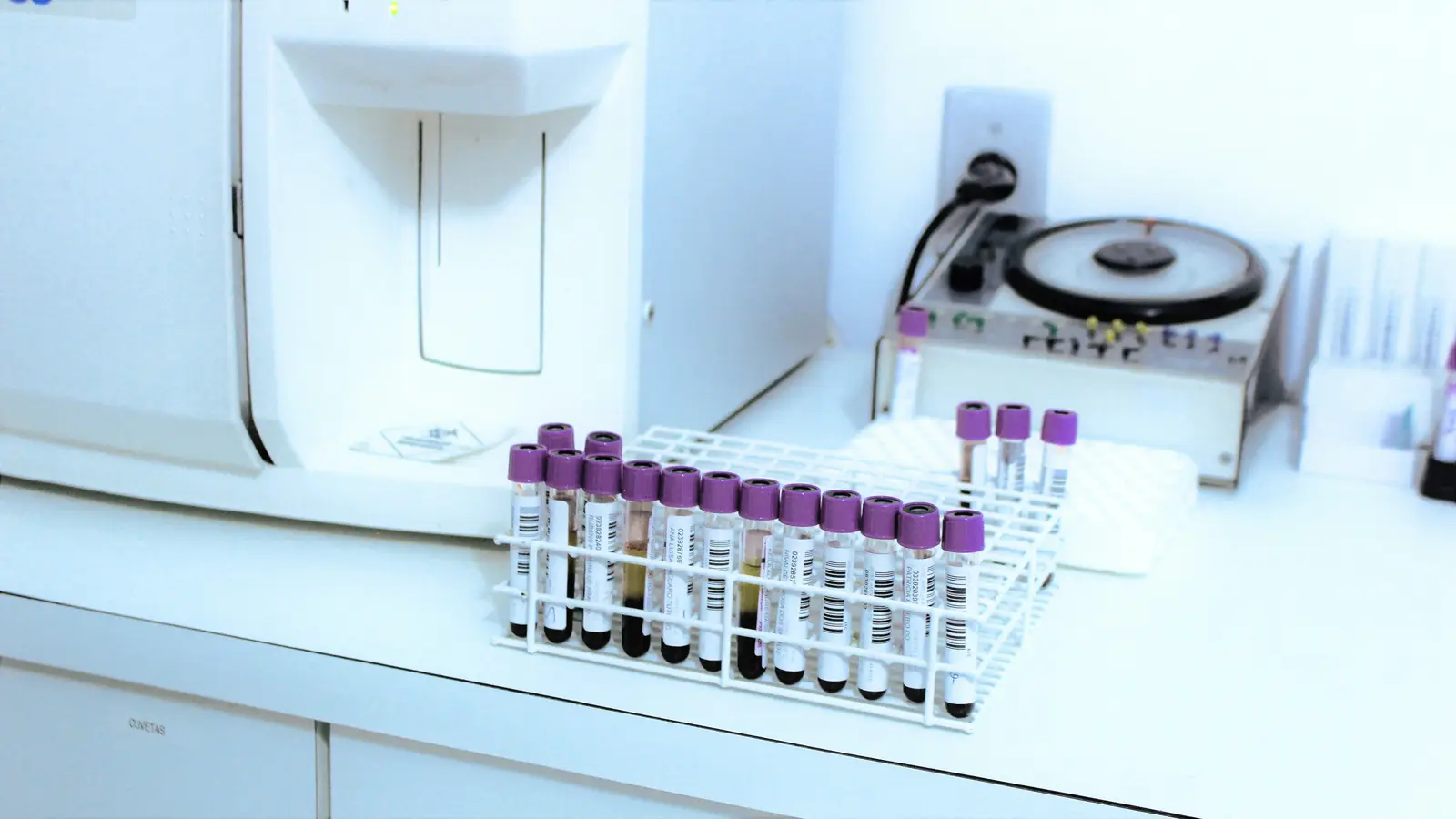
CGF (Concentrated Growth Factors) is a concentrate prepared from the patient’s blood in a centrifuge that switches speeds in several stages, without adding anticoagulant. The product is rich in fibrin, platelets and growth factors.1 The literature describes it as a “third generation” of autologous platelet concentrates, after PRP and the PRF family. Like iPRF, CGF started out in oral and maxillofacial medicine and from there moved into hair treatment1. It is material from your own body only, with no anticoagulant and no foreign substances.

How does CGF help hair?
CGF delivers a high concentration of growth factors to the hair follicle, and the fibrin network holds them at the injection site.1
- Stimulating the follicle: growth factors from platelets stimulate follicle cells and help the follicle stay longer in the growth phase2.
- Blood supply: some growth factors support the formation of small blood vessels around the follicle, so more oxygen and nutrients reach it2.
- A dense fibrin network: changing the spin speed creates a dense fibrin network that traps platelets and growth factors inside it1.
- A rich reservoir of growth factors: in a laboratory study comparing concentrates from the same blood sample, CGF had levels of platelets and of the growth factors TGF-β1, PDGF-BB and VEGF similar to or higher than PRP, and its extract stimulated cell division. The researchers describe CGF not only as a scaffold but as a reservoir that releases growth factors at the injection site6.
- Gradual release: as with all fibrin concentrates, growth factors are released from the network gradually rather than all at once. In laboratory measurements, fibrin concentrates released growth factors continuously over 10 days, while PRP released them mainly in the first hour7.
How is CGF different from PRP and iPRF?
The difference lies in how they are prepared: PRP is made with anticoagulant at a fixed speed, iPRF with a short, slow spin and no anticoagulant, and CGF in several stages of changing speeds, also with no anticoagulant.1 In the comparative trial in women, CGF and iPRF showed a similar increase in hair count, larger than that seen with PRP3.
| PRP | iPRF | CGF | |
|---|---|---|---|
| Additives in the tube | Anticoagulant | None | None |
| Preparation | One or two spins | A short, slow spin | Several stages at changing speeds |
| What forms | Liquid plasma | A liquid that forms a fibrin network | A dense fibrin network |
| Growth factor release | Fast7 | Gradual7 | Gradual, from a rich reservoir6 |
| Increase in hair count in the comparative trial | About 15% | About 27% | About 27%3 |
What have studies found about CGF for hair loss?
A 2025 review concludes that results with CGF in hereditary hair loss are encouraging.1
- Comparative trial: in a 2026 randomized trial, women with female pattern hair loss received four treatments of PRP, iPRF or CGF. After 24 weeks, the increase in hair count was greater in the CGF and iPRF groups (about 27%) than in the PRP group (about 15%)3.
- CGF added to PRP: in a half-scalp trial with 20 participants, 12 men and 8 women, one side received PRP and microneedling and the other side also received CGF. The side that received CGF showed a larger increase in hair count and density4.
- Case series: at one center, patients who received three CGF injections 3–4 weeks apart were evaluated. After 3 and 6 months, an increase in hair density was measured, with no serious side effects8.
Research in this field is still developing, most studies to date are small, and the response varies from patient to patient.
What’s new in research (updated November 2026)
Beyond the trials described above, two new publications address the mechanism and the broader picture:
- CGF and inflammation (2024): researchers in China measured the level of IL-17, a protein involved in inflammation, in the blood of 12 patients with hereditary hair loss before and after three CGF injections given a month apart, and found that it decreased. In parallel, in a mouse model of psoriasis and in laboratory experiments, CGF and its cells reduced inflammatory markers. This is a small mechanism study, not an efficacy trial, but it suggests that CGF may also act on inflammatory processes, not only through growth factors10.
- A review of autologous growth factor injections (2026): a systematic review and meta-analysis of 12 studies with 745 patients examined injections of platelet concentrates from the patient’s own blood, from PRP to newer-generation concentrates. The injections were found to be safe and improved hair density and thickness over a year, mainly with the newer concentrates. The researchers stress a high risk of bias and non-uniform protocols, and therefore see the findings as a basis for large controlled trials11.
These summaries describe the design of the studies and the researchers’ conclusions and are not a personal recommendation. Any decision about treatment is made only after an examination.
CGF alongside hair transplantation and in alopecia areata
- Alongside a hair transplant: in a trial in which 26 men with hereditary hair loss were randomly assigned to FUE transplantation alone or transplantation with CGF injections, the CGF group had higher hair density and a higher proportion of thick hairs after nine months5. General information about the transplant itself is on the page Hair transplantation.
- In resistant alopecia areata: in a series of seven patients who had not responded to standard treatments, combining CGF with a steroid delivered by microneedling was followed by hair regrowth9. The standard treatments are described on the page Treating alopecia areata (Hebrew).
Why combine CGF with other treatments?
Each treatment works on a different aspect of hair loss, and in studies CGF contributed mainly as part of a combination. Adding CGF to PRP and microneedling gave higher density4, and adding it to a hair transplant was associated with thicker hairs5. In hereditary hair loss the foundation of treatment is medication, and CGF complements it by nourishing the follicle. At the clinic, the combination is tailored to each patient after a trichoscopic diagnosis (Hebrew).
How is a CGF scalp treatment done?
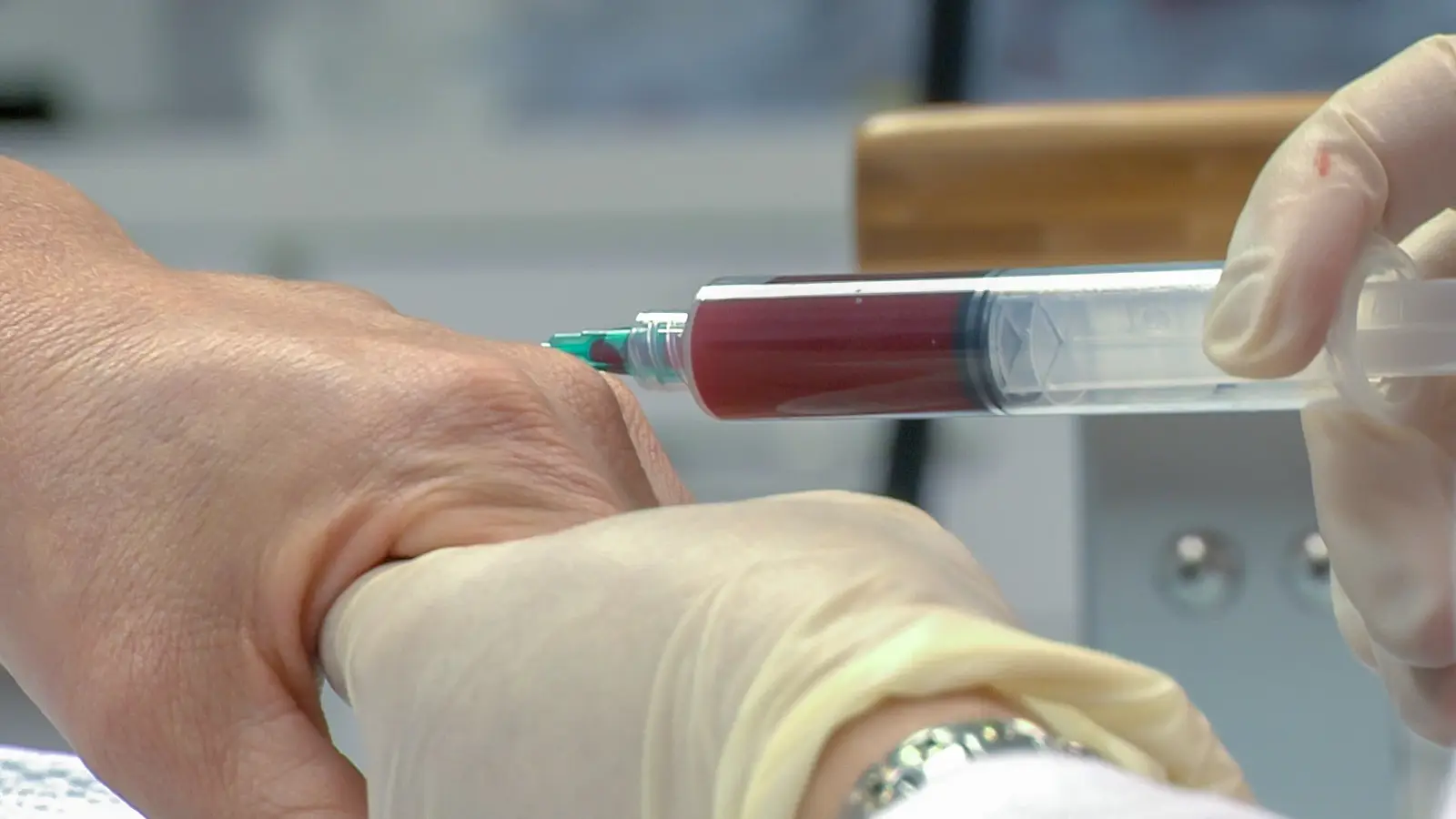
The process is similar to PRP: a blood draw, preparation in a centrifuge and injection into the thinning areas of the scalp.1
- Blood draw from a vein into tubes with no anticoagulant.
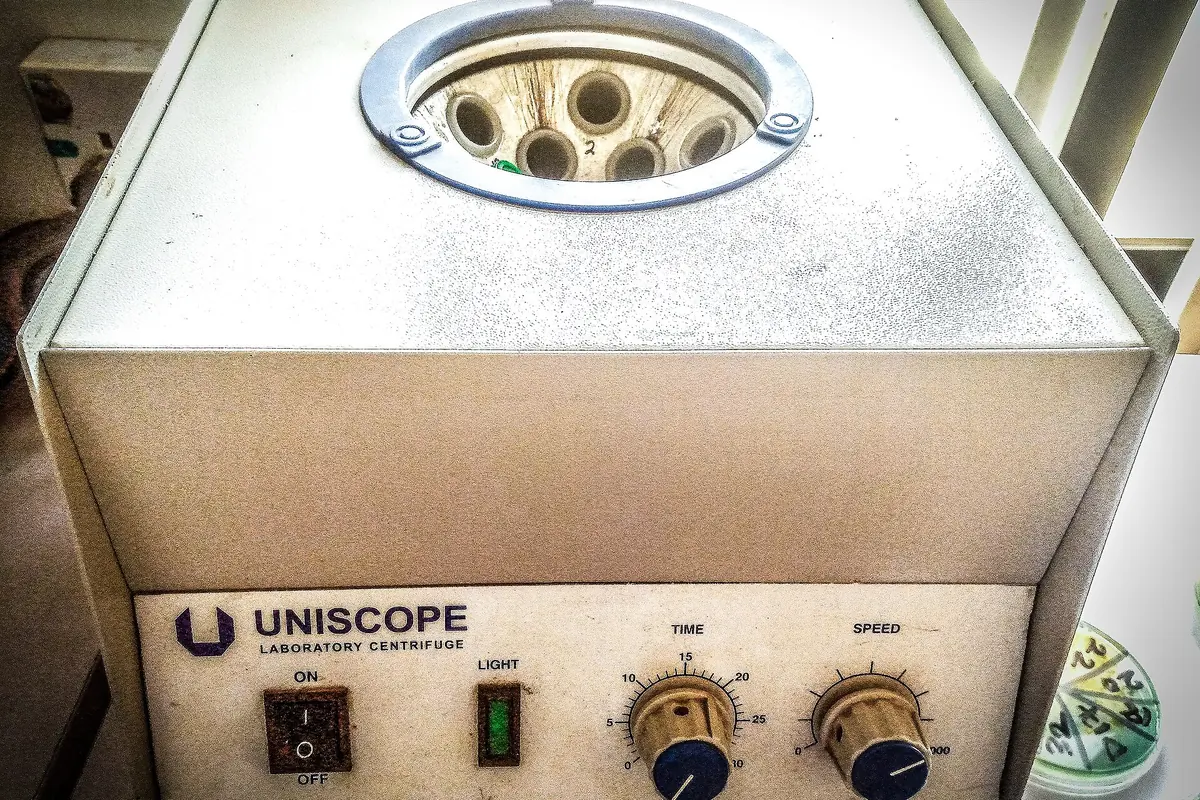
- Centrifuge preparation with a program of several stages at changing speeds1.
- Injection into the scalp in the thinning areas, sometimes together with microneedling or PRP, according to the plan4.
- Follow-up over months: in studies, improvement was measured after 3 to 6 months48.
In studies, three or four treatments were given at intervals of 3–4 weeks38. At the clinic, the number of treatments is set according to the individual situation.
What are the side effects of CGF?
Because this is your own blood injected into the scalp, side effects are mainly local and temporary: pain, swelling and tenderness at the injection site, and sometimes a small bruise.2 No serious side effects were reported in the studies8. Contraindications are similar to those of PRP: platelet disorders, an active scalp infection and use of medications that affect clotting. It is important to tell the doctor about every medication and medical condition. The full list is on the page Who should not have PRP for hair (Hebrew).
Who is CGF suitable for?
CGF is suitable mainly for hereditary hair loss in men and women, as part of a combined treatment plan, and also alongside a hair transplant.15 It particularly suits people who prefer a treatment made from their own material and those who want to strengthen their response to medication. iPRF is the concentrate closest to CGF in how it is prepared, and a different preparation step, in which PRP is exposed to light and temperature, is described on the page PRP activation with light and temperature (Hebrew).
How long do the results last?
CGF strengthens existing follicles and reduces shedding, and to maintain the result over time, maintenance treatments are planned together. Hereditary hair loss keeps working in the background, alongside hormones, stress and general health. The plan therefore usually includes baseline medication, follow-up with photographs and magnified examination, and booster treatments according to the measurements. The earlier you start, while there are still many active follicles, the more there is to preserve.
And if you are worried about the needles: the treatment can be made easier with cooling, numbing cream, a vibration device and nitrous oxide (laughing gas) (Hebrew).
What does CGF treatment with Dr. Buchbut look like?
The choice between CGF, iPRF or PRP is made after a trichoscopic diagnosis, not by the name of the treatment. With Dr. Dana Buchbut, who has been treating hair loss for 16 years, the plan is built around the type of hair loss and the condition of the follicles, and progress is measured with trichoscopic photographs at the same fixed points, to see in numbers whether the hair is responding.
Not sure which regenerative treatment is right for you? A comparison of regenerative hair treatments: PRP, iPRF, CGF, Regenera, exosomes and nanofat (Hebrew).
Frequently asked questions
What is CGF for hair?
CGF, concentrated growth factors, is a product prepared from the patient’s blood in a centrifuge that changes speed in several stages, without anticoagulant. It is injected into the scalp to deliver a high concentration of growth factors to the hair follicles.
How does CGF help hair?
The growth factors in the concentrate stimulate follicle cells, support the formation of small blood vessels around the follicle and help it stay in the growth phase. The dense fibrin network holds the growth factors at the injection site.
What is the difference between CGF and PRP?
PRP is prepared with anticoagulant and usually at a fixed spin speed, while CGF is prepared without anticoagulant at a speed that changes between stages. This produces a dense fibrin network that traps platelets and growth factors. In a randomized trial in women, the increase in hair count was greater with CGF than with PRP.
What is the difference between CGF and iPRF?
Both are prepared without anticoagulant and contain fibrin. The main difference is the centrifuge protocol: iPRF uses a short, slow spin, and CGF uses several stages at changing speeds. In the comparative trial in women, both showed a similar increase in hair count.
What do studies say about CGF for hair?
In a randomized trial in 74 women, hair count rose by about 27% with CGF, compared with about 15% with PRP. In a half-scalp trial, adding CGF to PRP and microneedling gave higher hair density. And in men who had a hair transplant, adding CGF was associated with higher density and a higher proportion of thick hairs.
How many CGF treatments are needed?
Usually a series of three or four treatments at intervals of 3–4 weeks, as in the studies. The number of treatments and the intervals are set at the clinic according to the type of hair loss and the individual situation.
What are the side effects of CGF?
CGF is made entirely from your own blood, with no foreign material, so side effects are mainly local and temporary: tenderness, mild swelling and sometimes a small bruise. No serious side effects were reported in the studies.
How long do CGF results last?
CGF strengthens existing follicles and reduces shedding, but hereditary hair loss keeps working in the background, together with factors such as hormones, stress and general health. So after the series, maintenance treatments are planned together and combined with medication, to maintain the result over time.
Does CGF hurt?
You feel small pinpricks and a sensation of pressure for a few minutes. This can be eased with cooling, numbing cream, a vibration device and nitrous oxide (laughing gas).
Who is CGF not suitable for?
Contraindications are similar to those of PRP: platelet disorders, an active scalp infection and use of certain medications that affect clotting. Suitability is checked individually before treatment.
Related reading
Regenerative hair treatments compared
PRP, iPRF, CGF, Regenera, exosomes and nanofat: the differences in brief.
Read (Hebrew)PRF, iPRF and CGF for scars
What is known about CGF and iPRF for acne scars.
Read (Hebrew)iPRF and CGF for hair
The full comparison of the three autologous blood concentrates.
Read (Hebrew)iPRF for hair
A liquid fibrin concentrate prepared with a short, slow spin.
ReadPRP for hair
The most studied treatment in the autologous blood concentrate family.
ReadPRP activation with light and temperature
An extra preparation step intended to activate the platelets.
Read (Hebrew)Regenera Activa (stem cells)
Regenera Activa: tiny samples from the back of the scalp are turned into a suspension rich in progenitor cells and growth factors, injected into the thinning area in a single visit. How it works and what studies have found.
ReadCGF in Tel Aviv
A growth factor concentrate from your own blood: what is and isn’t known, and how the treatment is done.
Read (Hebrew)How PRP is prepared
From the blood sample to the injection.
Read (Hebrew)PRP questions and answers
Frequently asked questions, grouped by topic.
Read (Hebrew)The complete guide to PRP treatment
From consultation and tests to injection and follow-up, step by step.
Read (Hebrew)The information on this page is general and for education only. It does not replace an examination, diagnosis or personal medical advice. Any decision about treatment is made only after an examination.