

In short
- A hair transplant moves follicles from the back of the head to thinning areas, based on “donor dominance”: the follicles keep their characteristics in their new location12.
- It suits people who have enough healthy donor hair, and not people with active alopecia areata, body dysmorphic disorder or unrealistic expectations34.
- At the clinic, transplants are performed with two methods: FUE and DHI. In both, individual follicles are extracted; the difference is in the implantation stage15.
- The result is seen after 6 to 12 months, and a temporary drop in hair is usually seen in the first three months34.
- Continuing medical treatment is recommended even after a transplant, because the original hair is still prone to loss34.
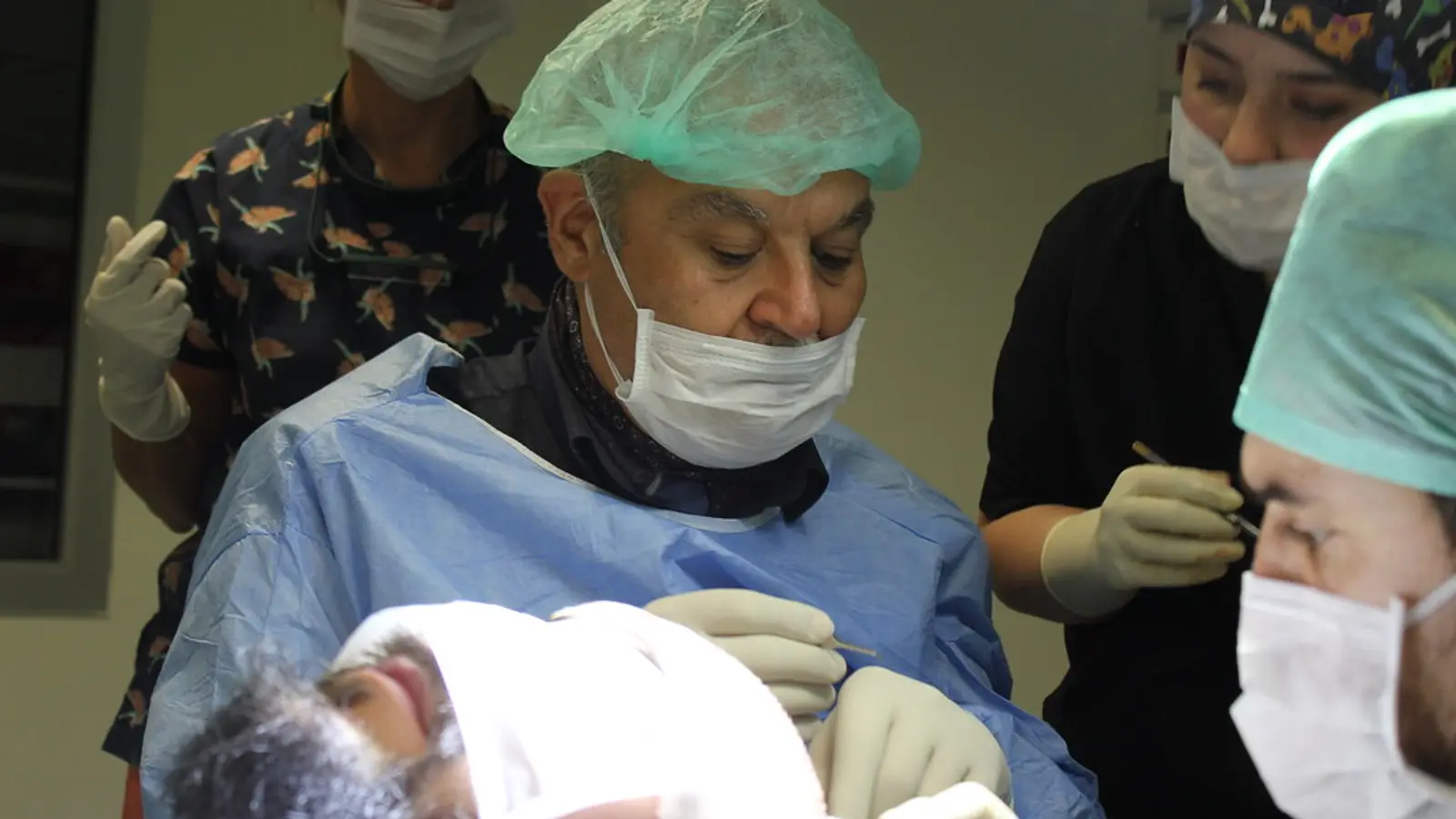
- At the clinic, the transplant is performed by Dr. Dana Buchbut herself, physician (M.D.).
A hair transplant is usually not the first step in treating hair loss, but an option considered after a home treatment plan (Hebrew) or when the response to conservative treatment is partial. On this page we explain how it works, who is a suitable candidate, and what happens over time.
Unlike non-invasive treatments such as PRP or phototherapy (Hebrew), this is a one-time surgical procedure (or sometimes done in two sessions) that moves existing hair from one place to another. It is not a treatment that stimulates new hair growth in areas that have already lost that ability. This distinction is important for understanding what to expect from the result.
How does a hair transplant work?
The central principle is called “donor dominance”: follicles moved from the back of the head, which is usually relatively resistant to hereditary balding, keep their genetic characteristics even after they are transplanted to another area. In practice, surgeons remove single hair follicles, or a strip of skin, from the donor area and implant them in thinning areas. The two main methods are FUE, extraction of individual follicles directly from the skin, and FUT, in which a strip of skin is removed first and the follicles are then separated from it12.
Who is a hair transplant suitable for, and who is it not?
It suits people who have enough healthy donor hair and whose thinning area still has growth potential. The European guideline states that a transplant can be considered in men and women with sufficient donor hair, and recommends (as a positive recommendation) combining it with finasteride in men with male pattern hair loss (Hebrew)4. Factors that make someone unsuitable include body dysmorphic disorder (BDD) and unrealistic expectations of the result4. A transplant is not suitable in active alopecia areata. In scarring alopecia, for example lichen planopilaris, a transplant can be considered only when the disease is inactive, and the proportion of grafts that survive over time gradually declines: 82.7% after one year, and only 39.6% after 4 to 6 years, according to a meta-analysis6.
FUE or DHI: what they share and how they differ
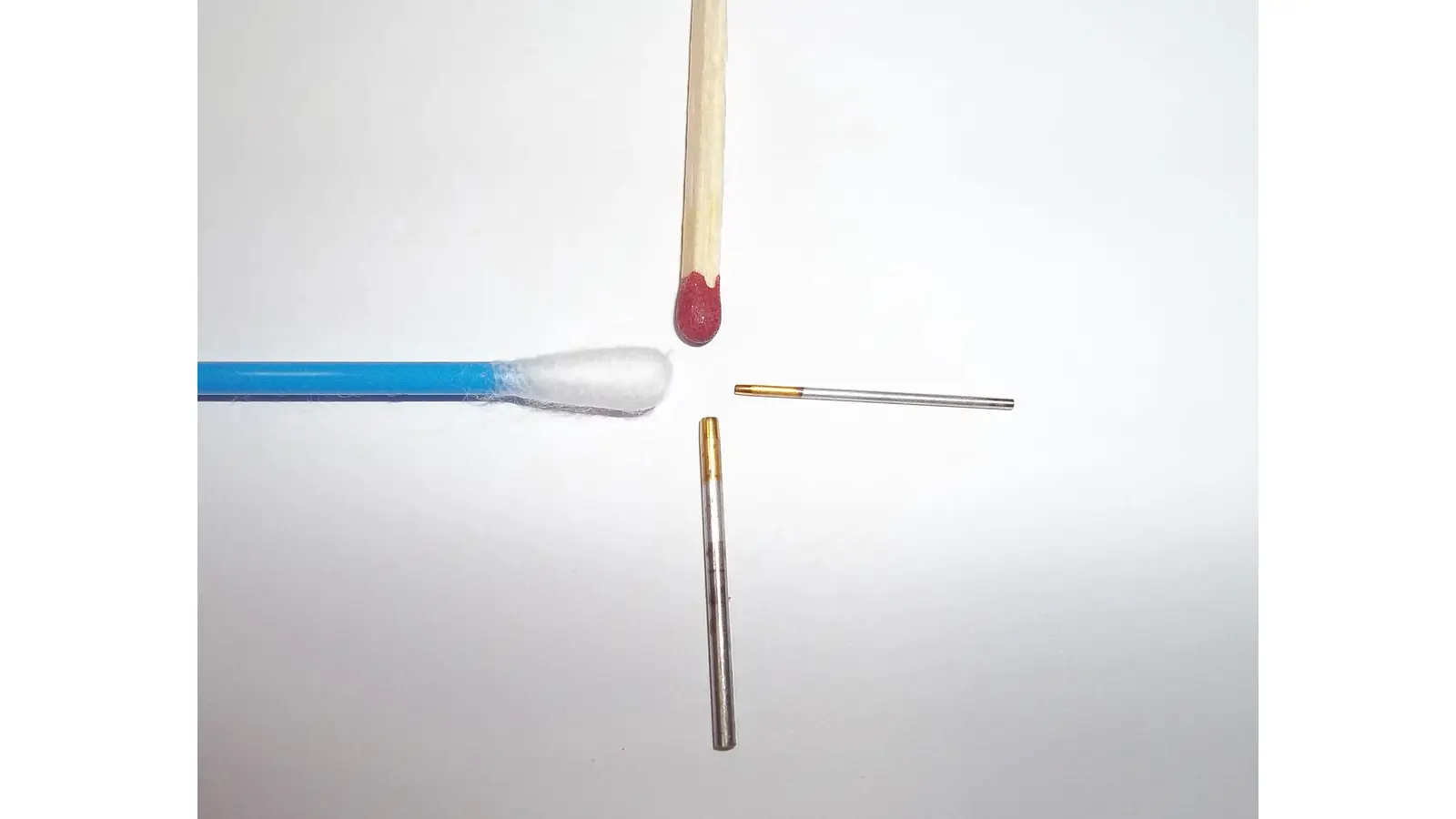
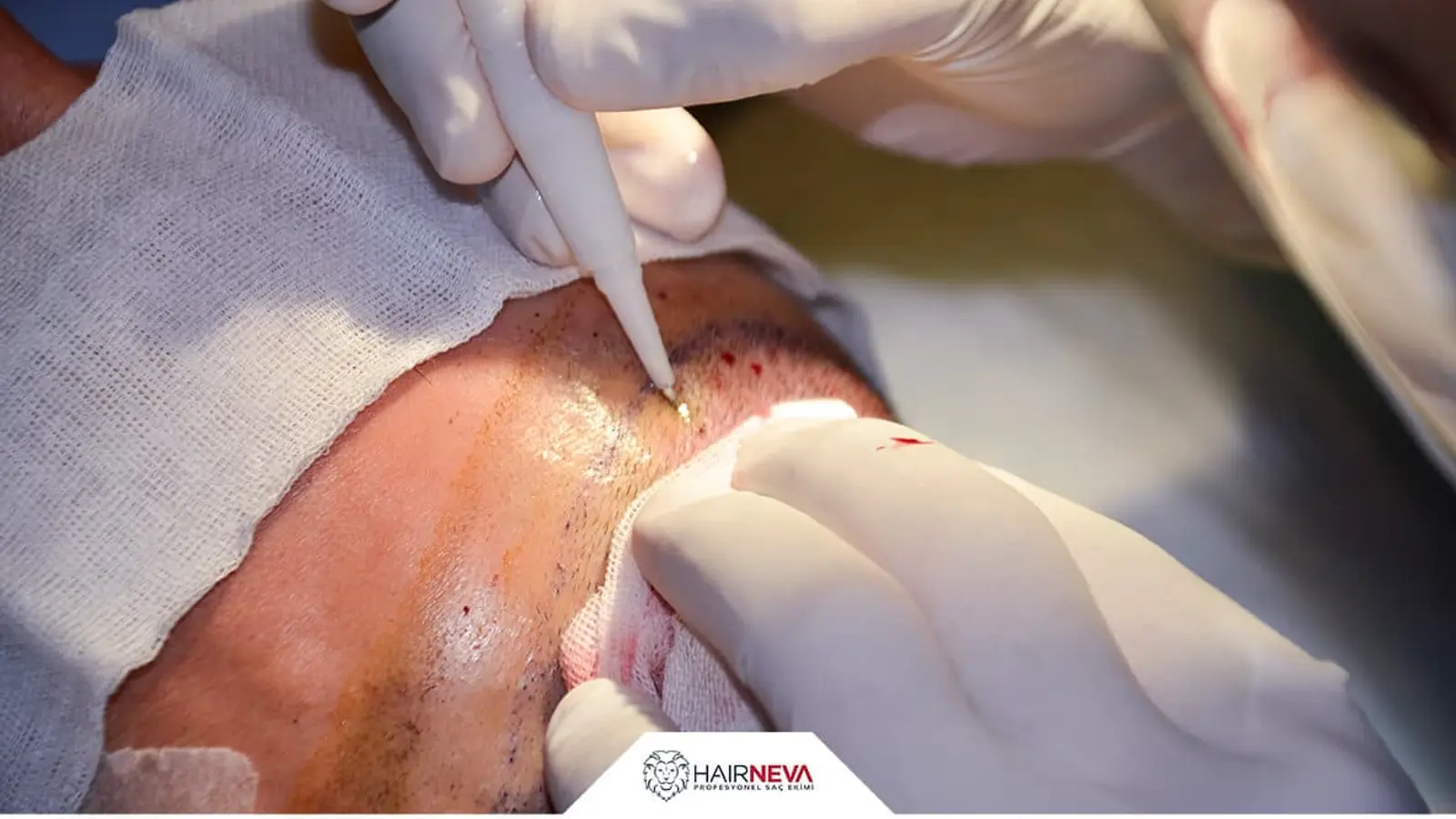
In both methods the follicles are extracted the same way: one by one, with a tiny hollow needle, from the donor area at the back and sides of the head. The only difference is in the implantation stage. In FUE (Hebrew), tiny recipient channels are first opened in the thinning area with a blade or needle, and the follicles are then placed into them. In DHI (Hebrew), each follicle is loaded into a dedicated implantation pen (Implanter), which opens the channel and implants the follicle in a single motion157. For a detailed comparison and how to choose, see FUE or DHI (Hebrew).
| FUE | DHI | |
|---|---|---|
| Follicle extraction | One by one, with a tiny hollow needle | Same as FUE |
| Implantation | Channels are opened first, then follicles are implanted | An implantation pen opens the channel and implants in one motion |
| Especially suited to | Covering a large area and a large number of grafts | The hairline, defined areas and thickening between existing hair |
| Shaving the recipient area | Usually yes | Sometimes possible without |
| Donor area afterwards | Tiny scattered dots | Same as FUE |
There are no studies showing that one method gives a better result than the other in general. What determines the result is mainly the quality of the donor area, the planning, and gentle handling of the follicles during the transplant57. The International Society of Hair Restoration Surgery (ISHRS) points out that FUE is not “scarless”: it leaves tiny dots, and hair extracted from the donor area does not grow back there8. That is why the clinic chooses the method according to the size of the thinning area, the hair density in the donor area, the pattern of hair loss, and whether there is a wish to implant between existing hair, not according to the name of the method. Sometimes both are combined in the same procedure.
And what about FUT? In this method a single strip of skin is removed from the back of the head and the follicles are separated from it. It leaves one linear scar, and in recent years most transplants have been done with FUE and its variations12.
What is “donor dominance”, in plain language?
Donor dominance means that follicles from the back of the head keep behaving like back-of-the-head hair even after they move to the thinning area. In most people, hair follicles in the lower back of the head are less sensitive to the hormone that causes hereditary balding. When they move to another place on the scalp, they “take with them” this genetic trait and stay less sensitive in their new location as well12. This is why a transplant can give a relatively stable result over time, unlike hair that was not transplanted.
What happens on the day of the transplant?
A transplant is a one-day procedure under local anesthesia, and you go home the same evening. The steps are similar in both methods29:
- Planning and marking: the hairline and the areas to be transplanted are marked, according to what was decided at the preliminary examination.
- Preparing the donor area: full or partial shaving of the back of the head, depending on the method and the extent of the transplant.
- Local anesthesia: in the donor area and in the recipient area.
- Follicle extraction: one by one, with a tiny hollow needle.
- Sorting and storage: the follicles are checked, sorted by the number of hairs in each, and kept in a solution until implantation.
- Implantation: in FUE into channels opened in advance, in DHI directly with an implantation pen. The angle and direction of each follicle are set to match the natural direction of growth.
- Dressing and instructions: you receive written instructions for the first days, and a follow-up appointment is scheduled.
Hair transplant without shaving
Sometimes it is possible to implant between existing hair without shaving the recipient area, mainly with the DHI method. This mostly suits thickening a defined area or correcting the hairline, and less so covering a large area. Even in a “no-shave (Hebrew)” transplant, narrow strips are usually shaved in the donor area, hidden by the surrounding hair, and the number of grafts that can be implanted in one session is smaller5. Suitability is determined at the examination.
Does a hair transplant hurt, and how long does it take?
The surgery takes between 4 and 8 hours and is done under local anesthesia. The patient is awake during the procedure, without general anesthesia3. Some discomfort is possible while the local anesthetic is given and in the first days of recovery; what happens then is described in the next section.
What happens in the first two weeks after a hair transplant?
Initial recovery usually takes one to two weeks. In the first days the scalp feels tight, sore and swollen, and temporary scabs form in the recipient area. According to the UK National Health Service (NHS)9:
- On the day of surgery you usually go home, without an overnight hospital stay.
- After 2–5 days the bandages can be removed, but the grafts are not touched.
- From the sixth day you can usually wash your hair gently, by hand.
- After 10–14 days non-absorbable stitches are removed, if there were any (mainly in the strip method, FUT).
- Time off work: one to two weeks may be needed.
- Physical activity: you may be advised to limit it in the first month, to reduce scarring.
Severe pain or any unexpected symptom is a reason to contact the clinic that performed the transplant9. The exact instructions vary with the transplant method, so they are given in writing by the surgical team. The long lists of “don'ts” found online (coffee, alcohol, special pillows) were not found in any high-quality source we read.
What happens after one, 3, 6 and 12 months?
Between the second and eighth week, the transplanted hairs fall out, and this is an expected stage of the process, not a failure of the transplant. After about 3 months, the hair may look even thinner than before the surgery3. Sometimes some of the original hair around the transplant also falls out temporarily, a phenomenon called shock loss (Hebrew). The table summarizes what is usually expected:
| Stage | What happens |
|---|---|
| 2 to 8 weeks | The transplanted hairs fall out: expected and normal |
| About 3 months | The hair may temporarily look thinner |
| 6–9 months | The real result starts to show |
| 9–12 months | European guideline: the final result is assessed, and sometimes more than one surgery is needed |
Is the result permanent, and why is medical treatment still needed?
Transplanted hairs keep their original characteristics and are not expected to fall out from the same hereditary process, but this is true only for them. The original hair that was not transplanted remains sensitive to the same balding process, so continuing medical treatment is recommended to slow future hair loss and preserve existing hair34. What to do in the first days and how to maintain the result over the years is explained on the page After a hair transplant (Hebrew), and if you have not yet decided, it is worth reading about hair restoration or hair transplant (Hebrew). In young men, it is sometimes advisable to wait with the transplant and start with medical treatment first, to see how the condition progresses3.
What are the risks?
In most cases the procedure is considered safe, but there are risks worth knowing about. In a review that included 2,353 patients from observational studies, 442 reported some complication. The most common were pain, swelling and edema in the donor area, and scarring in the recipient area. In rare cases more serious complications were reported, such as arteriovenous fistulas, mainly with the punch technique. The review describes the procedure overall as “generally safe”10. Isolated cases of lichen planopilaris appearing several years after a transplant have also been reported, but a causal link between the procedure and the disease has not been proven11.
Hair transplant for women
A transplant suits women under certain conditions: a specific pattern of hair loss, stable balding, sufficient donor hair and no active diffuse hair loss. The European guideline emphasizes that this suitability is determined individually, and not every female pattern of hair loss is suitable for a transplant4.
Hair transplant abroad: what to look out for
Before you fly, it is worth finding out who actually performs the procedure, what follow-up is available at home and what is included in the price. This is a real, practical question for many Israelis who consider traveling abroad for the procedure. For a detailed comparison, see Hair transplant in Turkey compared with Israel (Hebrew). A few practical questions are worth asking in advance: who exactly performs the transplant (the doctor or a team of technicians), what post-operative follow-up is available in Israel if a problem arises, and what exactly is included in the advertised price. Every practitioner, in Israel or abroad, has a different level of experience and training, and this is an important consideration in the choice. A detailed checklist, and preparation before and after the flight, can be found on the page Hair transplant in Turkey and abroad: what to check and how follow-up works (Hebrew).
Eyebrow and beard transplants
Follicles can also be transplanted to the eyebrows and beard, on the same principle of moving donor hair. Follicle transplantation is also used for the eyebrow and beard areas, on the same principle of moving donor hair. This is a field with its own specific considerations, beyond what is covered on this page, which focuses on the scalp. At the clinic, eyebrow and beard transplants are performed by Dr. Dana Buchbut herself. Details on the pages eyebrow transplant and beard transplant.
When is it better to wait with a transplant?
Even someone who is technically suitable for a transplant does not always need to rush into it. In young men, the guidance is sometimes to start with medical treatment and follow the pace of balding, because the future pattern of hair loss is not yet fully clear at a young age, and a hairline designed to suit a 25-year-old may look unnatural at 45 if balding continues to progress in areas that were not transplanted3. Another consideration is the stability of the condition: when balding is still progressing quickly, the result of a single surgery may become outdated relatively soon, so combining it with medical treatment is considered an integral part of the planning, not an optional extra4.
Does PRP after a transplant help?
Three controlled studies, with 217 participants in total, found improvement when PRP was added to a hair transplant, but their protocols differed from one another. It is hard to derive a single recommended protocol from this12. More on PRP can be found on the dedicated page.
When to start PRP around the transplant, what has been studied about graft survival and how it fits into recovery: PRP after a hair transplant (Hebrew).
Glossary
- Donor dominance: the property that allows hair from the back of the head to stay relatively resistant to balding even after it is transplanted elsewhere.
- FUE: extraction of individual follicles directly from the skin.
- FUT: removal of a strip of skin from the back of the head, from which the follicles are separated.
- DHI: a variation of FUE, direct implantation with a dedicated instrument.
- Donor area: the area, usually at the back and sides of the head, from which follicles are taken for transplantation.
- Arteriovenous fistula: an abnormal and rare connection between an artery and a vein, reported as a rare complication mainly with the punch technique.
What's new in research (updated November 2026)
Three new publications deal with what happens around the transplant itself:
- Consensus on graft survival in FUE (2025): a group of surgeons in China published in Plastic and Reconstructive Surgery a consensus, based on a systematic review, on the steps that improve graft survival with the FUE method. The recommendations cover seven stages: preparation before surgery, harvesting, separating and trimming the grafts, preserving them outside the body, implantation, post-operative care and prevention of complications. The main message is that graft survival depends on careful work at every stage, not only on technique13.
- Transplant combined with CGF (2026): a small randomized trial assigned 26 men to an FUE transplant alone or to a transplant combined with CGF injections. After nine months, hair density and the proportion of thick hairs were higher in the combination group, and no safety issues were recorded. Because of the sample size, this is a promising direction that still needs confirmation14.
- Healing of the donor area (2024): in a randomized half-head trial with 98 participants, tissue left around the follicles at the trimming stage was processed into a suspension and applied to the donor area after FUE. Areas treated this way closed faster than areas treated with antibiotic ointment, with less pain and itching in the first days. This is an experimental method, but it highlights how much healing of the donor area affects the experience after a transplant15.
These summaries describe the study designs and the researchers' conclusions and are not a personal recommendation. Any decision about treatment is made only after an examination.
How does Dr. Buchbut accompany patients before and after a transplant?
Care begins with a trichoscopic diagnosis before any decision about surgery, and continues after the transplant. Dr. Dana Buchbut has worked in hair medicine for 16 years and treats patients with both hair restoration and hair transplants, using the FUE method and the DHI method. The method is chosen after the examination, according to what suits each patient. Before a transplant, a computerized trichoscopy is done to check how many active follicles there are in the thinning area and how the balding is progressing, and every suitable patient receives a personal treatment plan with an agreed treatment goal. The plan may include strengthening existing hair before the transplant, and PRP treatments and medication after it. Patients who had a transplant abroad can receive follow-up and guidance here; see Hair transplant abroad: what to check and how follow-up works (Hebrew).
The bottom line
A hair transplant is an established surgical procedure that can give a natural and meaningful result for those it suits. It is not a magic solution and not a substitute for medical treatment, but a step that works together with it. Suitability depends on the quantity and quality of donor hair and on realistic expectations, and a thorough examination in advance is the way to know whether this is the right direction for you. The final result is seen only after many months, but it is built from the very first appointment.
Frequently asked questions
Who is a hair transplant suitable for, and who is it not?
It suits people who have enough healthy donor hair at the back of the head and whose thinning area still has growth potential. It is not suitable when there is active alopecia areata, body dysmorphic disorder, or unrealistic expectations of the result.
FUE or DHI: what is the difference, and which method is better?
In both methods the follicles are extracted the same way, one by one from the back of the head. The difference is in implantation: in FUE, tiny recipient channels are opened first and the follicles are then placed into them, while in DHI each follicle is loaded into an implantation pen and implanted directly. There are no studies showing that one method gives a better result in general. FUE is convenient for covering a large area, and DHI for the hairline and for thickening between existing hair. The clinic performs both, and the choice is made according to what suits each patient.
Do I need to shave my head?
Not always. The donor area at the back of the head is usually shaved, at least partially, to extract the follicles. In the recipient area, and mainly with DHI, it is sometimes possible to implant between existing hair without shaving it. A no-shave transplant usually limits the number of grafts in one session, so it mainly suits small areas.
How many grafts do I need?
It depends on the size of the thinning area, the hair density in the donor area and the goal. The estimate is made at the examination, after mapping the scalp, not from a general table. It is important to remember that the donor area is limited: a follicle that has been extracted does not grow back in its place.
Will there be scars?
In FUE and DHI no strip of skin is cut out, so there is no linear scar. Tiny scattered dots remain in the donor area, which are usually not noticeable when the hair is not fully shaved. No method is completely "scarless".
Does a hair transplant hurt?
The surgery itself is done under local anesthesia and takes between 4 and 8 hours. Some discomfort is possible in the anesthetized areas and during initial recovery, but this is surgery performed while you are awake, without general anesthesia.
Is the result permanent? Why is medical treatment still needed?
Hairs transplanted from the back of the head keep their original characteristics and are not expected to fall out because of balding. But the hair that was not transplanted remains sensitive to the same process, so continuing medical treatment is recommended to slow new hair loss.
When can I wash my hair and return to work after a hair transplant?
According to the NHS, the bandages are removed after 2–5 days, you can wash your hair gently by hand from the sixth day, and one to two weeks off work may be needed. In the first month you are sometimes advised to limit physical activity. The exact instructions are given by the surgical team and vary with the method.
What happens after one, 3, 6 and 12 months?
Between the second and eighth week the transplanted hairs fall out, and this is expected, not a failure. After about 3 months the hair may look even thinner. The real result is usually seen after 6 to 9 months, and sometimes only after 12.
What are the risks?
The common complications are pain, swelling and edema in the donor area, and scarring in the recipient area. In rare cases more serious complications have been reported, mainly with the punch technique. Reviews describe the procedure as "generally safe".
Hair transplant abroad: what should I look out for?
This is a real, practical question for many Israelis. It is important to find out in advance about the training of the team performing the procedure, the follow-up available in Israel after the surgery, and what is included in the price. Not every clinic is the same, in any country.
Can women have a hair transplant?
Yes, under certain conditions: when balding is stable, there is enough donor hair and there is no active diffuse hair loss. Suitability is determined after an accurate diagnosis.
Can eyebrows and beards be transplanted too?
The general principle of transplanting follicles from a donor area is similar, but this is a field with its own needs and considerations, which are best clarified at an individual examination.
Does PRP after a transplant help?
Three controlled studies that examined this found improvement, but their protocols differed from one another, so it is hard to define a single recommended protocol.
Is a hair transplant surgery?
Yes, it is a surgical procedure performed under local anesthesia, even though it is considered less invasive than other operations.
Related reading
FUE hair transplant
How individual follicles are extracted and implanted, recovery and what to expect.
Read (Hebrew)DHI hair transplant
Direct implantation with a dedicated pen: how it differs from FUE and how it does not.
Read (Hebrew)After a hair transplant
The first days, washing, sleep and sport, and how to maintain the result for years.
Read (Hebrew)Hair transplant abroad
Ten questions before you fly, plus preparation and follow-up at home.
Read (Hebrew)Shock loss: hair loss after a transplant
Why original hair falls out after surgery, and when it comes back.
Read (Hebrew)Hair restoration or hair transplant
How to decide what suits you, and why combining them gives the most.
Read (Hebrew)Receding hairline and temples
When a receding hairline is balding, and what can be done at a young age.
Read (Hebrew)Male pattern hair loss
When a transplant is considered, and why medical treatment continues after it.
Read (Hebrew)Hair gallery
Before-and-after photos from Dr. Dana Buchbut's clinic: thinning hair in men and women, after hair transplants, patchy hair loss and more. Results vary from person to person.
ViewHair loss treatment methods
All hair loss treatment methods in one place: PRP, iPRF and CGF, micrografts, mesotherapy, phototherapy, hair transplants and more, with the level of evidence for each method.
ReadHair transplant complications
Hair transplant complications: what is common, what is rare and when to see a doctor
Read (Hebrew)Who should not have a hair transplant
Who should not have a hair transplant, and when it is better to postpone it
Read (Hebrew)A second transplant
A second hair transplant: when to wait, when to go back and who it suits
Read (Hebrew)Hair transplant in Tel Aviv
Examination, FUE or DHI planning, the day of the transplant and follow-up at the clinic in Ramat HaHayal.
Read (Hebrew)Eyebrow transplant
Who it suits, how the brow is designed, recovery, and why the hairs need trimming afterwards.
ReadBeard transplant
When it is suitable, where the hair is taken from, how many grafts, and what the alternatives are.
ReadThe information on this page is general and for education only. It does not replace an examination, diagnosis or personal medical advice. Any decision about treatment is made only after an examination.