

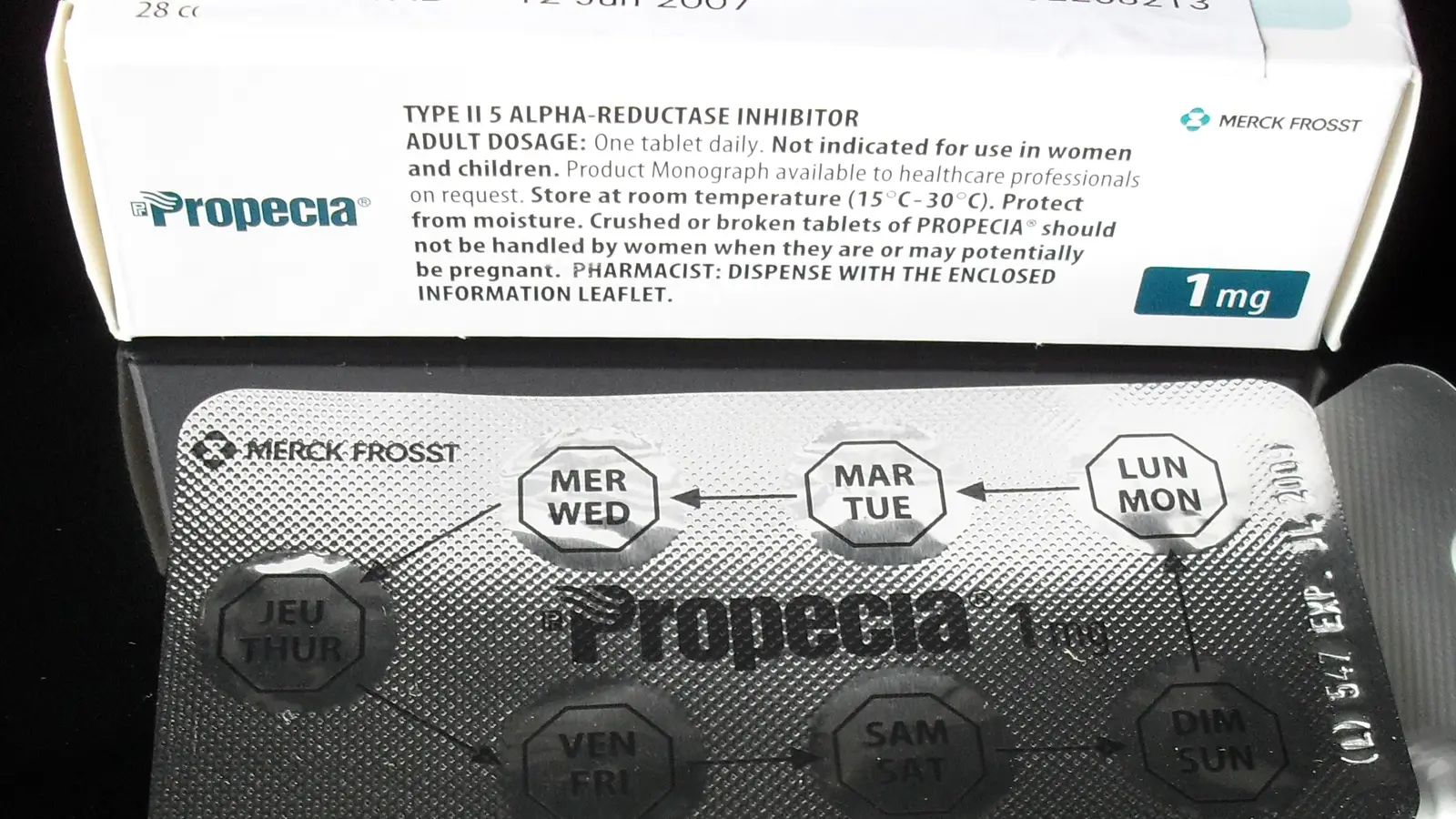
In short
- Finasteride lowers the hormone DHT, which gradually shrinks the follicles on the crown and at the temples in men with a hereditary tendency1.
- In trials of 1,553 men aged 18 to 41, it added on average 107 hairs after one year and 138 after two years in a small area of the crown, compared with placebo1.
- The improvement was maintained over five years, while in the placebo group hair loss continued to progress2. It was also found effective at the front of the scalp3.
- The European guideline gives it a strong recommendation for men4.
- It has known sexual and psychological side effects, so it is started after a proper conversation with the doctor, with awareness and follow-up56.
- A topical version is also available, with lower exposure in the blood7.
If you are in your 20s or 30s and starting to see receding temples or thinning on the crown, you have very likely heard of finasteride, and you have probably also heard some frightening things about it. This page tries to sort things out: what the medication does, what studies have actually shown, what is known about side effects, and how to decide whether it is right for you. The goal is for you to arrive at the conversation with your doctor with a full, balanced picture.
How does finasteride stop hair loss?
In male pattern hair loss, the hormone DHT causes sensitive follicles to shrink cycle after cycle, until the hairs become thin and short. Finasteride blocks the enzyme that converts testosterone into DHT (Hebrew), lowering DHT levels in the blood and in the scalp1. This protects the follicles and slows the process known as miniaturization (Hebrew).
It is important to understand what this means in practice: finasteride preserves what you have and brings back some of what was lost, as long as the follicles are still alive. That is why it works better when started early, in the first stages of the Norwood scale (Hebrew), while there are still many active follicles.
What have studies shown?
Two large controlled trials in 1,553 men aged 18 to 41 are the foundation. In hair counts in an area about 2.5 cm in diameter on the crown, the group taking finasteride 1 mg a day had 107 more hairs than the placebo group after one year, and 138 more after two years. The improvement was also seen in patient assessments, physician assessments and photographs, and in the placebo group hair loss continued to progress1.
And in the long term? 1,215 of the men continued in controlled extension trials for up to five years. The hair improvement was maintained throughout, no new safety problems were identified, and in the placebo group hair continued to thin gradually2.

What do the guidelines say? The evidence-based European guideline gives oral finasteride a strong recommendation for men with hereditary hair loss4, and a meta-analysis of treatments for hereditary hair loss found an increase in hair count with both finasteride and minoxidil8.
What’s new in research (updated November 2026)
Whether finasteride affects mood is still being studied. Three papers from the past two years:
- A meta-analysis of observational studies (2026): a systematic review and meta-analysis of observational studies looked at men taking finasteride or dutasteride for an enlarged prostate or hereditary hair loss. No significant link was found with the risk of suicide or neuropsychiatric events, but the studies differed from one another. The researchers recommend continued monitoring, given the concern raised by drug regulators13.
- Why do the studies contradict each other? (2026): a meta-analysis of five large longitudinal studies examined why earlier studies on finasteride-class drugs and depression reached different results. The choice of comparison group explained most of the differences: studies that compared users with people taking no medication showed an increased risk, and studies that compared them with users of another prostate medication did not. According to the researchers, the risk is probably small, but it is still important to watch for changes in mood14.
- Topical versus oral finasteride (2026): an analysis of the FDA adverse event reporting database compared oral finasteride with topical finasteride. Topical finasteride produced fewer signals of sexual and psychological side effects than tablets. The researchers note that a reporting database does not prove causation and that controlled studies are needed15.
Any change in mood or sexual function during treatment should be reported to your doctor. These summaries are not a personal recommendation.
How long does it take to see results?
Hair grows slowly, so patience is needed. In the first months the main goal is for the shedding to stop. Improvement in density is assessed after about a year of regular use, and in the trials the gap versus placebo kept growing in the second year as well1. It is worth photographing your scalp under consistent lighting before you start, so you can see the difference for yourself.
Side effects: what is known and what to do
Most men who take finasteride have no side effects, but it is important to know about them in advance. A meta-analysis of 15 randomized trials found a 1.66-fold higher risk of sexual dysfunction with finasteride compared with placebo5. There is also a study that says something about expectations: in a trial in which men received finasteride without knowing what they were taking, those who were warned in advance about sexual side effects reported them in 43.6% of cases, compared with 15.3% among those who were not warned9. The takeaway: some of these effects are also related to anxiety and expectation, and a calm, factual conversation with the doctor is part of the treatment.
Mood. In 2025 the European Medicines Agency concluded that suicidal thoughts are a possible side effect of oral finasteride, and noted that the benefits still outweigh the risks in all approved indications. The guidance is to stop and see a doctor if low mood, depression or such thoughts appear6. The UK regulator noted in 2026 that psychological and sexual effects may persist even after stopping, and recommends asking about a history of depression before prescribing10.
PSA. Finasteride lowers PSA, the blood test used to screen for prostate cancer, by about 40% to 50% in men aged 40 to 60. Anyone having this test should tell the doctor that he is taking finasteride11.
In practice: before starting, tell the doctor about your mood, any history of depression and other medications; pay attention to changes; and if something feels wrong, stop and consult. This way most men can benefit safely. Details on how common the effects are and what is known about mood are on the page Side effects of finasteride (Hebrew).
Topical finasteride: an option with less exposure in the blood
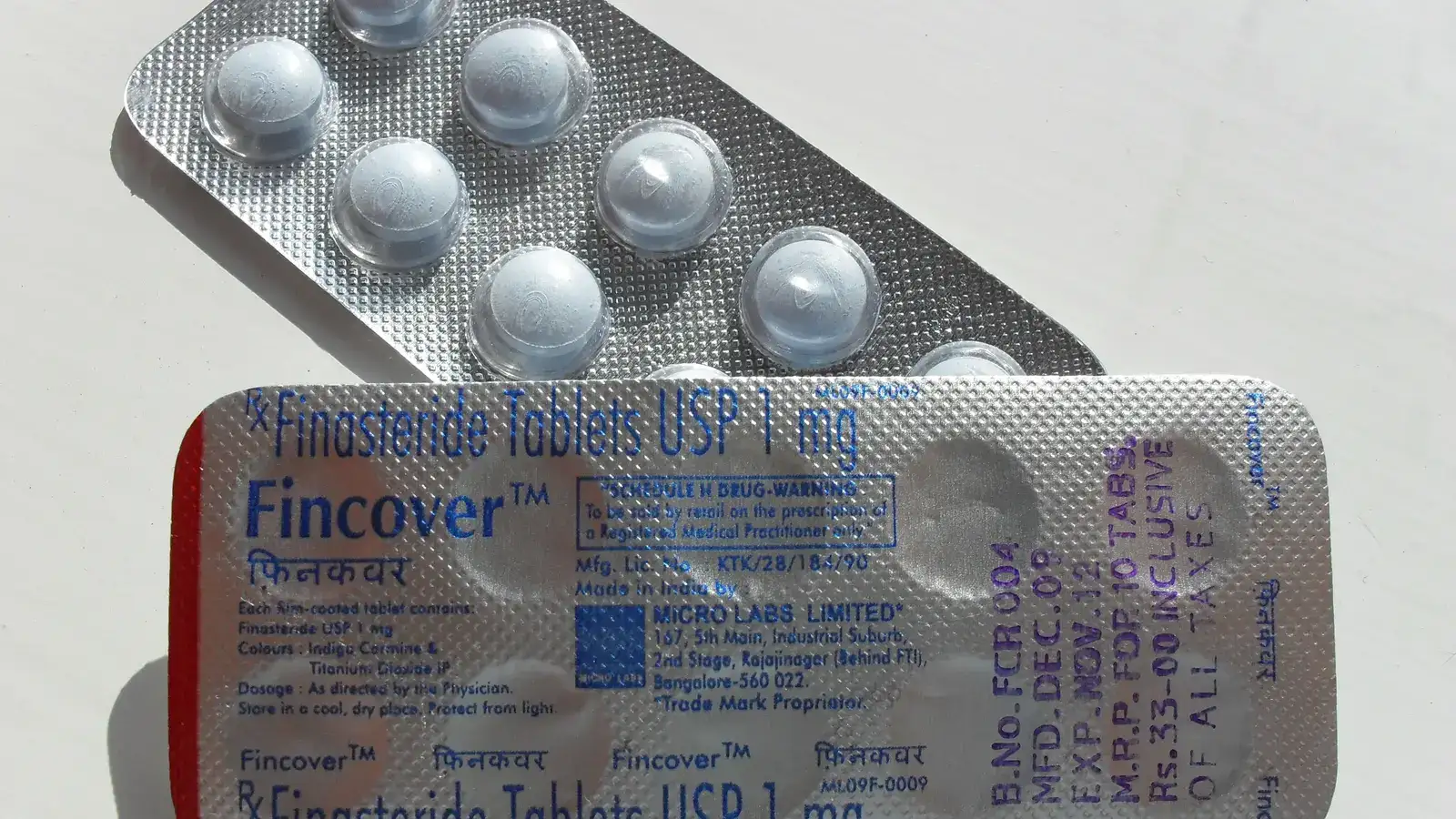
For those who prefer lower systemic exposure, there is now a finasteride spray applied to the scalp. In a phase III randomized trial in 458 men, the spray was more effective than placebo and similar to the tablet, with significantly lower drug levels in the blood and a smaller drop in blood DHT7. In another small trial, a topical combination of finasteride 0.1% and minoxidil 5% was safe and effective in increasing hair density and thickness over 12 weeks, although it showed no significant advantage over minoxidil alone in that short period12. Another option is DHT blockers injected directly into the scalp, such as dutasteride mesotherapy (Hebrew).
What happens when you stop?
Finasteride’s protection lasts only as long as you take it. In the trials, hair loss continued to progress in the placebo group12, and this is usually what happens after stopping as well: the hereditary process returns to its natural pace. So the decision to start is a long-term one, and anyone considering stopping should first discuss alternatives, such as switching to a topical or injected treatment.
How does finasteride fit into a treatment plan?
The best results usually come from a combination. Finasteride protects the follicle from DHT, minoxidil stimulates growth, and in-clinic treatments such as PRP for hair and scalp mesotherapy (Hebrew) add a further layer of support. People considering a hair transplant also benefit from medication, because a transplant does not stop hair loss in the surrounding original hair. All the options are described on the page Male pattern hair loss (Hebrew).
Who is finasteride suitable for, and who not?
Finasteride is suitable mainly for men with early to moderate hereditary hair loss, and is not intended for women of childbearing age. Suitability is decided in a conversation with the doctor, after a diagnosis.
- Mainly suitable for men with hereditary hair loss at early to moderate stages who want to halt progression and keep their hair over time4.
- Not for women of childbearing age: women who are pregnant or may become pregnant should not handle broken or crushed tablets.
- A prior conversation is needed when there is a history of depression or anxiety, or when a pregnancy with a partner is planned soon and you want advice on timing.
How is it done with Dr. Buchbut?
With Dr. Dana Buchbut, a physician who has worked in hair medicine for 16 years, the decision about medication starts with a computerized trichoscopic diagnosis, which shows what stage the hair loss is at and how many active follicles there are, and continues with an open conversation explaining the benefits, the side effects and the alternatives available today, including topical treatment or scalp injections — so you leave the appointment with a clear picture and a plan that fits you exactly.
Frequently asked questions
How does finasteride work?
Finasteride blocks the enzyme type 2 5-alpha-reductase, which converts testosterone into DHT. DHT is the hormone that makes follicles on the crown and at the temples gradually shrink in men with a hereditary tendency. With less DHT in the scalp, the follicles are protected.
How soon do you see results?
Hair grows slowly, so the result is assessed after about a year of regular use. In the large trials, the difference versus placebo was clear after one year and grew further in the second year. In the first months the main goal is for the shedding to stop.
Does finasteride work at the temples or only on the crown?
Both. Beyond the crown trials, a separate controlled trial in men with thinning at the front and middle of the scalp found a significant increase in hair count there, which was maintained or improved in the second year. Deep temple recession where there are no longer active follicles responds less, so earlier is better.
What happens if you stop taking finasteride?
The protection of the follicles lasts only as long as you take the medication. After stopping, hereditary hair loss resumes at its natural pace, and what was gained is gradually lost. So it is a long-term decision.
Does finasteride affect sexual function?
A meta-analysis of randomized trials found a 1.66-fold higher risk of sexual dysfunction compared with placebo, which means most men do not experience such effects. An interesting study also showed that expecting side effects matters: men who were warned in advance reported them far more often than men who received the same drug without a warning. If an effect appears, talk to your doctor.
What about mood?
In 2025 the European Medicines Agency concluded that suicidal thoughts are a possible side effect of oral finasteride, and also concluded that the benefits still outweigh the risks. The guidance is to tell the doctor about any history of depression before starting, and to stop and see a doctor if low mood or such thoughts appear.
What is the difference between oral and topical finasteride?
In a randomized trial in 458 men, finasteride spray was more effective than placebo and similar to the tablet, with significantly lower drug levels in the blood and a smaller drop in blood DHT. It is an option for those who prefer lower systemic exposure.
Does finasteride affect the PSA test?
Yes. In men aged 40 to 60, finasteride 1 mg lowered PSA by about 40% to 50% within a year. A man who takes finasteride and has a PSA test should tell his doctor, so the result is interpreted correctly.
Can finasteride be combined with minoxidil or PRP?
Yes, and the combination is very common: finasteride protects the follicle from DHT, minoxidil stimulates growth, and treatments such as PRP and mesotherapy add another layer. The plan is built according to the stage of hair loss and the patient’s preferences.
Related reading
Male pattern hair loss
Why it happens and which treatments the guidelines recommend.
Read (Hebrew)Minoxidil
Topical and oral: how it works and who it suits.
ReadDutasteride injected into the scalp
A DHT blocker given directly in the scalp.
Read (Hebrew)Hair loss medications
All the medications and how they are given: topical, oral and injected.
Read (Hebrew)The Norwood scale
Which stage you are at, and what is done at each stage.
Read (Hebrew)PRP for hair
A complementary treatment that strengthens follicles.
ReadFinasteride and fertility
What is known about sperm count and what to do before planning a family.
Read (Hebrew)Finasteride vs. dutasteride
A comparison of the two oral medications: evidence, approval status and risks.
Read (Hebrew)Testosterone and hair loss: blood levels, treatment and follow-up
Read (Hebrew)Topical finasteride
Topical finasteride: how it works, and what is known about how it compares with the tablet
Read (Hebrew)Hair loss medications: is it for life?
Do hair loss medications have to be taken for life?
Read (Hebrew)Minoxidil or finasteride: the difference and how to choose
Minoxidil or finasteride for hair loss in men?
Read (Hebrew)The information on this page is general and for education only. It does not replace an examination, diagnosis or personal medical advice. Any decision about treatment is made only after an examination.