

In short
- A new, round, smooth bald spot in the beard is most often alopecia areata, the same condition that causes bald patches on the scalp1.
- In a survey of people with severe alopecia areata, about 61.5% reported that their beard was affected2.
- There is little research on alopecia areata of the beard alone, compared with the scalp3.
- Treatment is similar to the scalp: steroid creams, steroid injections and, in extensive disease, JAK inhibitor tablets41.
- It is worth checking the scalp, eyebrows and nails as well, because the condition can affect more than one area12.
What can a round bald spot in the beard be?
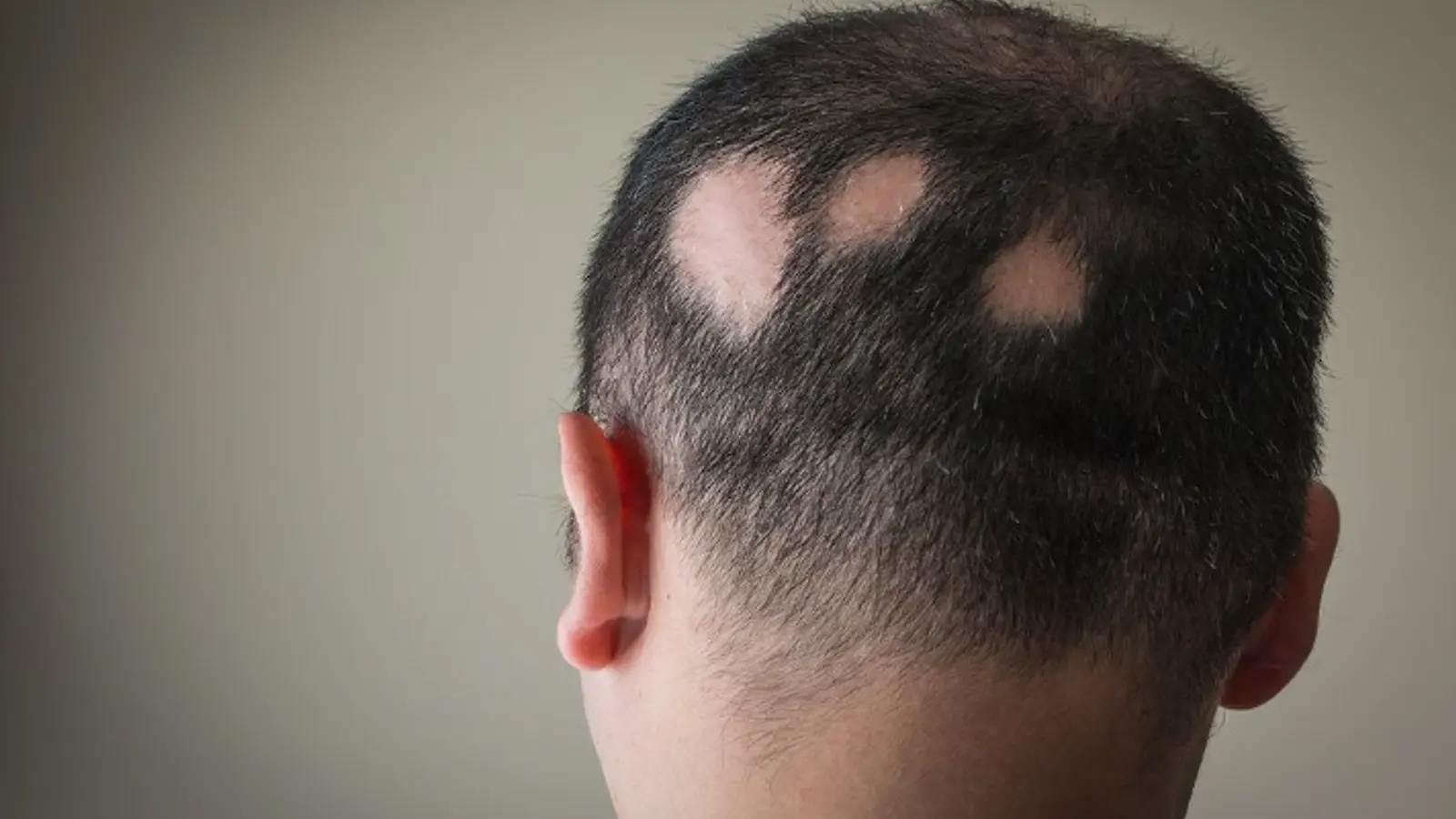
A smooth, round bald spot that suddenly appears in a beard that was growing well looks very much like the patches of alopecia areata on the scalp, and that is indeed the most common cause. It is important to separate this from an area of the beard that has never grown in densely, which is a completely different thing and has nothing to do with an autoimmune condition.
For many men, a beard patch is the first time they hear about alopecia areata at all. Most people think of it as "a bald spot on the head," not something that can affect the beard. It is exactly the same condition, simply showing up in a different hair-bearing area of the body.
How can you tell alopecia areata from a beard that just grows patchy?
The key sign is the sudden appearance of a round or oval patch of smooth, clean skin, without scaling or redness, in an area where hair used to grow normally. This matches the clinical description on the scalp: smooth skin without visible signs of inflammation1. A beard that has never been dense in a particular area, on the other hand, usually reflects natural follicle density and is not related to the condition.
A few more features can help. In alopecia areata, short characteristic hairs called "exclamation mark hairs" can sometimes be seen at the edge of the patch. They are thicker at the tip and taper toward the root. Finding them supports the diagnosis, but not finding them does not rule it out, which is why a clinical examination, and sometimes dermoscopy, is better than self-assessment1.
What if there is redness, pimples or crusts? It may be a beard fungus
A bald area in the beard with red skin, pus-filled bumps or crusts around the hairs does not fit the usual picture of alopecia areata, and a fungal infection or folliculitis should be considered. In alopecia areata the skin is usually smooth and clean1. According to DermNet, tinea barbae (fungal infection of the beard) shows up as red, raised areas, pustules and crusts around the hairs, and the hairs in the area pull out easily. It is most common in farmers and people in contact with infected animals such as cattle and horses, and person-to-person spread is rare5.
The distinction matters because the treatment is completely different. Tinea barbae is confirmed with a lab test of skin scrapings and hairs, and is usually treated with oral antifungal medication, or a topical product in mild cases5. So treatment for alopecia areata should not be started before the diagnosis is clear. Bumps in the beard can also come from folliculitis (Hebrew), an inflammation of the hair follicles.
Why does it happen? Is it stress?
As elsewhere on the body, alopecia areata in the beard is an autoimmune process in which the immune system attacks the hair follicles. A 15-year Israeli population-based study found a rising incidence of alopecia areata among men aged 18 to 30, and the researchers suggest that stressors may act as a trigger. This is a hypothesis, not a proven finding6. Stress is a possible trigger, not a proven cause, and certainly not anyone's "fault." More on triggers on the page causes of alopecia areata.
For young men, a patchy beard can feel especially hard socially and personally, and according to the Israeli data this is exactly the age at which the condition has become more common. That does not mean young men are "more stressed" than anyone else, only that the condition can hit at a time of life when appearance matters socially and professionally.
Will it go away on its own, and can it spread to the scalp?
A small, new patch has a reasonable chance of regrowing spontaneously, as in other areas affected by alopecia areata. According to Clalit Health Services, the condition resolves within a year in about half of patients7. The most important factor for the outlook is how extensive the condition is overall, not only in the beard. Onset at a young age, or disease lasting more than a year, is linked to a less favorable outlook18. See also will alopecia areata go away?
Sometimes it does appear in other places too. Alopecia areata can affect several areas at once, so it is worth checking the scalp, eyebrows and nails. In an international survey of people with severe disease, 61.5% reported beard involvement and 47% to 49% reported eyebrow and eyelash involvement, meaning that several areas together is common in this group2. This survey was in people with relatively severe disease, so these figures do not necessarily apply to someone with a single small patch in the beard. Still, it is a good reason for the first examination to look at the whole picture, not only the patch that brought you in.
As on the scalp, the beard can show different forms: a single limited patch, several patches that merge, or, less commonly, loss of the whole beard as part of alopecia universalis, which involves all body hair1. The form affects the choice of treatment and how urgently to get checked. More on the forms on the page types of alopecia areata.
What treatments are there for the beard?
The treatments are similar to those used on the scalp: steroid cream, steroid injections and, in extensive disease, tablets from the JAK inhibitor family. However, there is much less research that has looked at the beard alone, compared with the large body of research on the scalp3. A new assessment tool published in 2026, the BEARD Score, aims to give a uniform measure of beard involvement, which shows that the field is still developing3. In principle, all the options on the page alopecia areata treatment apply to the beard as well, and for extensive disease see JAK inhibitors for alopecia areata41. JAK inhibitors are prescribed by a specialist dermatologist.
Side effects of injections in the face. Steroid injections in the face, including the beard, can cause local thinning of the skin (atrophy) and lightening of the skin at the injection site, usually temporarily. These are the same side effects known from scalp injections, but on the face they are more visible, so extra attention to appearance is needed9. Full details on the procedure and side effects: steroid injections for alopecia areata.
Beard transplant? Not while alopecia areata is active. Active alopecia areata is considered a contraindication to hair transplantation, because the condition can attack the transplanted hairs too, and surgery may trigger a flare. When the condition is quiet the risk is smaller, but it does not disappear. More on beard transplants and on hair transplants in alopecia areata (Hebrew).
How does it feel, and what can you do cosmetically in the meantime?
A visible gap in the beard can be as embarrassing and upsetting as a bald patch on the scalp, especially when it is hard to hide. In the international survey mentioned above, reduced quality of life was very common among people with severe disease, including those whose beard was affected2. The German guideline recommends informing every patient about options for psychological support, and not treating this aspect as secondary10.
Shaving clean, keeping the beard short, or shaping it around the affected area are all purely cosmetic choices, and which one to pick is a matter of personal comfort. There is no evidence that shaving changes the pace of regrowth. Shaping the beard to reduce the visual contrast, or using temporary camouflage products, are non-invasive options that can help while you wait. They are cosmetic, not medical, but they are a legitimate part of coping until medical treatment works10. If the area also has redness, bumps or scaling, get checked first, because those signs fit tinea barbae or folliculitis better.
When should you see a doctor, and why not just compare photos online?
Comparing yourself with photos online can be misleading, because an early fungal infection, a small scar or another skin reaction can look similar at first glance to an alopecia areata patch. A clinical examination, and sometimes dermoscopy, makes it possible to tell these conditions apart and choose the right treatment instead of guessing1. This is especially true of the beard, where people are less familiar with how alopecia areata typically looks than on the scalp.
It is worth getting checked when:
- A new, round bald spot appears in the beard.
- It comes with scaling, redness or itching that suggests another condition.
- It spreads quickly.
- There are also changes on the scalp, eyebrows or nails (see alopecia areata of the eyebrows, eyelashes and nails).
An early examination does not mean you must start treatment right away. It mainly confirms the diagnosis, rules out other causes and gives a clear picture of the options, so that the decision whether and when to treat is informed rather than guessed.
How is it done at Dr. Dana Buchbut's clinic?
At the clinic in Beit HaRofim, HaBarzel 11, Ramat HaHayal, Tel Aviv:
- The examination starts with trichoscopy: the patch and the surrounding hairs are examined under magnification with a FotoFinder device, to confirm alopecia areata and rule out tinea barbae or folliculitis.
- A trichoscopy examination takes one to two hours.
- Follow-up visits show whether the beard is regrowing, so the plan can be adjusted.
- No referral is needed, and you receive an invoice for the consultation that you can submit to private insurance.
- The consultation takes between 15 minutes and two hours, and its fee is offset against treatment if you go ahead with treatment.
For details on getting here and booking, see alopecia areata in Tel Aviv.
Frequently asked questions
Can stress cause a bald spot in the beard?
Many people report a stressful period before a beard patch appears, but stress has not been proven to cause the condition itself. It may be a possible trigger in people who are predisposed, not the only cause.
Is a bald spot on the chin always alopecia areata?
Usually yes, if it is round, smooth and clean, without scaling or redness. An accurate diagnosis requires an examination, because other conditions can also cause a local lack of growth in the beard.
A bald patch in my beard is red with bumps. Is that alopecia areata?
Usually not. In alopecia areata the skin is smooth and clean. Redness, pustules and crusts around the hairs fit a fungal infection of the beard (tinea barbae) or folliculitis better. Tinea barbae is diagnosed with a lab test and treated with antifungal medication, so it is important to get checked before starting treatment.
How long does it take for the beard to grow back?
It varies from person to person. A small, new patch has a good chance of regrowing on its own within months, but there is no fixed timeline, and further episodes can occur even after regrowth.
The hair in my beard grew back white. Why?
This is common in alopecia areata in general. Regrowing hair can be white or light at first and gradually regain its usual color.
Does minoxidil help beard alopecia areata?
Minoxidil encourages hair growth but does not act on the immune process itself, so at most it is used as an add-on to the main treatment, not as a stand-alone solution.
Should I shave the area?
That is a personal choice, not a medical recommendation. There is no evidence that shaving affects the pace of regrowth, and many people prefer to shave for cosmetic reasons while they wait.
Can steroid injections be used in the beard?
Yes, this is one of the accepted treatments for localized alopecia areata, including in the beard, although there is less dedicated research than for the scalp. Possible side effects such as skin thinning should be kept in mind.
Is a beard transplant a solution for alopecia areata?
Not while alopecia areata is active. Active alopecia areata is considered a contraindication to hair transplantation, because the condition can attack the transplanted hairs and surgery may trigger a flare. Even when the condition is quiet the risk is smaller but does not disappear.
When should I see a doctor about a beard patch?
When a new, round bald spot appears in the beard, when it comes with scaling or redness, when it spreads quickly, or when there are also patches on the scalp, eyebrows or eyelashes.
Sources
- DermNet. Alopecia areata. dermnetnz.org
- Bewley A, et al. Patient-reported burden of severe alopecia areata: first results from the Multinational Alopecia Areata Unmet Need Survey. Clin Cosmet Investig Dermatol. 2024;17:751-761. doi:10.2147/CCID.S445646. doi.org
- The BEARD Score: a practical tool to assess beard involvement in alopecia areata. Int J Dermatol. 2026. (PMID 41531278). pubmed.ncbi.nlm.nih.gov
- Harries MJ, et al. British Association of Dermatologists living guideline for managing people with alopecia areata 2025. Br J Dermatol. 2026;194(2):e56-e73. doi:10.1093/bjd/ljaf452. doi.org
- DermNet. Tinea barbae. dermnetnz.org
- Wohl Y, et al. Incidence rate of alopecia areata in Israel: a 15-year analysis of population-based data. J Dermatol. 2024;51(1):88-94. doi:10.1111/1346-8138.17033. doi.org
- Clalit Health Services. Alopecia areata (Hebrew). www.clalit.co.il
- Tosti A, Bellavista S, Iorizzo M. Alopecia areata: a long term follow-up study of 191 patients. J Am Acad Dermatol. 2006;55(3):438-41. doi:10.1016/j.jaad.2006.05.008. doi.org
- Mayo Clinic Press. How is alopecia areata treated?. mcpress.mayoclinic.org
- Blume-Peytavi U, et al. S3 guideline diagnostics and therapy in alopecia areata, Part 2: therapy, psychosocial and cosmetic support. J Dtsch Dermatol Ges. 2026. PMC13435026. pmc.ncbi.nlm.nih.gov
Related reading
Alopecia areata
Causes, outlook and treatments, including JAK inhibitors.
ReadAlopecia areata treatment
What works, by how extensive the hair loss is.
ReadEyebrows, eyelashes and nails
How alopecia areata affects them and what can be done.
ReadSteroid injections
How they work, how often, and side effects.
ReadBeard transplant
When a beard transplant is an option.
ReadAlopecia areata in Tel Aviv
Diagnosis, treatment and follow-up in Tel Aviv.
ReadThe information on this page is general and for education only. It does not replace an examination, diagnosis or personal medical advice. Any decision about treatment is made only after an examination.