

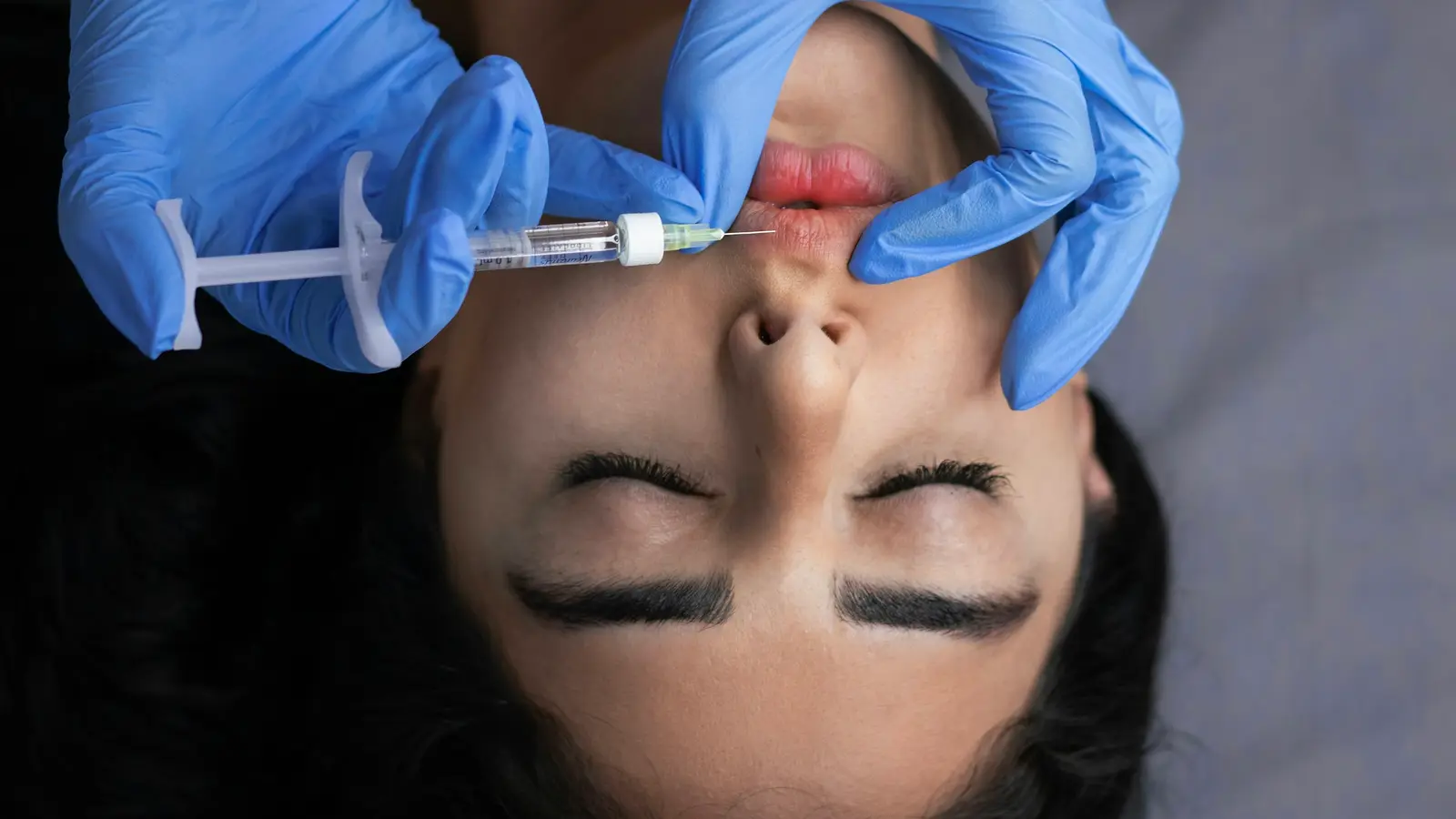
In short
- A hyaluronic acid filler is a gel injected under the skin to restore lost volume or smooth a fold, for example in the cheeks, the chin, the nasolabial folds or the lips1.
- In Israel, hyaluronic acid is classified as a "medical device", unlike botulinum toxin, which is a prescription drug2.
- The effect is temporary and usually lasts from a few months to a year, depending on the product and the area34.
- Hyaluronic acid is the only material among the types of fillers that can be broken down with a dedicated enzyme, both in a complication and for correction5.
- The most serious risk, injection into a blood vessel, is rare but serious, which is why it is important that the injection be performed by a physician, in a clinic, with a product from an authorized source16.
- All injections at the clinic are performed by Dr. Dana Buchbut herself, a physician (M.D.).
On this page you will find a clear, up-to-date explanation of hyaluronic acid fillers: what they actually do, how long the result lasts, and which risks are worth knowing before you decide. There are also focused pages on specific areas, lip filler and jawline contouring, and a separate, detailed page on complications and dissolving filler for anyone looking for urgent information. On under-eye hollows specifically: how long under-eye filler lasts.
Dermal fillers (hyaluronic acid, Radiesse) are among the most common aesthetic treatments in the world, and also among the topics with a lot of inaccurate information online, from marketing that ignores the risks to horror stories that ignore the fact that most treatments go by without any complication. The goal of this page is to give you a balanced, reliable picture: what works, what the real risk is, and how to choose well so you can enjoy the result with peace of mind.
What is a dermal filler, and how is hyaluronic acid different from other materials?
Dermal fillers are medical implants injected under the skin to restore volume or smooth a fold. The FDA defines them this way: materials injected mainly into the face, most often to fill wrinkles and add volume1. There are several types of fillers, based on chemically entirely different materials, and hyaluronic acid has a clear safety advantage: it is the only material that can be broken down with a dedicated enzyme if needed57.
In Israel, unlike botulinum toxin, which is a prescription drug, hyaluronic acid is classified as a "medical device" (AMAR registry). A 2019 report by Israel's State Comptroller noted that, at the time of writing, the Medical Devices Law had not yet fully come into force, so there was then no formal registration requirement for the product itself as there is for a drug2. Other fillers, such as calcium hydroxylapatite and poly-L-lactic acid, belong to a group called collagen stimulators (biostimulators) and work differently; you can read about them on the biostimulators page. The most common products in this group are Aesthefill, Sculptra, Radiesse and Ellansé.
In its basic form, hyaluronic acid is not a substance foreign to the body: it is a molecule found naturally in connective tissue and in the skin, and its role is to bind water and give the tissue volume and hydration1. Injectable hyaluronic acid products are manufactured in the lab in a more stabilized form than the natural molecule, which is why different products differ in texture and duration of effect, even though they are all based on the same basic material3.
Which areas of the face are fillers used in?
Fillers are used to restore volume lost with age and to smooth folds caused by loss of tissue support. Common areas include the cheeks, chin, nasolabial folds (the fold between the nose and the corner of the mouth), hollows under the eyes, temples and lips1. The clinical goal differs slightly in each area: in the cheeks and chin it is usually restoring volume lost with age; in the nasolabial folds, filling a line formed by sagging of the surrounding tissue; and under the eyes, smoothing a sharp transition between the lower eyelid and the cheek caused by local volume loss. The temples, an area that requires special caution, are covered on the temple filler page.
Facial fillers are used mainly to restore volume and smooth folds, for example in the cheeks, the chin and the nasolabial folds.
Each area has its own considerations. The under-eye area and the nose are considered higher-risk areas for complications because of the local blood vessel anatomy, and therefore require especially precise anatomical knowledge89. For more focused details: lip filler, under-eye filler, jawline contouring, chin contouring, cheeks and facial sculpting and non-surgical nose reshaping. When the under-eye problem is mainly color rather than a hollow, a filler is usually not the solution; see dark circles under the eyes.

What is the difference between a filler and botulinum toxin?
A filler adds volume, and botulinum toxin relaxes a muscle that creates a wrinkle through movement: these are two completely different principles of action. Expression lines on the forehead and between the brows, formed by repeated muscle contraction, usually respond to botulinum toxin injection. Folds caused by volume loss, such as the nasolabial fold, or a need to add volume, as in the cheeks or chin, are treated with filler. The nasolabial fold, marionette lines and lines above the lip are explained in detail on the lines around the mouth and nose page.
The two are often confused, partly because they are sometimes combined in the same session or the same area of the face; for example, a line above the upper lip can result both from muscle movement and from volume loss. What suits you, and in what combination, is decided at a personal examination.
How long does a filler last?
How long the effect lasts depends on the type of material and the injection area, and usually ranges from a few months to a year. The following table summarizes general data by type of material, not by commercial brand:
| Material | Estimated duration of effect |
|---|---|
| Hyaluronic acid | About 4 to 12 months, depending on the area and the product3. Cleveland Clinic cites a common range of about six months to a year4 |
| Calcium hydroxylapatite | About 6 to 12 months3 |
| Poly-L-lactic acid | About 1 to 3 years; works gradually and differently. Details on the collagen stimulators page3 |
Areas with a lot of movement, such as the lips, tend to "use up" hyaluronic acid faster than relatively still areas such as the cheeks. Keep in mind that these are general ranges from the literature, not a personal promise of results; the rate also depends on individual metabolism3. If you are planning an injection ahead of an event, you will find timing recommendations on the timing an aesthetic treatment before an event page.
What is the treatment like, and what is recovery like?
The injection itself usually takes from a few minutes to about a quarter of an hour, depending on the area and the amount of material. Before the injection, the areas to be treated are usually marked. Many hyaluronic acid products already contain an anesthetic within the gel itself, which reduces the need for separate anesthesia3.

What should you do, and what should you avoid, after a filler injection?
The basic recommendations are simple: postpone strenuous exercise until the next day, do not touch the area for three days, and avoid sun and tanning. These are the guidelines of the American Academy of Dermatology3: hold off on sports and exertion until the following day; do not touch the treated area for three days unless you were instructed to massage it; stay out of the sun and do not use tanning beds. Certain materials, such as poly-L-lactic acid (which is not hyaluronic acid), actually require daily massage in the first weeks3. Further instructions depend on the product and the area, and are therefore given in writing at the end of the treatment. Severe pain, a change in skin color or a visual disturbance after an injection is a reason to seek care immediately; details on the filler complications page.
What happens if you stop renewing the treatment?
Because the effect is temporary, the face gradually returns to its pre-treatment state as the body breaks down the material. There is no "worsening" beyond the starting point: the process is simply a gradual return to your personal baseline, alongside natural aging that continues regardless of the treatment34. If you are considering stopping periodic treatments, you need not fear ending up worse than before the first treatment; just set your expectations knowing that the result is not permanent.
What are the disadvantages of hyaluronic acid?
The main disadvantage is that the effect is temporary: the body gradually breaks down the material, and anyone who wants to maintain the result needs to repeat the treatment. Other disadvantages, detailed in the following sections:
- A few days of recovery: redness, swelling and bruising at the injection site, which usually resolve within days to two weeks. What to expect after under-eye filler: recovery after under-eye filler.
- A rare but serious risk: injection into a blood vessel. That is why it is important for the injection to be done at a clinic that knows how to recognize and treat such a complication.
- Dependence on technique: the result and safety depend on planning, anatomical knowledge and choosing the right material for the area.
What are the common side effects?
Most side effects are mild and resolve on their own within days to two weeks. The most common are redness, swelling, tenderness to touch and bruising at the injection site3. These are considered an expected part of the process, not a complication.
Much more serious side effects are rare, and the risk can be reduced with proper planning, anatomical knowledge and appropriate injection technique6. For full details on complications, including when to seek urgent care, see the complications page.
What is the most serious risk, and how rare is it?
The most serious risk is accidental injection into a blood vessel, which can block blood flow. Such a blockage can cause skin damage and, in certain areas of the face, harm to vision as well1. It is a rare complication, but it is the main reason injection is recommended only at a clinic that knows how to recognize and treat it quickly if it occurs68.
If you want to understand the subject in depth, including the signs that require immediate care and what treatment of the complication involves, you will find it on the complications page, written especially for anyone who needs urgent or precise information about it.
It is important to keep the risk in proportion: this is a rare complication, not a common scenario. The reason it is emphasized so much on this page and across the site is that its consequences are serious if it does occur, and that the ability to prevent and treat it depends largely on the choice of practitioner and the availability of immediate treatment; in other words, on factors patients can influence in advance, unlike risks over which they have no control.
Can hyaluronic acid be dissolved if something is wrong?
Yes, and this is one of the main safety advantages of hyaluronic acid over other fillers. A dedicated enzyme (hyaluronidase) breaks down hyaluronic acid, and it can be used both in an emergency of vascular occlusion and to correct an unwanted result, such as asymmetry or a lump5. This option does not exist for other fillers, such as calcium hydroxylapatite or poly-L-lactic acid, which cannot be broken down in the same way7. Full details on the dissolving process are on the complications page and the hyaluronic acid dissolving page. The clinic performs hyaluronic acid dissolving with the enzyme hyaluronidase, based on a medical decision.
Why are "permanent" fillers and silicone not recommended?
The advantage of hyaluronic acid is that its effect is temporary and correctable, an advantage that "permanent" fillers do not offer. The FDA states explicitly that injectable silicone is not approved for any aesthetic use1. If something goes wrong with a permanent filler (asymmetry, a lump, a delayed reaction), there is no simple way to correct or dissolve it, unlike hyaluronic acid13.
Devices advertised for "needle-free" injection are also not FDA-approved for delivering fillers1, a question especially relevant to lip filler and covered in detail on the lips page.
How do you choose where to get injected?
The safe choice is a physician, in a clinic, with a product from an authorized source: not online, not at home and not in a non-medical setting. The American Academy of Dermatology recommends not getting a filler injection at a spa, a party, a salon or at home3. The FDA explicitly warns against buying fillers online1.
In Israel, a 2019 report by Israel's State Comptroller documented seizures of counterfeit fillers, along with incidents of non-medical injection outside a medical setting2. The practical reason the choice matters: the source of the product and the physician's training are the two main factors that reduce the risk of complications, including the serious complication of injection into a blood vessel6.
Are all hyaluronic acid fillers the same?
No, but the main differences between them concern texture, density and the recommended injection area, not the basic material itself. Different products are made by different processes that affect the gel's elasticity, its ability to "hold" volume versus "flow" within the tissue, and the expected duration of effect. That is why physicians choose different products for different areas of the face, for example a denser texture for an area that needs structural support, such as the chin, and a softer texture for a delicate area, such as the lips. This site describes the materials by generic name and not by commercial brand, because the clinically meaningful difference is between families of materials (for example, hyaluronic acid versus calcium hydroxylapatite), and less between brands within the same family13.
Who is a filler less suitable for?
In pregnancy, during breastfeeding and under age 22, the safety of fillers has not been studied, and there are other situations in which treatment is postponed or considered with caution. According to the US Food and Drug Administration (FDA)1:
- Pregnancy, breastfeeding and young age: the safety of the products is unknown in pregnancy, during breastfeeding and under age 22.
- Active inflammation or infection: when there are pimples, cysts, a rash, hives or an infection in the area, the injection is postponed.
- Bleeding disorders: it is important to mention them in advance.
- Allergies: for example to lidocaine (the anesthetic contained in some products) or to other ingredients of the product.
Other conditions, such as active autoimmune disease, require judgment based on the full medical history. The FDA also recommends not buying fillers online, because they may be counterfeit or unapproved1.
What should you ask before starting treatment?
It is worth coming to the consultation with a few questions prepared, to make sure your goal and expectations are clear before the injection. Recommended questions include: what exactly the goal of the injection is in the specific area, how long the effect is expected to last in that area, what recovery to expect, what happens if the result does not match expectations, and whether the clinic can provide immediate treatment in case of a complication.
The last question is especially important: as described on the complications page, the serious risk of filler injections is rare but requires rapid treatment, so it is worth knowing in advance that the clinic where the treatment takes place is prepared for this situation, and not only for the injection itself.
Filler or regenerative treatment (PRP, polynucleotides, exosomes)?
A filler adds volume immediately, while regenerative treatments encourage the skin to repair itself gradually: these are two different categories that are easy to confuse. When the problem is a focal lack of volume, a filler gives an immediate answer. When the problem is the quality of the skin itself (texture, hydration, fine lines), a regenerative treatment is usually more suitable. A full comparison of all the regenerative treatments is on the regenerative skin treatments: what is the difference page.
Products used at the clinic
Some products have a separate page, with their composition, the evidence and their registration status in Israel:
- Profhilo — a hybrid hyaluronic acid, without a chemical cross-linking agent. It is intended for skin quality rather than volume, and is therefore closer to a skin booster. Registered in Israel as a wrinkle filler containing hyaluronic acid.
What is a filler consultation with Dr. Dana Buchbut like?
With Dr. Dana Buchbut, a physician with 16 years of experience in aesthetic and hair medicine, a filler consultation starts with a conversation and a facial examination, not with choosing a syringe. In the conversation we find out what bothers you and what your goal is, what has been injected in the past and which medical conditions you have, such as recurrent herpes, a bleeding disorder or pregnancy, and we explain which options exist, including alternatives that do not involve injections. The decision on the material and the area is made only after an examination, as part of follow-up and a personal plan. You can ask any question, including the ones on the list above.
What is new in research (updated November 2026)
Studies published in 2024–2026 that were not yet covered on this page, in brief. They are presented to reflect the current state of knowledge, not as a promise of results. A decision about treatment is always made after a personal examination.
- The material stays longer than was thought (2024): MRI scans in 33 patients showed that cross-linked hyaluronic acid remained in the midface for much longer than commonly believed, sometimes years after the last injection. The practical implication: touch-ups are not always needed on a fixed schedule, and it is worth reassessing each time.10
- What longevity depends on (2026): A systematic review of 24 studies found that the longevity of fillers depends on the manufacturing technology, the mobility of the area and the anatomy, and that patient satisfaction went hand in hand with the amount of material actually measured. Most side effects were immediate and transient, and late effects were rare.11
- Vascular occlusion: timing is key (2026): An updated guide to managing vascular occlusion after filler emphasizes that pain and a change in skin color are the common signs, and that rapid intervention, within the first hours, improves the chance of recovery. The main treatment is hyaluronidase, which is why it is important for the injection to be done by a physician who has the means to treat the complication immediately.12
Terms on this page: Botulinum toxin · Vascular occlusion · Radiesse (CaHA) · Sculptra (PLLA) · Biostimulator · Hyaluronidase · Full glossary
Frequently asked questions
How long does a hyaluronic acid filler last?
According to the American Academy of Dermatology, between 4 and 12 months, depending on the area, the type of gel and your individual rate of breakdown. Areas with a lot of movement, such as the lips, tend to "use up" the material faster than stiller areas, such as the cheeks.
When do you see the final result?
The result is visible immediately after the injection, but some of the initial swelling goes down only after one to two weeks. That is why the final result is usually assessed only once the swelling has fully resolved.
Does the injection hurt?
There is some discomfort during the injection, which varies by area. In more sensitive areas, such as the lips, local anesthesia is sometimes used. Many hyaluronic acid products already contain an anesthetic within the gel itself.
Can hyaluronic acid be dissolved if something is wrong?
Yes. Hyaluronic acid is the only filler material that can be broken down with a dedicated enzyme, both in response to a complication and to correct an unwanted result. This is a significant safety advantage over other materials.
What is the difference between a filler and botulinum toxin?
A filler adds volume or smooths a fold caused by tissue loss, while botulinum toxin relaxes a muscle that creates a wrinkle through movement. The two are sometimes combined in the same area of the face, but they are completely different substances in composition and mode of action.
Are fillers dangerous?
Most side effects are mild and resolve on their own within days to two weeks. The serious risk, accidental injection into a blood vessel, is rare but real and can cause serious harm, which is why it is important for the injection to be performed by a physician with knowledge of facial anatomy.
What is a "permanent" filler, and why is it less recommended?
Permanent fillers, such as injectable silicone, remain in the body for good. The problem is that they cannot be corrected or dissolved if a complication arises or the result is unwanted. The FDA states explicitly that injectable silicone is not approved for any aesthetic procedure.
Can a filler be combined with botulinum toxin in the same session?
Yes, it is a common combination when there is both muscle movement that creates a wrinkle and volume loss or a fold in the skin. The order of the treatments and the right combination are decided at a personal examination.
Does the body break down the filler on its own?
Yes. Hyaluronic acid breaks down gradually and naturally in the body, so the effect is temporary, not permanent. This is different from permanent fillers, which remain in the body without natural breakdown.
Can you buy fillers and inject them at home?
No, and it is also dangerous. The FDA explicitly warns against buying fillers online and against self-injection, because of the risk of infection, counterfeit products and serious complications that require immediate medical care.
What is the difference between a filler and a skin booster?
A filler is intended to add volume and smooth folds, while a skin booster is a lower concentration of hyaluronic acid injected superficially to improve hydration and texture, without aiming to add volume. These are two different uses of the same basic material.
What should you avoid after a hyaluronic acid filler?
According to the American Academy of Dermatology: hold off on sports and exertion until the next day, do not touch the area for three days unless you were instructed to massage it, and avoid sun and tanning. Further instructions are given at the end of the treatment, depending on the product and the area.
Can fillers be injected during pregnancy or breastfeeding?
It is not recommended. According to the FDA, the safety of fillers in pregnancy and during breastfeeding is unknown, so treatment is usually postponed until after this period.
What does hyaluronic acid do for the face?
A hyaluronic acid gel injected under the skin restores volume or smooths folds, for example in the cheeks, the chin or the nasolabial folds. The effect usually lasts six months to a year, because the body gradually breaks down the material. If something is wrong, it can be broken down with an enzyme.
Who should not have hyaluronic acid injections?
According to the FDA, safety has not been studied in pregnancy, during breastfeeding or under age 22. The injection is postponed when there is inflammation, pimples, a rash or an infection in the area, and it is important to mention bleeding disorders and allergies in advance, for example to lidocaine. Conditions such as active autoimmune disease require judgment based on the medical history.
Related reading
Lip filler
The procedure, recovery and risks specific to the lip area.
Read (Hebrew)Jawline contouring
Who it suits, what studies show and how long it lasts.
Read (Hebrew)Complications after fillers
When it is urgent, and how hyaluronic acid is dissolved.
Read (Hebrew)Under-eye filler
Who it suits, and the risks in a sensitive area.
Read (Hebrew)Botulinum toxin injections for expression lines
A completely different treatment: relaxing a muscle, not adding volume.
ReadCollagen stimulators (biostimulators)
Injectables that encourage the body to produce its own collagen.
Read (Hebrew)Skin boosters
Superficial injections for skin quality and hydration, not for adding volume.
Read (Hebrew)Regenerative skin treatments: what is the difference
PRP, iPRF, polynucleotides, exosomes, nanofat and collagen stimulators: a comparison table.
Read (Hebrew)Aesthetics gallery
Before-and-after photos from the clinic of Dr. Dana Buchbut: botulinum toxin, fillers, collagen stimulators, non-surgical face lifting and more. Results vary from person to person.
Read (Hebrew)After a hyaluronic acid injection
After a hyaluronic acid injection: what to avoid, massage, swelling and when to seek care
Read (Hebrew)How long hyaluronic acid lasts
How long hyaluronic acid lasts, and when you see the final result
Read (Hebrew)Permanent filler: the risks and what to do if it has already been injected
Read (Hebrew)Temple filler
Hollow temples: hyaluronic acid or a biostimulator, and safety in a sensitive area.
Read (Hebrew)The information on this page is general and for education only. It does not replace an examination, diagnosis or personal medical advice. A decision about treatment is made only after an examination.