

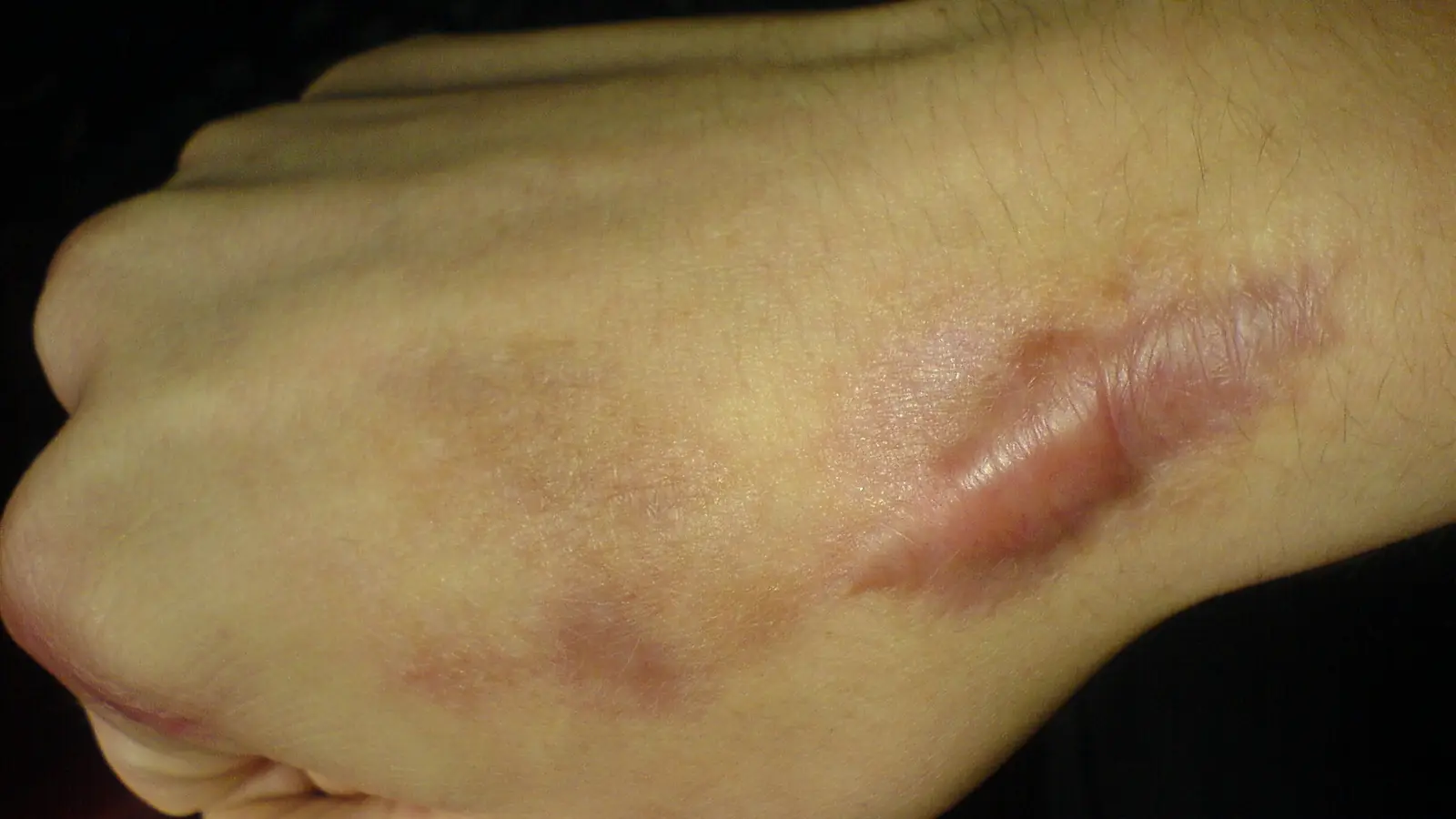
In short
- A keloid is a scar that extends beyond the borders of the original wound and spreads into the healthy skin around it, which is what sets it apart from a hypertrophic scar12.
- It does not regress on its own, and it can appear months or even years after a very minor injury2.
- It can be treated, but recurrence rates are substantial, so several treatments are usually combined34.
- Excision alone is a common mistake: the keloid recurs in 45 to 100 percent of cases without adjuvant treatment3.
- A keloid is not dangerous, but a lesion that grows quickly or changes shape must be examined56.
- All treatments at the clinic are performed by Dr. Dana Buchbut herself, a physician (M.D.).
What is a keloid scar?
A keloid is a type of raised, thick scar that grows beyond the borders of the original wound into the surrounding healthy skin. It is one of the two types of "active" scars, alongside the hypertrophic scar, which are covered in depth in the complete guide to scars. A keloid can be firm and tender, and sometimes painful or itchy, and its color tends to differ from the surrounding skin: pink, reddish-purple or brown, depending on skin tone1.
Keloid scars differ from an ordinary raised scar in that they extend beyond the borders of the original wound and do not regress on their own, so they require planned treatment and follow-up.
Contrary to intuition, a keloid does not have to follow a major injury. It can form after a pimple, an insect bite, an injection, a piercing or a small burn, and sometimes with no identifiable cause at all27.
How do you tell a keloid from a hypertrophic scar?
The key difference is the borders: a hypertrophic scar stays within the wound line, and a keloid goes beyond it. A hypertrophic scar usually appears within weeks of the injury, grows for about 3 to 6 months and then tends to regress gradually. A keloid, by contrast, can appear months or even years after the injury, and usually does not regress on its own128.
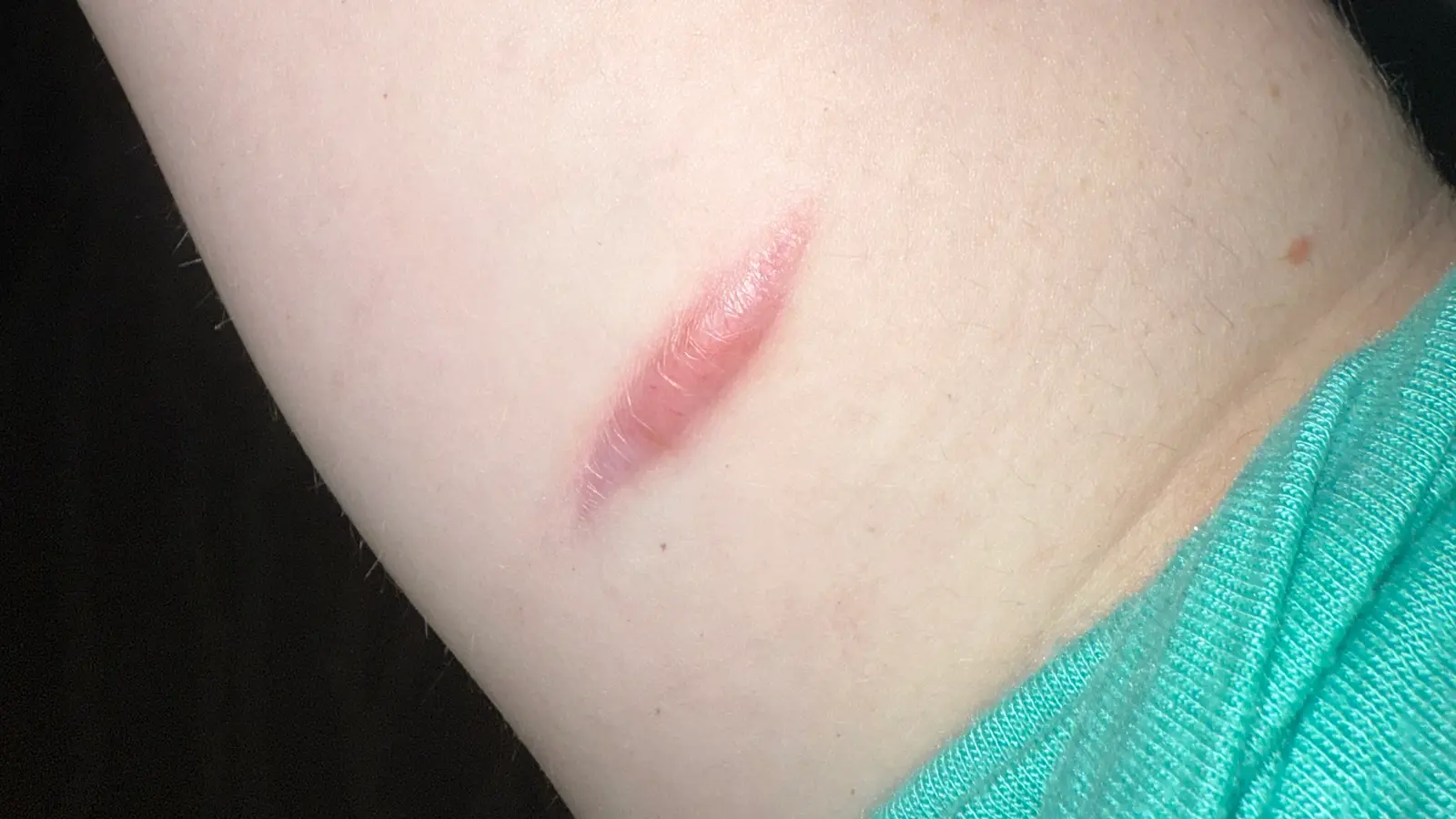
One tool used for clinical distinction is the JSW Scar Scale: a score of 5 or below is classified as a normal mature scar, a score of 6 to 15 corresponds to a hypertrophic scar, and a score of 16 or above corresponds to a keloid5. Distinguishing between the types matters a great deal, because keloids have much higher recurrence rates, so the treatment approach is different.
Why do keloids form, and who is at higher risk?
A keloid forms when the natural healing process "does not stop in time", and local, systemic and genetic risk factors affect the likelihood of this happening. Among the local factors, the main one is mechanical tension on the wound, which is why keloids are common in areas that stretch, such as the chest and shoulders. Systemic factors, such as high blood pressure, as well as genetics and lifestyle, also contribute3.
The most prominent risk factors:
- Skin tone: keloids are considerably more common in brown or Black skin, and in people of African, Asian and Hispanic descent27.
- Age: the risk is highest between the ages of 10 and 302.
- A personal or family history of keloids2.
- Pregnancy: keloids may worsen during pregnancy and improve after delivery. One explanation is the effect of estrogen as a systemic factor3.
In Israel, with its population diverse in skin tone, this is an important consideration in assessing risk and choosing treatment.
Where do keloids usually appear?
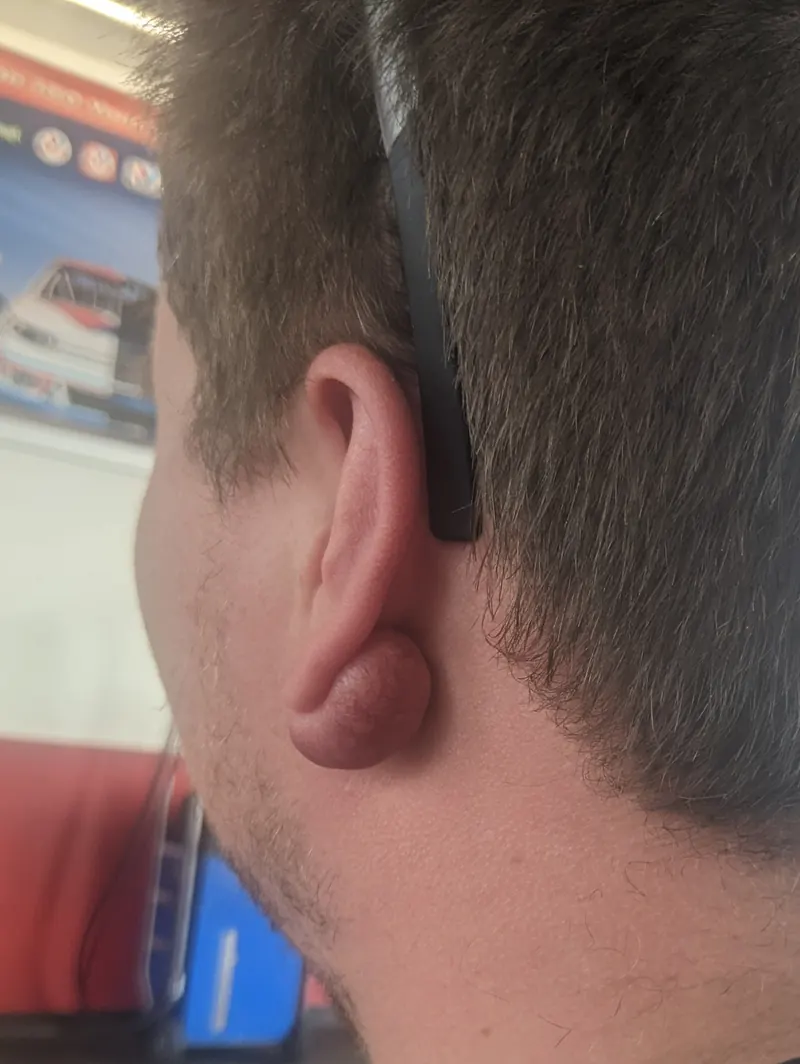
Keloids are especially common on the ears, shoulders, upper back and chest, areas where the skin is under high mechanical tension21. An ear keloid after piercing is a particularly common subtype, which is why people with a tendency to keloids are usually advised to avoid further piercings, or to seek advice beforehand.
What treatments are there for keloids, and how successful are they?
No single treatment ensures success, so the approach accepted in international guidelines is to combine treatments according to the keloid's size, location and response to previous treatment39. The table summarizes the main options:
| Treatment | What is known about it |
|---|---|
| Intralesional steroid (corticosteroid) injection | Reduces the keloid by 50 to 100 percent according to one review, but about a third recur within a year and up to half within five years4 |
| 5-FU, usually combined with a steroid | Effective in 45 to 96 percent of cases in the studies reviewed; the combination with a steroid appears superior to a steroid alone104 |
| Cryotherapy (freezing) | Suitable for small keloids; a volume reduction of more than 50 percent after one treatment has been reported, with a risk of skin lightening811 |
| Vascular laser | Helps with redness and itching, but is less effective as a sole treatment for keloids; usually combined with injection34 |
| Surgical excision | Only with adjuvant treatment; on its own the recurrence rate is very high3 |
| Radiation therapy after excision | A recurrence rate of about 14 to 22 percent in recent meta-analyses, depending on the method1213 |
Intralesional steroid injection is one of only two treatments that were already considered sufficiently established in the first international recommendations of 200214. More details on injections, including side effects, are in the guide to scar injections. How many injections are needed, how often and what the side effects are is explained on the page steroid injections for keloids, and the combination with 5-FU on the page 5-FU combined with Kenalog for keloids. On freezing with liquid nitrogen, alone or before an injection, see keloid cryotherapy with liquid nitrogen.
Do silicone sheets and pressure help keloids?
Silicone and pressure are home treatments that help mainly to prevent a keloid or its recurrence, and less to shrink an established keloid. Silicone sheets or gel can help flatten a keloid, and they are also used on a new keloid, after an injury and after surgery to remove a keloid15. A Cochrane review of 20 trials found an improvement in the thickness and color of raised scars, but the evidence is weak and the quality of the studies is low16. According to the American Academy of Dermatology, once the wound has closed, the gel is applied or a sheet is put on every day for about six months17. Details on use are on the page silicone for scars.
Continuous pressure reduces blood flow to the scar and is used mainly on the ear, with a pressure earring, after a keloid has been excised. To work, it needs to be worn 12 to 20 hours a day for several months15.
A bump on the ear after piercing: according to the American Academy of Dermatology, when the skin of the earlobe starts to thicken, a keloid can sometimes be prevented by acting quickly: removing the earring and switching to a pressure earring, worn for at least 12 hours a day and preferably 20, for 4 to 6 months17. It is worth showing the bump to a doctor, because an infection or an ordinary scar can look similar at an early stage.
Why is excision alone never enough?
Because excising a keloid without adjuvant treatment ends with the keloid coming back in 45 to 100 percent of cases, sometimes even larger than the original3. This is probably the most common mistake in keloid treatment: a "clean" surgical removal creates a new wound, and if no treatment is added to prevent the process from recurring (radiation therapy, steroid injection, 5-FU or a combination), the new wound may turn into a keloid again.
That is why the accepted recommendation is always to combine surgery with an adjuvant treatment, and not to offer excision as a stand-alone solution6. What such a plan looks like in practice, from excision techniques to the follow-up schedule, is explained on the page surgical keloid removal.
Is radiation therapy for keloids safe?
Radiation therapy after keloid excision substantially reduces the chance of recurrence, and it is intended mainly for keloids that are resistant to other treatments. A meta-analysis that included 72 studies and about 9,000 keloids found a recurrence rate of about 22 percent with surgery combined with radiation, compared with 37 percent with radiation alone; with brachytherapy the recurrence rate was lower, about 15 percent. The highest risk of recurrence was in chest keloids, and the most common side effect was a change in pigmentation12. A more recent meta-analysis, which included over a hundred studies and about 10,700 lesions, found recurrence rates of 14 to 18 percent depending on the method, with no significant difference between earlier and later radiation after surgery13. On the ear, where keloids are especially common, recurrence rates after steroid injection and after radiation were similar in the short term, but the effect of the steroid weakened over time18.
As for safety: there are isolated case reports of a risk of a secondary tumor following radiation, collected over about 70 years, but the causal link is unclear, and accepted protocols keep to a maximum effective and safe dose3. Both the American Academy of Dermatology and the British Association of Dermatologists mention this risk in their explanations for treatment consent1519. The decision on radiation therapy is made together with a radiation oncologist, and it is usually reserved for resistant cases or for large, recurrent keloids.
Will the keloid come back after treatment?
This is the main risk in keloid treatment, so it is important to talk about it honestly in advance. Even after steroid injections, the most common treatment, about a third of keloids come back within a year, and up to half come back within five years, according to one review4. Patient organizations also report similar recurrence rates, ranging from about 50 to 80 percent depending on the treatment and the length of follow-up1519.
Because of this, the recommendation is not to stop follow-up after a "successful" treatment. Guidelines recommend follow-up for at least 18 to 24 months after keloid treatment, in order to detect signs of recurrence early and add treatment as needed3.
How can a new keloid be prevented?
People with a tendency to keloids (a personal or family history) can reduce their risk in a few simple ways2198:
- Avoid piercings, tattoos and unnecessary surgery, and think twice about any elective procedure.
- Tell the surgeon about the tendency before any planned surgery, so that preventive treatment can be considered.
- Pressure earrings after ear piercing can help prevent a keloid at the piercing site2.
- When it comes to prevention after surgery, a steroid injection about 10 to 14 days after the operation is considered preferable to an injection before or during the operation8.
When is a biopsy needed?
When the "keloid" grows unusually fast, bleeds, hurts with varying intensity, or looks atypical, a biopsy is advisable to rule out another diagnosis. A keloid itself is not a cancerous tumor and is not contagious7, but some rare skin tumors, including dermatofibrosarcoma protuberans, squamous cell carcinoma and even amelanotic melanoma, can look similar to a keloid at first glance5. The American Academy of Dermatology also stresses that certain skin cancers can look like an ordinary scar6. A lesion that behaves "not like a typical keloid" therefore requires an examination and sometimes a biopsy, and not only empirical treatment. An "ordinary" keloid that bothers you is also worth having examined: the earlier you start, the more treatment options there are to choose from.
What does a keloid consultation with Dr. Dana Buchbut look like?
The consultation begins with an examination that distinguishes a keloid from a hypertrophic scar, and with a personal plan built on the assumption that the keloid may come back, and that therefore includes follow-up. The plan may include scar injection, instructions for silicone and pressure, and prevention advice for those with a tendency to keloids. Treatments such as radiation therapy after excision are done in cooperation with other providers, as described above. In line with the guidelines, follow-up for at least 18 to 24 months after treatment is recommended. A lesion that grows quickly or looks unusual is referred for further medical evaluation.
What is new in research (updated November 2026)
Studies published in 2024–2026 that were not yet covered on this page, in brief. They are presented to reflect the current state of knowledge, not as a promise of results. A decision about treatment is always made after a personal examination.
- Kenalog together with 5-FU (2024): a meta-analysis in the journal Plastic and Reconstructive Surgery (13 studies, most of them randomized trials) found that combining triamcinolone (Kenalog) with 5-FU as an intralesional injection achieved better results than either one alone, and with fewer dilated blood vessels in the skin than a steroid alone.20
- Network comparison: response versus recurrence (2026): a network meta-analysis of 24 randomized trials concluded that combining triamcinolone and 5-FU offers the best balance between treatment response and reduced recurrence. Botulinum toxin showed a good response, but did not significantly reduce recurrence.21
- Follow-up is needed even after a good response (2026): another large network meta-analysis (51 studies) found that combining 5-FU with a steroid is superior to a steroid alone, and that adding a laser may add further benefit. For preventing recurrence, no significant difference was found between the treatments, meaning that a keloid remains a condition that requires follow-up even after improvement.22
Terms on this page: hypertrophic scar · 5-FU · liquid nitrogen cryotherapy · triamcinolone · botulinum toxin · full glossary
Frequently asked questions
I got a keloid on my ear after a piercing. Is that common?
Yes. The ears are among the most common sites for keloids, and a keloid can appear even after an ordinary piercing, not only after a significant injury. If there is a family tendency to keloids, it is worth considering this before another piercing.
What should I do when a bump starts on my earlobe after a piercing?
It is best to act quickly and show it to a doctor. According to the American Academy of Dermatology, at the first sign of thickening you can remove the earring and switch to a pressure earring, worn for at least 12 hours a day and preferably 20, for 4 to 6 months.
Do silicone sheets help keloids?
They can help flatten a keloid and prevent a new keloid or recurrence after surgery, with daily use for about six months. The evidence is weak, so for an existing keloid they are usually combined with another treatment, such as injections.
Is a keloid dangerous, or can it become cancerous?
A keloid itself is not a cancerous tumor and is not contagious. However, some rare skin tumors can look similar to a keloid, so a "keloid" that grows unusually fast, bleeds or changes shape should be examined, and sometimes biopsied.
Can a keloid be removed with laser alone?
It is usually not recommended as a sole treatment, because the recurrence rate is high. A vascular laser can help with redness and itching, but it is usually combined with injections or other treatments rather than relied on alone.
How many injections does it take for a keloid to respond?
The number varies from person to person and is determined by the actual response, not by a number fixed in advance. It is usually a series of injections a few weeks apart, with reassessment at every visit.
What happens to a keloid during pregnancy?
Keloids may worsen during pregnancy, probably because of hormonal changes, and improve after delivery. Steroid injections are not given during pregnancy, so active treatment is usually postponed until after delivery, subject to medical assessment.
Can children get keloids?
Yes, mainly from puberty onward, since the age range with higher risk is 10 to 30. In children, special caution is needed with steroid injection doses, partly because of reports of hormonal side effects at high doses.
Can a keloid go away on its own without treatment?
No. Unlike a hypertrophic scar, which tends to flatten gradually, a keloid usually does not regress on its own, and stays stable or keeps growing slowly if left untreated.
What does Dr. Dana Buchbut offer for keloids?
After an examination that distinguishes a keloid from a hypertrophic scar, a personal plan is built that may include scar injection, instructions for silicone and pressure, and follow-up for at least 18 to 24 months, because a keloid may come back.
Is it better to wait and see, or to get examined as soon as I notice a new bump?
It is better to come early rather than wait. Once a bump starts to thicken, treatment at that stage (for example, a pressure earring after piercing, or an early injection) gives a better chance of preventing it from developing into a full keloid than waiting to see "whether it gets worse on its own".
What if injections do not help my keloid?
When injections alone are not enough, they are usually combined with another treatment, such as 5-FU, cryotherapy or a vascular laser, and sometimes surgery with adjuvant treatment is considered. The choice depends on the keloid's size, location and treatment history.
Related reading
Scars: the complete guide
All types of scars, how to tell them apart and which treatments exist.
Read (Hebrew)Scar injection
Steroid, 5-FU and botulinum toxin: how it works and who it suits.
Read (Hebrew)Scar after surgery
What to do from day one to an old scar, and when it becomes raised.
Read (Hebrew)Acne scars
A keloid can also develop from acne on the chest and back.
Read (Hebrew)Hypertrophic scar
A raised scar that stays within the borders of the wound: how it differs from a keloid.
Read (Hebrew)Silicone for scars
Sheet or gel: when to start and for how long.
Read (Hebrew)Ear keloid
Ear keloid after piercing: why it forms, how it is treated and how often it comes back
Read (Hebrew)Itchy scar
Why a scar itches, what helps at home, and when itching points to a keloid or a raised scar.
Read (Hebrew)Steroid (Kenalog) injections for keloids
How many injections are needed, how often, how to tell it is working and what the side effects are.
Read (Hebrew)5-FU combined with Kenalog for keloids
Why 5-FU is combined with a steroid for stubborn keloids, who it suits and what the risks are.
Read (Hebrew)Keloids on the chest and shoulders
Why keloids on the chest, shoulders and upper back are especially stubborn, and how they are treated and recurrence prevented.
Read (Hebrew)Bump near a nose piercing
Pimple, granuloma, raised scar or keloid: how to tell them apart and what to do.
Read (Hebrew)Keloid cryotherapy with liquid nitrogen
How freezing works, why it is combined with Kenalog injections and who it suits.
Read (Hebrew)Surgical keloid removal
Why excision alone recurs, which treatments are added after it, the earlobe and the follow-up schedule.
Read (Hebrew)Prone to keloids? Prevention before a procedure
What to tell the surgeon, piercing and tattoos, a checklist for the first six weeks and when to seek help.
Read (Hebrew)The information on this page is general and for education only. It does not replace an examination, diagnosis or personal medical advice. A decision about treatment is made only after an examination.