

In short
- Some centers abroad achieve good results, but the differences between them are large, and at some centers much of the work is done by technicians without close supervision1.
- Checking in advance is what matters most: who performs the procedure, who supervises, who is responsible for safety and who follows you up after you return.
- A transplant does not stop balding in your original hair, so appropriate medical treatment is recommended even before the transplant2.
- Medication and PRP around the transplant improved results in controlled studies345.
- Close follow-up in the first year is recommended by hair transplant surgeons, and it is easier to do close to home2.
- At the clinic, Dr. Dana Buchbut performs the transplant herself, physician (M.D.).
Are you thinking of flying abroad for a transplant, and maybe you already have a quote that includes a hotel and transfers? It is a big decision, and it can turn out very well. The aim of this page is not to talk you out of it, but to help you ask the right questions, arrive at the transplant with your original hair protected and your scalp prepared, and come home with a plan that protects the result for years.
What is important to know about hair transplants abroad?
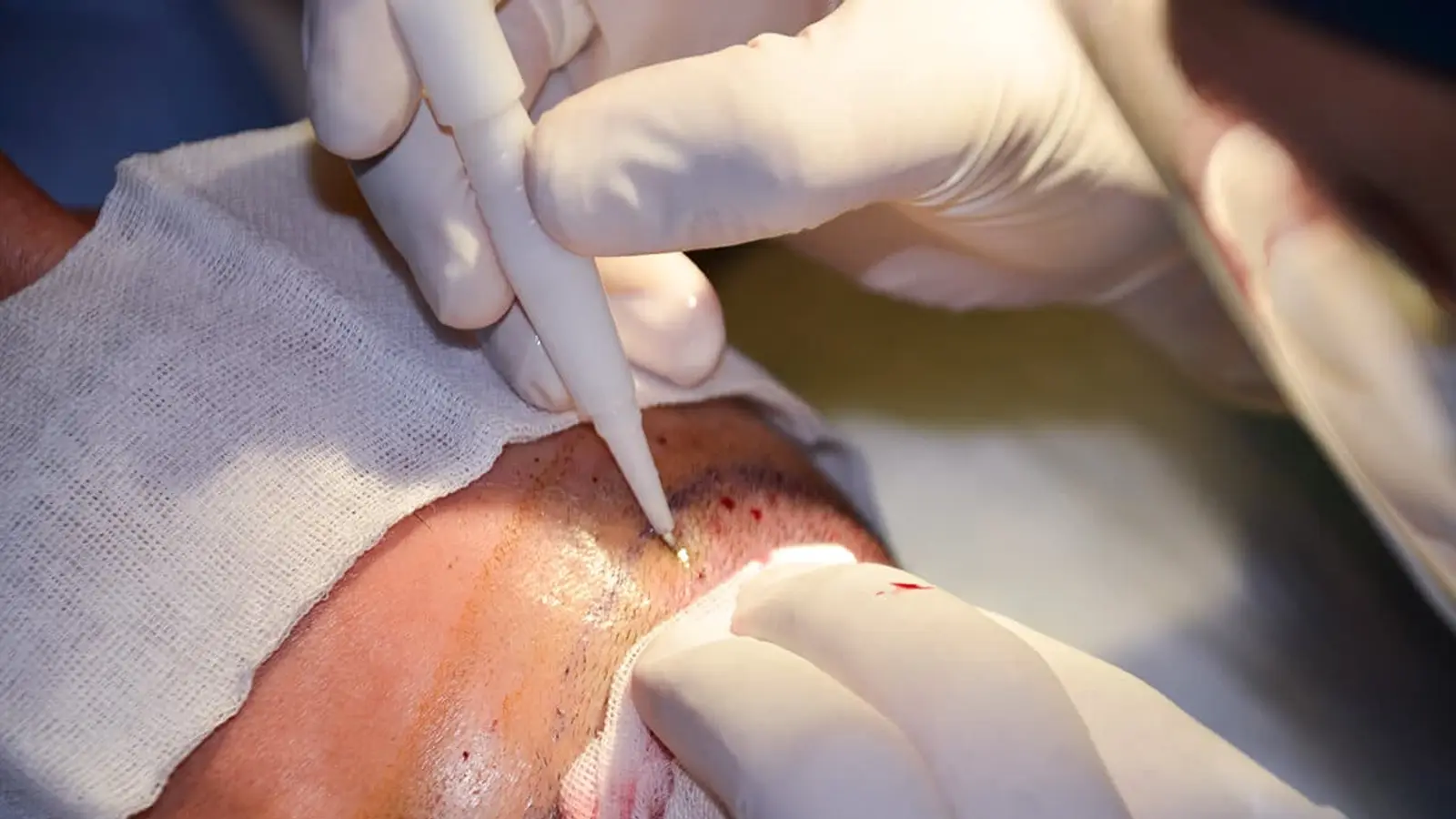
A 2025 review by researchers from a large US medical center examined the hair transplant tourism industry, with Turkey as a case study. According to the review, some centers achieve good results and high graft survival rates, but the industry operates with partial regulation and without uniform reporting of outcomes and complications. The phenomena described include aggressive marketing that plays down risks, an expanded role for technicians without close supervision, promising one surgeon while others actually perform the procedure, and complications that end up in the health system of the patient's home country1. The researchers' conclusion: large price differences may reflect differences in experience, equipment and safety protocols1.
The good news is that most of these risks shrink when you check in advance, and when there is someone at home who follows you before and after the transplant.
Checklist: 10 questions to ask before you fly
- Who is the doctor who will perform the transplant, and what is their training and experience?
- Which steps will technicians perform, and under whose close supervision?
- How many patients does the center operate on per day, and how long will the doctor be in the room?
- Who is responsible for anesthesia and safety during the procedure, and what happens in an emergency?
- How many grafts are planned, and why? How does that affect the donor area for the future?
- What will the hairline look like in 20 years, if balding continues around it?
- Did the center ask about medications, underlying conditions and blood tests before setting a date?
- What exactly is included in the price, and what costs extra?
- What are the instructions for the first two weeks, and who is available for questions after you return?
- Who will examine you in person at home if pain, infection or an unexpected result occurs?
If the center did not ask you a single question about your health and your medications before setting a date, that is a sign to stop and find out more. An international consensus of 38 hair transplant surgeons states that underlying conditions should be assessed and a personal plan built before the transplant, and that certain medications that increase bleeding should be stopped in advance2.
A transplant in Georgia, Greece or Cyprus: what is different?
The destination matters less than it seems. What counts is who performs the transplant and how it is planned. Besides Turkey, some Israelis look into a transplant in Georgia, Greece or Cyprus, mainly because of the short flight and the price. The same checklist above applies to every country, and there are a few points worth paying special attention to:
- Georgia. A destination that has grown in recent years, with clinics in Tbilisi and Batumi. Check who the doctor responsible for the surgery is, what their license number is and who issued it, and ask explicitly which steps they perform themselves and which are done by technicians. The International Society of Hair Restoration Surgery warns against transplants performed by unlicensed staff, in any country (ISHRS).
- Greece and Cyprus. EU member states, but EU membership does not mean every clinic operates at the same level. Ask the same questions: who the doctor is, what the license is, how many transplants per day, and what the follow-up plan is.
- Documentation in a language you understand. Ask for a surgical report in English: number of grafts, areas, technique and medications given. Without such a report, it is hard for a doctor at home to help if needed.
- Follow-up after you return. In most cases people do not go back for a check-up at the clinic abroad. It is worth arranging in advance who will examine you at home in the weeks and months after the transplant.
At Dr. Dana Buchbut's clinic in Tel Aviv you can have an examination before you travel, to find out whether your stage and donor area are suitable for a transplant, as well as follow-up and supportive treatment after you return, regardless of the country where the transplant was done. A detailed comparison is on the transplant in Turkey or in Israel page.
Before the flight: preparing your hair and scalp
Preparation starts months before the transplant, and it is easy to do at home.
- Accurate diagnosis: a computerized trichoscopic examination shows the stage of balding, how many active follicles there are, and the condition of the donor area. It also rules out conditions in which a transplant is not suitable, such as active scarring alopecia.
- Appropriate medical treatment: the consensus of hair transplant surgeons recommends that patients receive appropriate medical treatment for balding before the transplant2. Finasteride and minoxidil protect the original hair.
- A calm scalp: dandruff, seborrheic dermatitis or psoriasis are best calmed before the procedure. You do not need a perfect scalp, you need a calm one.
- Baseline photos: well-organized photos before the transplant make it possible to compare the result accurately.

After you return: how to protect the result
The grafts taken from the back of the head are resistant, but the original hair around them remains sensitive to the hereditary process. This is the stage where treatment close to home makes the difference:
- Medication: in a controlled trial, men who took finasteride around the transplant showed more hair and greater density around the transplanted area; 94% of them showed a visible increase in hair, compared with 67% in the placebo group3.
- PRP: a systematic review of three controlled studies found improvement when PRP was added to the transplant4, and a comparative study found that combining PRP with medication improved follicle survival, growth rate and hair strength5.
- Follow-up: the consensus recommends close follow-up in the first year2. At follow-up visits we check graft survival, the scalp and the original hair, and adjust the treatment.

And what if it is still too early for a transplant?
In young men, the right first step is often to stabilize. A hairline designed at 25 may look unnatural at 45 if balding continues around it, and the donor area is a limited resource worth saving for the future. The consensus emphasizes candidate selection and medical treatment before the transplant2. Many men find that early treatment preserves enough hair to postpone the decision, or to reduce the number of grafts they will need. On the decision itself, see hair restoration or transplant.
What is normal after you return, and when should you get checked?
Swelling, scabs and temporary shedding in the first weeks are a normal part of healing. The grafts often shed after a few weeks and the hair starts to regrow later, and original hair around the area may also shed temporarily. See shock loss and after a hair transplant.
Signs that call for a prompt examination at home: worsening pain, spreading redness, fever, pus, scabs that remain for more than two weeks, or a spot in the donor area that does not heal.
How is it done at Dr. Dana's clinic?
With Dr. Dana Buchbut, a physician who has worked in hair medicine for 16 years and has followed many patients before and after transplants, the care starts with a computerized trichoscopic diagnosis and a plan to protect the original hair, and continues after you return with follow-up, medical treatment and PRP as needed. When necessary, she also refers you to a suitable surgeon. That way, even if the transplant itself takes place far from home, professional care before and after it stays close.
Frequently asked questions
Is a hair transplant in Turkey safe?
Some centers achieve good results and high graft survival rates. A 2025 review also describes risks: partial regulatory oversight, use of technicians without close supervision, marketing that plays down risks, and promises that are not kept. The differences between centers are large, so checking in advance is what matters most.
What is most important to ask before choosing a center?
Who is the doctor who will actually perform the procedure, which steps technicians will perform and under whose supervision, who is responsible for anesthesia and safety, how many grafts are planned and why, what is included in the price, and who will follow you up after you return home, including when a problem arises.
Why do I need medical treatment if I am having a transplant?
Because a transplant moves hair, but it does not stop balding in the original hair around it. In a controlled trial, men who took finasteride around the transplant showed more hair and density around the transplanted area compared with placebo. A consensus of hair transplant surgeons also recommends that patients receive appropriate medical treatment before the transplant.
Does PRP help after a transplant?
A systematic review of three controlled studies found improvement when PRP was added to the transplant, and a comparative study found that combining PRP with medication improved follicle survival and growth rate. Protocols differ between studies, so the timing is set individually.
I am 24 with a receding hairline. Should I fly abroad for a transplant?
At a young age it is better to first stabilize the balding with medical treatment and see where it is heading. A hairline designed for age 25 may look unnatural at 45 if balding continues around it, and the donor area is a limited resource. Many young men find that early treatment preserves enough hair to postpone the decision.
I came back from my transplant and something does not look right. What should I do?
Swelling, scabs and temporary shedding of the grafts in the first weeks are a normal part of healing. Worsening pain, spreading redness, fever, pus or scabs that remain for more than two weeks are a reason to get checked quickly, at home, and not to wait for a WhatsApp reply from abroad.
Hair transplant
Who it suits, how it is done and what to expect at each stage.
Read moreAfter a hair transplant
The first days, and protecting the result for years.
Read moreShock loss
Temporary shedding after a transplant, and when the hair comes back.
Read moreHair restoration or transplant?
How to decide based on your stage, age and donor area.
Read moreFinasteride
Protecting the original hair before and after the transplant.
Read morePRP for hair
A complementary treatment that supports graft survival and growth.
Read moreHow to choose a doctor for hair loss: 7 questions
Read moreHair transplant complications: what is common, what is rare and when to see a doctor
Complications of FUE hair transplants
Read moreA second hair transplant: when to wait, when to go again and who it suits
Read morePRP after a hair transplant
What studies found, when to start after the transplant, and activated plasma (MCT) to protect the grafts.
Read moreHair transplant in Tel Aviv
Examination, FUE or DHI planning, transplant day and follow-up at the clinic in Ramat HaHayal.
Read moreThe information on this page is general educational information only and is not a substitute for an examination, diagnosis or personal medical advice. A decision on treatment is made only after an examination.