

In short
- A series of several injections is usually needed, not a single one. The usual interval is a few weeks; a UK hospital leaflet gives 6 to 8 weeks4.
- The effect is cumulative: the keloid gradually softens and flattens, and itching and pain often ease after the first few injections14.
- The main side effects are local: a dent in the skin, lightening of the skin color and small blood vessels. Most fade slowly27.
- A keloid can come back even after a good response, so follow-up and prevention continue18.
- When the keloid responds only partially, another treatment is added, mainly 5-FU in the same injection56.
What is a Kenalog injection, and why is it injected into a keloid?
Kenalog is a brand name for triamcinolone acetonide, a steroid injected directly into the keloid tissue to calm the inflammation and the excess collagen production that make it grow. The American Academy of Dermatology notes that steroid injections shrink keloids, soften them and ease itching and pain, and that in most cases several injections are needed1.
Steroid injections into a scar are also used for a hypertrophic scar, but for keloids they are the most common and longest-established treatment, and are almost always given as a series rather than a single injection.
The steroid is injected into the keloid itself, not into the healthy skin around it. This is the difference between a treatment that flattens the scar and a dent in the surrounding skin: precise injection into the hard tissue is a central part of the technique3. For all types of scar injections, including 5-FU and botulinum toxin, see scar injections.
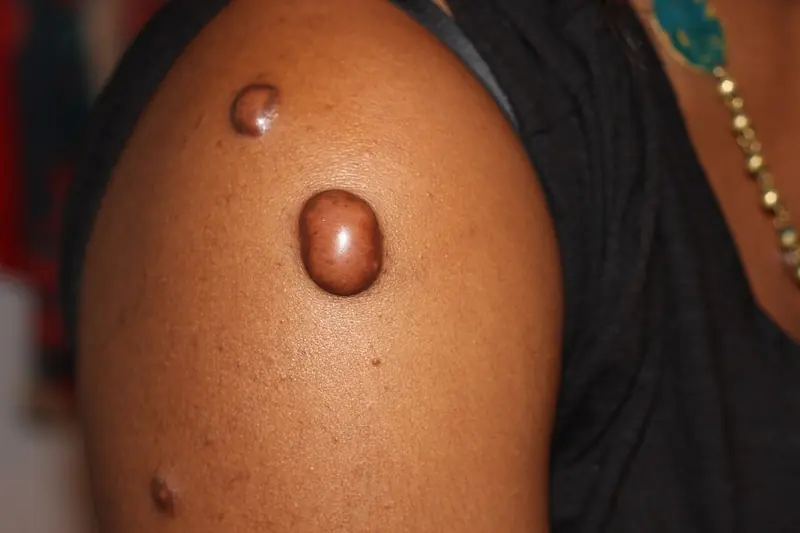
How many injections does a keloid need?
There is no fixed number in advance. Most people need a series of several injections, and treatment continues as long as the keloid keeps flattening and there are no side effects that require stopping. A review of triamcinolone for keloids describes series of repeated injections, with the number depending on the keloid's size, its location and the response3.
What affects the number of injections:
- Size and thickness: a small, relatively flat keloid usually responds faster than a thick, large one.
- Age of the keloid: a new, active keloid usually responds better than an old, very hard one.
- Location: on the chest and shoulders, where the skin is constantly stretched, keloids tend to be more stubborn. See keloids on the chest and shoulders.
- Response to the previous injection: this is the most important factor, and it is assessed at every visit35.
How often are the injections given?
The usual interval is a few weeks between injections. In a UK hospital patient leaflet the interval is usually 6 to 8 weeks, and the effect is described as cumulative. This is the time the tissue needs to respond, and it also allows checking whether side effects have started before injecting again4.
Injecting too early, or too large an amount each time, increases the risk of a dent and lightening of the skin. So as the keloid flattens, the amount is usually reduced, and the intervals can be lengthened3.
How do you know the treatment is working?
The first signs are usually softening of the keloid and relief of itching and pain, followed by gradual flattening of the keloid. The change in color is slower, and sometimes redness or darkening remains long after the keloid is already flat12.
| What is checked at each visit | What it means |
|---|---|
| The keloid feels softer | The tissue is responding; continue according to the plan |
| The height has decreased | A good response; sometimes the amount is reduced or the interval lengthened |
| No change after several injections | Consider combining with 5-FU or another treatment56 |
| A dent, lightening or blood vessels at the edges | Stop or reduce, and give the skin time to recover27 |
The British Association of Dermatologists stresses that the goal is to improve the keloid and the symptoms, and that even after good treatment it can come back8.
Side effects of Kenalog injections in a keloid
Most side effects are local: a dent in the skin or the fat beneath it, lightening of the skin color, small blood vessels (telangiectasias) and sometimes pain during the injection. DermNet lists the dent and the color change as the recognized side effects of steroid injections into a scar2.
- Dent (atrophy): usually appears two to three months after the injection, and tends to improve slowly over one to two years7. Full information on the page skin dent after a steroid injection.
- Lightening of color: more noticeable in darker skin, and usually fades within weeks to months7.
- Small blood vessels on the surface of the scar or at its edges.
- Pain: the keloid is hard, and injecting into it is unpleasant. Cooling or a numbing cream before treatment helps some people4.
- Infection: rare.
Effects on the whole body are uncommon with keloid injections, because the amount is small. If you have diabetes, mention it before the injection and monitor your blood sugar in the days afterward. Steroids are not injected into scars during pregnancy5.
What is done when the keloid does not respond to the injections?
When the keloid responds only partially or stops improving, the steroid dose is not simply increased; another treatment is added, mainly 5-FU in the same injection. A 2026 network meta-analysis that included 24 controlled trials found that combining triamcinolone with 5-FU gave the best balance between treatment response and reduced recurrence6.
Ogawa's updated algorithm proposes a stepwise approach: start with the simple treatment and add combinations according to the response, including cryotherapy, vascular laser, and for a large, resistant keloid also surgery with radiation5. Details on the combination on the page 5-FU and Kenalog for keloids.
How is recurrence prevented after a series of injections?
After the keloid has flattened, follow-up, silicone and avoiding irritation continue, because a keloid can come back even after a good response. The American Academy of Dermatology notes that keloids often come back, and that home treatment such as silicone can be added to reduce the risk1.
- Silicone as a sheet or gel, every day, for months.
- Pressure, mainly on the ear, with a pressure earring after treatment.
- A follow-up visit every few months in the first one to two years, to catch recurrence early and inject again while it is small.
- Avoiding new injuries in the area, including piercings and tattoos, if you are prone to keloids.
When should you come in for an examination?
It is worth coming in for an examination when a scar starts to grow beyond the borders of the wound, when it itches or hurts, or when a treated keloid starts to come back. Treating a small, new keloid is simpler than treating a large, old one1.
A lesion that grows very fast, bleeds, opens up, or does not look like a typical keloid needs evaluation and sometimes a biopsy, because some rare skin tumors look like a scar at first2. On the difference between a keloid and an ordinary raised scar, see hypertrophic scar.
How is it done at Dr. Dana Buchbut's clinic?
Dr. Dana Buchbut, physician (M.D.), examines the scar and gives the injections herself: she distinguishes between a keloid and a hypertrophic scar, assesses size, location and age, and builds a plan that assumes from the start that the keloid can come back.
The injections are given into the keloid tissue, in an amount set according to its size and the response since the previous visit, and the surrounding skin is checked at every visit. When the keloid responds only partially, Dr. Dana considers combining 5-FU with the steroid, after explaining that this is an off-label use. Between injections she gives instructions on silicone and pressure, and after the series is completed a follow-up visit is scheduled. A lesion that looks unusual is referred for evaluation first. General information on keloids on the page keloid scar.
Frequently asked questions
How many Kenalog injections does a keloid need?
There is no fixed number. Most people need a series of several injections a few weeks apart, continuing as long as the keloid keeps flattening and there are no side effects that require stopping. A large, old or chest keloid usually needs more treatments.
How often are steroids injected into a keloid?
Usually every few weeks. In a UK hospital patient leaflet the usual interval is 6 to 8 weeks. The interval is set according to the response and the condition of the surrounding skin.
How long until improvement is seen after a steroid injection into a keloid?
The first signs are softening of the keloid and relief of itching and pain, and they are often felt after the first few injections. Flattening is gradual and cumulative, and the change in color is slower.
Does a Kenalog injection into a keloid hurt?
Injecting into hard tissue is unpleasant, and in a very hard keloid it can hurt for a few hours afterward. Cooling before the injection, or a numbing cream applied in advance, helps some people.
I got a dent after a steroid injection into a keloid. Will it go away?
In most cases a dent after a steroid injection improves gradually over one to two years. It is worth coming back for an examination: injections to the area are usually stopped or reduced, and there are also treatments for a dent that does not go away.
The keloid came back after the injections. What now?
Recurrence is common with keloids. It is worth coming back for an examination early, while the recurrence is still small. Usually the area is injected again, often combined with 5-FU or another treatment, with silicone and pressure added for prevention.
Can I have a steroid injection into a keloid during pregnancy?
No. Steroids are not injected into scars during pregnancy, and keloids can also get worse during this period. Treatment is planned after the birth, and questions about breastfeeding are answered individually at the examination.
Keloid scar
What a keloid is, why it comes back and which treatments exist.
Read more5-FU and Kenalog for keloids
When 5-FU is combined with the steroid and what is important to know.
Read moreDent after a steroid injection
Why a dent or a light patch forms and what can be done.
Read moreScar injections
Steroids, 5-FU and botulinum toxin: a comparison of the agents.
Read moreEar keloid
Keloid after an ear piercing: treatment and preventing recurrence.
Read moreSilicone for scars
How silicone is used to prevent recurrence.
Read moreKeloid cryotherapy with liquid nitrogen
How freezing works, why it is combined with Kenalog injections and who it suits.
Read moreSurgical keloid removal
Why excision alone comes back, which treatments are added after it, the earlobe and the follow-up schedule.
Read moreThe information on this page is general educational information only and is not a substitute for an examination, diagnosis or personal medical advice. A decision about treatment is made only after an examination.