

In short
- A wart is caused by a virus (HPV) that enters the outer layer of the skin, and it is benign and not dangerous1.
- Many warts go away on their own: in children, on average half within a year and two thirds within two years23.
- Contagious through skin-to-skin contact and shared surfaces, especially when the skin is wet or damaged41.
- First-line treatment: salicylic acid or liquid nitrogen cryotherapy. Both have imperfect evidence, and they are the treatments with the main research support25.
- Get it examined promptly: a wart that is very painful, bleeds, changes shape, occurs in someone immunocompromised, is on the face, or has not responded for years in an adult61.
- All wart treatments at the clinic are performed by Dr. Dana Buchbut herself, a physician (M.D.).
What is a wart and what causes it?
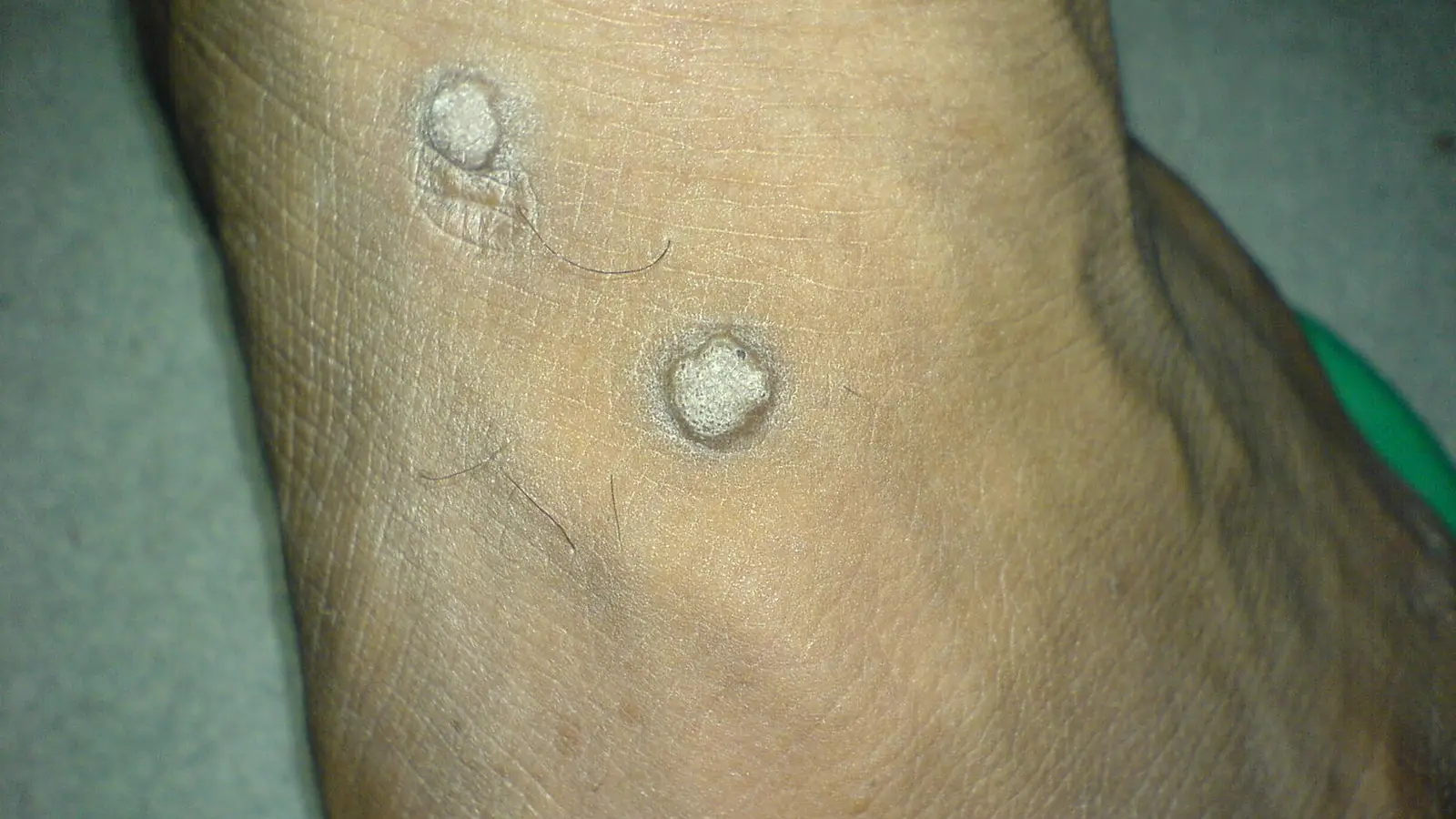
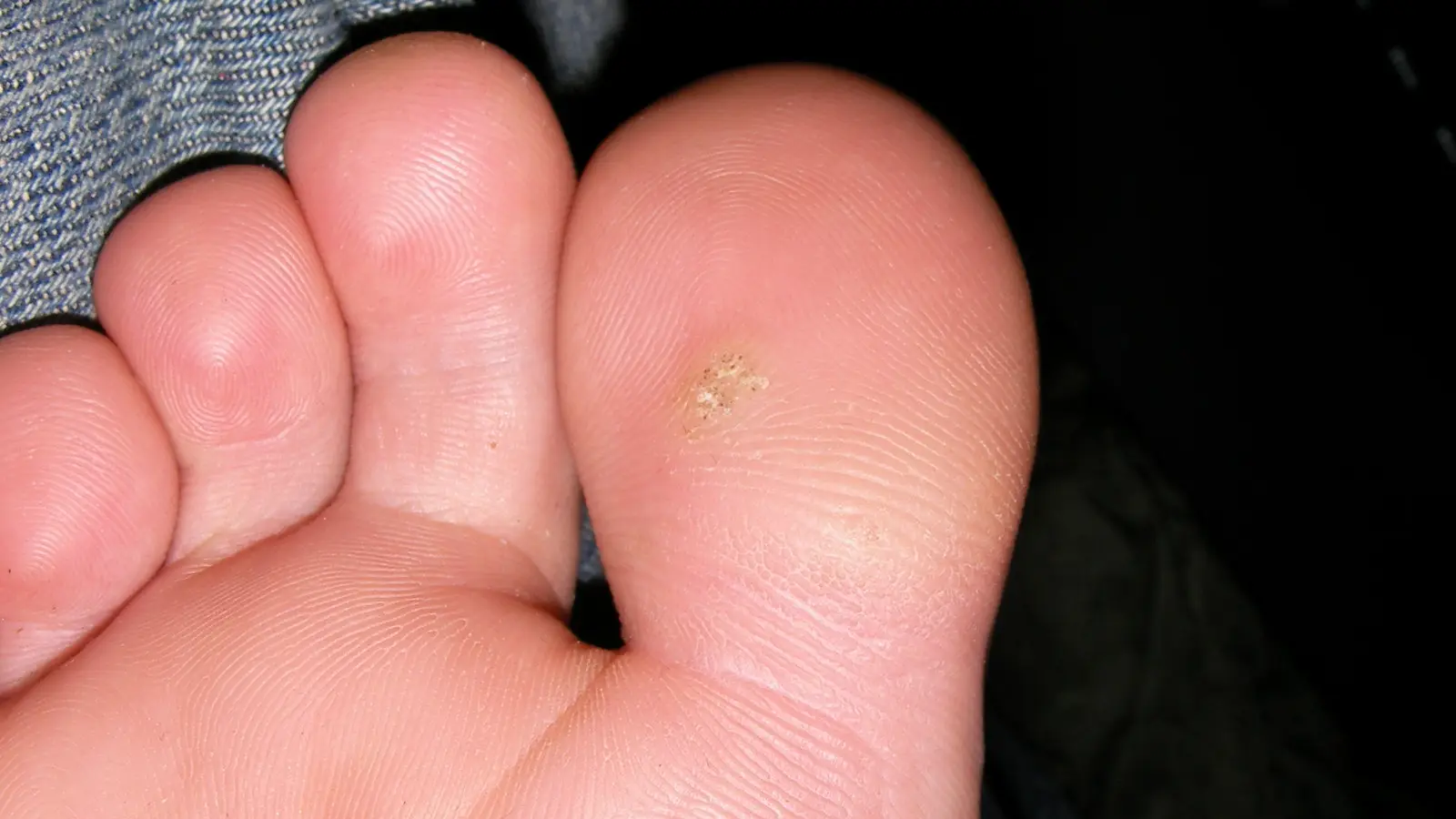
A wart is a benign skin growth that forms as a result of infection with the human papillomavirus (HPV) in the outer layer of the skin, and it is not cancerous. There are more than 100 different types of HPV, and only a small number of them cause skin warts417. A wart usually looks like a hard, rough bump, most often on the hands or the soles of the feet; it is somewhat contagious and often disappears on its own.
The small black dots sometimes seen inside a wart are not dirt and not a "root": they are tiny blood vessels with clotted blood inside, and they are a useful sign for identification71. It is also important to know that warts are not caused by poor hygiene, and there is no reason at all to be embarrassed by them: they are simply a very common viral infection4. A wart on the sole of the foot, for example, is not hereditary, even if it sometimes seems to "run in the family"1.
What types of warts are there, and how do I know which one I have?
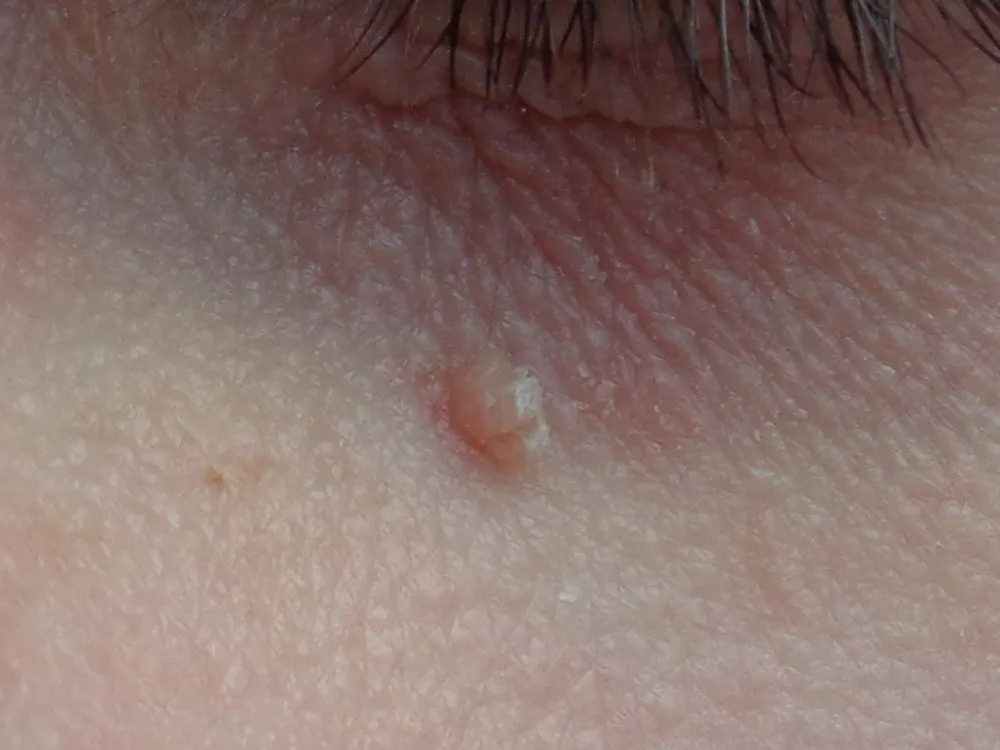
Viral warts appear in several main forms: the common wart (usually on the hands), the plantar wart (verruca), the flat wart, the filiform wart (elongated, mainly on the face) and the periungual wart, next to the nail. Each looks a little different, but they are all caused by the same type of virus41.
It is also important to know what is not a viral wart, because in Hebrew the word "yabelet" (wart) is used for several completely different things:
- A corn (sometimes called a "nail wart" or "root wart" in Hebrew): a thickening of the skin caused by repeated pressure and friction, usually on the foot, and not a viral infection. Its location, appearance and treatment differ from those of a viral wart, and it can be hard to tell them apart with an untrained eye; a doctor can help with the diagnosis1. The differences are detailed on the page viral wart or corn.
- Skin tag (a "flesh wart" in Hebrew): a small, soft lump, usually on the neck or in the armpits, which is also unrelated to the wart virus.
- Molluscum contagiosum: caused by an entirely different skin virus, not HPV, and a separate topic with its own treatment.
The medical differential diagnosis of a lesion that looks like a wart also includes other skin conditions, including lesions that need attention, so when in doubt it is worth getting it examined8.
Are warts contagious, and how do you catch them?
Yes, warts are contagious, but not very easily. The virus spreads through direct skin-to-skin contact, and also through shared objects and surfaces, for example around swimming pools and in public showers, especially when the skin is wet, cracked or damaged419.
Not everyone exposed to the virus develops a wart, and it is not always clear why it happens in one person and not in another471. The time between infection and the appearance of the wart can be months, on average about 2 to 67. Nail biting and picking the skin around the nails spread warts to that area7, and a wart can also be transferred from one part of the body to another by scratching, picking or shaving over it19.
A study of 1,099 elementary school children in the Netherlands found that about a third of them had warts on their hands or feet3. In children, the main risk factors for new warts are family members with warts and a high rate of warts in the classroom10.
Does a wart go away on its own, and how long does it take?
Yes, in most cases, but it takes time and varies greatly between people. In children, about half recover within a year and roughly two thirds within two years2. In adults the process can be much slower, and persistence for 5 to 10 years is not unusual2.
A follow-up study of school children found a complete clearance rate of about 52 per 100 person-years, meaning that roughly half of the children with warts will be free of warts within a year, and younger age was associated with a higher chance of clearance3. For plantar warts, up to about 65% clear on their own within two years of appearing1. A wart that clears on its own usually leaves no mark1.
The HPV type also affects how quickly a wart disappears, but there is no routine test that identifies the type, and there is no need for one to make a decision11.
When should you treat, and when can you wait?
Waiting is a legitimate choice, not neglect. The guideline of the British Association of Dermatologists for children (see also warts in children) states explicitly that it is often possible not to treat and to wait for the wart to go away on its own4. Plantar warts that cause no pain or symptoms are also usually best left alone1.
In healthy people, not treating is an accepted option, and no treatment can promise a cure; the chance is higher in young people with a relatively new wart21. In people with a weakened immune system, treatment does not always bring a complete cure, but it can reduce the warts and the functional or cosmetic problem they cause2.
Common reasons to choose treatment are pain (especially on the sole of the foot), embarrassment, a wart that catches on clothing or shoes, and spread to additional warts413.
What treatments are there, and how well proven is each one?
There is no one treatment that suits everyone, and all treatments have only partial evidence. The table summarizes what is currently known, from the established treatments to the emerging ones (full details on the page wart removal treatments):
| Treatment | How well proven it is | What to know |
|---|---|---|
| Salicylic acid | First line, consistent evidence25 | A review of about 8,800 participants: more effective than placebo, with a greater effect on the hands than on the soles of the feet5. Daily use, usually for 3–4 months2 |
| Liquid nitrogen freezing (cryotherapy) | First line, effectiveness varies by location25 | Two large trials on the sole of the foot found no clear advantage over salicylic acid or over waiting alone; for warts on the hand it showed a more marked advantage1213 |
| Combining salicylic acid and cryotherapy | Better than salicylic acid alone5 | A reasonable option when a single treatment was not enough |
| Duct tape (silver tape) | Conflicting evidence51 | One trial showed a large advantage; two larger trials found no difference from placebo141516. Inexpensive and relatively safe |
| Immunotherapy (for example diphencyprone, Candida antigen) | Second line, reasonable for stubborn warts21718 | Requires several treatments over months; side effects are usually mild (irritation, blisters) |
| Bleomycin injection | Second line, mixed evidence2519 | Painful; usually reserved for stubborn warts that have not responded to first-line treatment |
| Cantharidin (usually in combination) | Emerging, mainly in combinations22021 | Most studies are uncontrolled; side effects include pain and blisters |
| Laser (for example pulsed dye) | Second line, not shown to be superior to other treatments222 | Considered mainly when other treatments have failed; ablative laser can leave a painful scar |
| Microwave | Emerging, early evidence2324 | A relatively new treatment, still with few controlled trials |
| Curettage, cautery or surgical excision | Usually not first line612 | Risk of scarring, and on a weight-bearing area (such as the sole of the foot) the scar can be painful for a long time; the wart can recur within the scar itself |
| HPV vaccine | Not proven as a treatment for skin warts | Intended mainly to prevent genital warts and cervical cancer, not to treat existing skin warts2526827 |
All destructive treatments (cryotherapy, laser, curettage, excision) have possible side effects: pain, blisters, temporary or permanent change in skin color, and in some cases a scar516. The choice between treatments depends on the wart's location, age, the number of warts and what has already been tried.
Can I treat a wart myself at home? How do I do it properly?
Yes, self-treatment with salicylic acid is usually the reasonable starting point, as long as you follow the instructions. Before applying it, soak the area in warm water and gently file down the thick layer of skin with an emery board or pumice stone, then apply the product to the wart only, every day, for at least several weeks and usually several months41.
It is a good idea to protect the surrounding healthy skin (for example with petroleum jelly) and cover with a plaster, and to avoid rubbing the healthy skin41. If the area becomes very painful or irritated, it is better to stop for a few days and then resume1. Pharmacy products are not intended for use on the face9.
What is important to avoid: cutting, scraping or picking a wart with sharp tools at home. This may spread it to other areas or cause an infection179. This is especially important for people with diabetes or reduced sensation in the feet: before any self-treatment, it is advisable to consult a doctor1.
Why did the wart come back, or why won't it go away?
Because no treatment can promise a permanent cure, and a wart that has cleared does not "immunize" you against new warts. In adults, warts can persist for years despite repeated treatments2. The HPV type that caused the wart can also affect how quickly it responds to treatment, which may explain why seemingly similar warts respond differently in different people11.
Recurrence is also common after destructive treatments such as cryotherapy, laser and surgery; sometimes the wart comes back within the scar itself18. When a wart does not respond to first-line treatment (salicylic acid, cryotherapy), the next step is usually to move to second-line treatments such as immunotherapy, bleomycin or cantharidin, under the care of a doctor2.
Who is more prone to warts, and why do they keep coming back in some people?
Warts are more common and more stubborn in people whose immune system is weakened, and there are other groups in whom they recur more often. According to DermNet8:
- Immunosuppression: warts are especially common in people who take immunosuppressive medications long term (for example azathioprine or ciclosporin) and in people living with HIV. In organ transplant recipients they tend to come back after treatment.
- Smoking: warts come back more often in smokers.
- Working in a cold, damp environment: a certain type of HPV causes "butcher's warts" on the hands of people who work with meat or in similar conditions.
Anyone being treated with immunosuppressive medications who develops many or stubborn warts should tell the doctor who prescribes these medications, and not rely on self-treatment alone.
What is different about warts on the face, next to the nail or in sensitive areas?
On the face and in sensitive areas, ordinary pharmacy wart products are not used, and an examination is advisable instead of self-treatment. Over-the-counter salicylic acid products are not intended for use on the face, and a wart on the face is in itself a reason to see a doctor967. For a thin, protruding wart on the nose, eyelid or lip, see filiform wart on the face.
Warts around the nail are relatively hard to treat and tend to come back. Nail biting and picking the skin around the nails are a common way of spreading the virus to this area7. It is also important to know that destructive treatments such as aggressive cryotherapy next to the nail can cause permanent, long-term nail deformity, so special care is needed there in choosing the treatment28. Details on the page warts next to and under the nail.
When is a wart a reason to see a doctor?
Most warts are not an emergency, but there are some signs that should not be ignored. It is worth getting examined when:
- The wart is very painful, bleeds, burns, itches a lot or changes shape7619
- You are not sure it is a wart at all761
- You have treated it and the wart remains or spreads, or there are many warts at once761
- The wart is on the face or in the genital area769
- You have diabetes or reduced sensation in the feet16
- You have a weakened immune system (immunosuppressive medications, a transplant, HIV)716
A clinical guideline states that a biopsy is recommended if a wart grows quickly, looks like an open sore, or does not respond to treatment at all6. The reason is that other lesions, including a rare type of skin tumor on the foot, can look exactly like a stubborn wart for years, and sometimes even give a misleadingly normal first biopsy result293031. This is rare, but it is exactly why a "wart" that has not responded for years in an adult deserves an examination, and not just another round of self-treatment.
What about warts in the genital area?
Warts in the genital area are usually caused by other HPV strains and are transmitted mainly through sexual contact. They are not treated with products intended for skin warts, and the medical recommendation is to see a doctor for examination and appropriate treatment27.
How can new warts be prevented?
Warts cannot be prevented completely, but the risk of infection and spread can be reduced. Some habits supported by medical guidelines:
- Do not touch or pick warts, including your own, and do not bite your nails791
- Use a separate emery board or pumice stone for warts, or disposable tools71
- Do not shave, comb or clip over an area with a wart79
- Do not share towels, shoes or socks791
- Wear flip-flops in public showers and at swimming pools, and cover a wart with a waterproof plaster at the pool19
- Hand moisturizer can help prevent cracks in the skin, through which the virus enters more easily7
In children, transmission is linked mainly to family members and the classroom, so habits like these at home and in kindergarten make a real difference10.
Whether you choose to wait or to treat, a short examination gives certainty and points to the right path for you.
What does a wart consultation with Dr. Dana Buchbut look like?
Dr. Dana examines the wart herself to confirm the diagnosis and rule out other lesions, and builds a plan together with you based on the wart's location, your age and treatments already tried. If a wart hurts, grows or does not respond, that is exactly the time for an examination. On the methods themselves: wart removal and liquid nitrogen cryotherapy.
What is new in research (updated November 2026)
Studies published in 2024–2026 that were not yet covered on this page, in brief. They are presented to reflect the current state of knowledge, not as a promise of results. A decision about treatment is always made after a personal examination.
- Stubborn plantar warts (2025): a multicenter randomized trial from France tested four second-line treatments for plantar warts that had not cleared after salicylic acid: concentrated salicylic acid, liquid nitrogen, 5-FU cream and imiquimod cream. None of them showed a significant effect after 90 days. The finding illustrates why stubborn warts require patience, and sometimes a combination or a change of approach.32
- Cryotherapy versus other treatments (2026): a systematic review of 31 randomized trials on plantar warts found no significant difference in complete clearance or recurrence between liquid nitrogen cryotherapy and other treatments. Cryotherapy was better for partial clearance, especially with two freeze-thaw cycles and treatment every two weeks, while topical treatments caused less redness.33
- Injected immunotherapy (2026): a meta-analysis of 9 randomized trials compared two methods of injection into the wart that recruit the immune system: the MMR vaccine and vitamin D3. MMR showed better complete clearance, and each had a slightly different side-effect profile (redness versus swelling). The researchers call for larger, more standardized studies.34
Frequently asked questions
Is a wart dangerous, or can it turn into cancer?
Viral warts are benign and not cancerous. However, it is sometimes hard to distinguish between a stubborn wart and another lesion, and in very rare cases a skin tumor (such as a rare type of carcinoma on the foot) can look exactly like a stubborn wart for years, and even give a normal biopsy result on a first test. So a wart in an adult that does not respond to treatment, grows or changes shape is worth having examined.
Are warts contagious?
Yes. The virus spreads through direct skin-to-skin contact, and also via shared surfaces such as pool areas and public showers, especially when the skin is wet or damaged. However, not everyone exposed to the virus develops a wart, and it is not clear why it happens in one person and not in another.
How long does it take for a wart to go away on its own?
The time varies greatly. In children, on average half recover within a year and roughly two thirds within two years. In adults warts can last much longer, and even 5 to 10 years is not unusual. For plantar warts, up to about 65% clear on their own within two years.
What are the black dots seen in a wart?
The black dots are tiny blood vessels inside the wart with clotted blood in them, not dirt and not "roots". They are a common and useful sign for identifying a viral wart, especially for distinguishing it from a corn.
Why does a wart hurt?
Plantar warts hurt mainly because they are on a weight-bearing area, so every step presses on them. Warts in other places usually do not hurt unless they crack, become infected or are located in an area that rubs constantly, such as next to a nail.
Can I cut or pick off a wart myself?
It is not recommended. Picking, scraping or shaving over a wart can spread it to other areas of the skin and cause an infection. If you want to treat it at home, it is better to use a product made for this purpose rather than sharp tools.
Does salicylic acid from the pharmacy help?
Yes, it is the treatment with consistent evidence. A review that included about 8,800 participants found that salicylic acid increases the chances of clearance compared with placebo, although the effect is considered modest, and is more marked on the hands than on the soles of the feet. It needs to be used daily, usually for several months, to see a result.
Does duct tape (silver tape) work for warts?
The evidence is conflicting. One trial showed a large advantage for duct tape, but two larger, higher-quality trials found no difference compared with placebo. It is an inexpensive, simple and relatively safe treatment, so it may be worth a try, especially in children, but there is no way to promise that it will work.
Is laser better than other treatments for warts?
It has not been shown to be better than other treatments, and it is usually considered only when first-line treatments have not worked. Ablative (CO2) laser can cause pain and an uncomfortable scar, and the wart may come back within the scar itself. Most studies on lasers for warts are small and uncontrolled.
Can a wart come back after treatment?
Yes, and this is fairly common, with all types of treatment, including after cryotherapy, laser and surgery. No treatment can promise a permanent cure, and even after successful clearance, the wart that cleared does not "immunize" you against new warts elsewhere.
Why do I have so many warts?
Numerous and stubborn warts are more common in people whose immune system is weakened, for example because of immunosuppressive medications, and warts come back more often in smokers. In such cases it is advisable to see a doctor and not rely on self-treatment alone.
Does the HPV vaccine treat skin warts?
No, this has not been proven. The existing vaccines are intended mainly against the strains that cause genital warts, not the strains that mainly cause skin warts, so the rationale for using them for skin warts is unclear. There are reports of using the vaccine for stubborn warts with promising results, but they are based mainly on small case series and not on controlled trials.
Are there "home remedies" that actually work?
Most have no research evidence. Vitamin and zinc supplements have not shown a clear benefit for the warts themselves. Complementary treatments such as hypnosis, homeopathy and acupuncture are mentioned as existing, but without supporting evidence. Fig sap, for example, is not recommended because of a risk of skin inflammation. Salicylic acid, on the other hand, which is also sold over the counter, is supported by research.
When should I give up on another attempt at home and move to professional treatment?
After several consecutive months of self-treatment (usually salicylic acid) without improvement, when the wart is painful or genuinely bothersome, or when there are several warts that are multiplying: these are reasonable signs to move to treatment at the clinic, such as liquid nitrogen cryotherapy, which gives better control than home treatment alone.
Related reading
Plantar wart
How to recognize a plantar wart, why it hurts and what helps.
Read (Hebrew)Warts in children
A guide for parents: wait or treat, and how to do it without pain.
Read (Hebrew)Wart removal methods
A complete review of the treatments and how well proven each one is.
Read (Hebrew)Viral wart or corn?
How to tell a viral wart from a corn, and why it matters.
Read (Hebrew)Freezing warts with liquid nitrogen
How it works, how many treatments are needed and what happens afterward.
Read (Hebrew)"Nail wart" and "root wart"
A "nail wart" or "root wart" on the foot? What lies behind these Hebrew names, how to tell a viral wart from a corn with a core, why there is no "root" to dig out and what does help. With sources.
Read (Hebrew)Flat warts
Flat warts on the face, beard area and hands: why they spread and how to treat them carefully
Read (Hebrew)Molluscum
Molluscum contagiosum: how to recognize it, whether it is contagious and when to treat it
Read (Hebrew)Filiform wart on the face
A thin wart on the nose, eyelid or lip, and how to remove it carefully.
Read (Hebrew)Wart next to the nail
Why a wart around the nail is stubborn and how to treat it without harming the nail.
Read (Hebrew)An inflamed or blackened wart
Expected reaction to treatment or infection: how to tell the difference and what to do.
Read (Hebrew)The information on this page is general and for education only. It does not replace an examination, diagnosis or personal medical advice. A decision about treatment is made only after an examination.