

In short
- What it is: nanofat is the patient's own fat, harvested in a small amount under local anaesthesia, mechanically emulsified and filtered into a fine liquid that can pass through a thin needleTonnard 2013.
- Why for hair: processed fat is rich in cells that release growth factors and anti-inflammatory signals, which may improve the environment around the follicleSadeghi 2024.
- Evidence: in a pilot study of men with androgenetic alopecia, hair count and thickness increased over 12 monthsZhang 2025. Larger trials are still needed.
- Who it suits: mainly pattern hair loss in men and women while active follicles remain, as part of a combined plan.
- In Tel Aviv: Dr. Dana Buchbut (MD) performs the treatment herself at her clinic in Beit HaRofim, HaBarzel 11, Ramat HaHayal, after a computerized trichoscopy with FotoFinder.
What is nanofat for hair?
Nanofat is autologous fat that has been emulsified and filtered. The study that first described the technique found stromal cells in the processed fat, including cells defined as adipose-derived stem cellsTonnard 2013. Unlike classic fat grafting, nanofat is not meant to add volume: it delivers cells and growth factors to the tissue.
How does it support hair follicles?
The cells in processed fat release growth factors and anti-inflammatory substances that support blood supply and the follicle environmentSadeghi 2024. In pattern hair loss, follicles gradually shrink and the growth phase shortens, so the goal is to support follicles that are still alive.
What does the research show?
- Pilot study, men: ten men aged 22-38 received three injections of a nanofat-derived concentrate four weeks apart; hair count and thickness rose over 12 months, with no serious side effectsZhang 2025.
- Cell-enriched fat, 71 patients: no overall difference between groups at 24 weeks, but a significant gain in terminal hair in a subgroup of men with early hair lossKuka 2020.
- With PRP: in one trial, density rose about 52% with SVF-enriched PRP versus about 22% with PRP aloneButt 2020; another randomized trial found no significant differenceBehrangi 2024.
- Systematic review: nine studies of adipose-derived stromal cells all reported increased hair density, with no serious adverse eventsMantovani 2023.
What does the procedure involve?
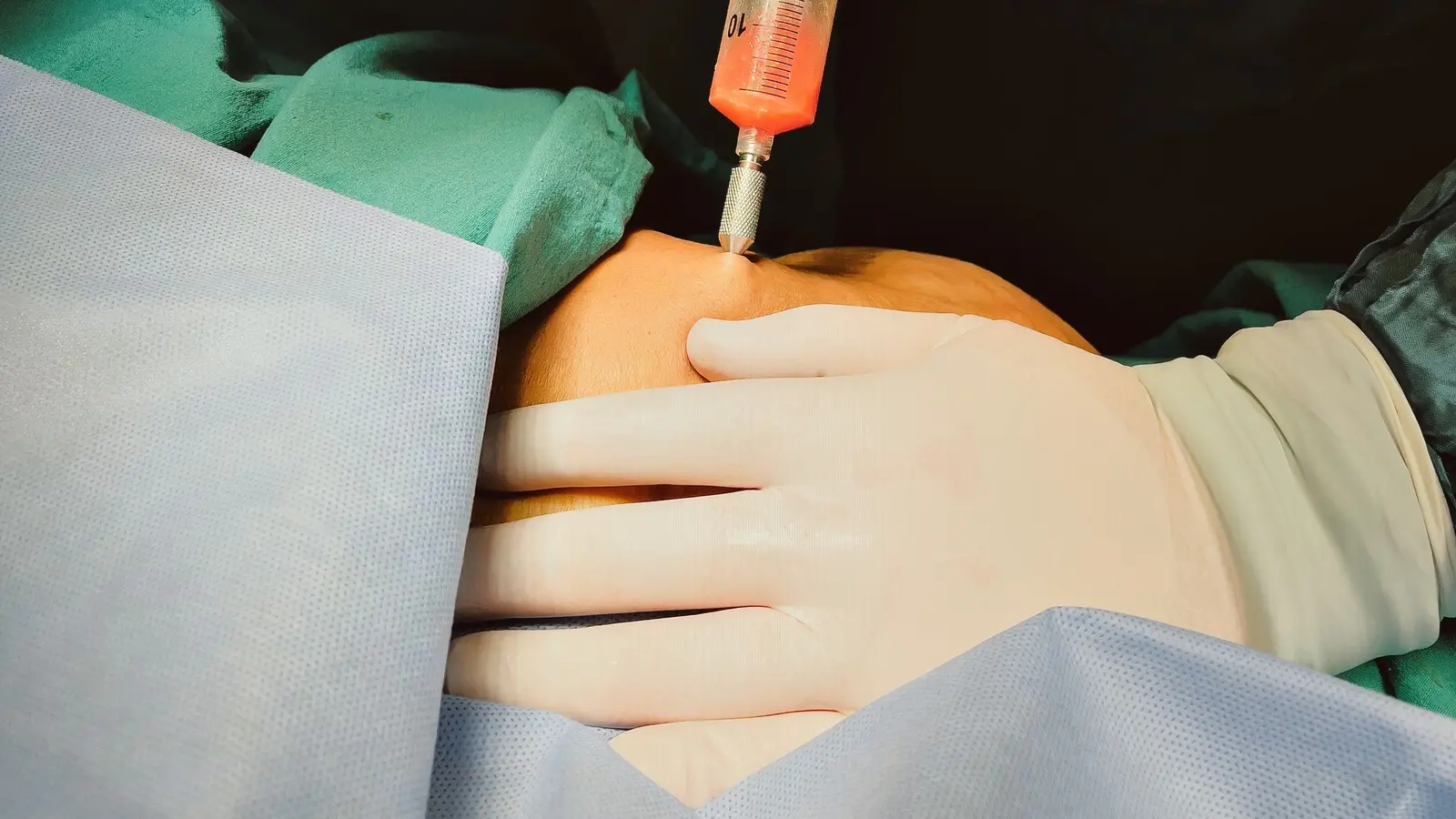
One visit, two steps: a small amount of fat is harvested through a thin cannula, usually from the abdomen or thighs, then emulsified, filtered and injected into the thinning areas of the scalpTonnard 2013. Expect a few days of swelling and tenderness at the harvest site and temporary scalp sensitivity. Nitrous oxide is available at the clinic for comfort, at extra cost.
Nanofat, PRP or Regenera Activa?
PRP comes from your blood and is given as a series; Regenera Activa uses tiny samples of scalp tissue and is usually a single session; nanofat uses fat and is given once or a few times, depending on the protocol. Many patients combine treatments with medication. See Regenera Activa in Tel Aviv and stem cell hair treatment.
Nanofat for hair in Tel Aviv
Dr. Dana Buchbut is a physician (MD, Tel Aviv University; MBA, MIT) practicing hair medicine since 2010, with 18,000 satisfied patients. She performs nanofat, PRP, iPRF, CGF and Regenera Activa herself at her clinic in Ramat HaHayal, Tel Aviv. No referral is needed, and consultations last from 15 minutes to two hours. A personal plan and quote are given after the examination.
Frequently asked questions
Does nanofat work for hair loss?
Early studies are encouraging: a pilot study in men found increased hair count and thickness over 12 months, and a review of adipose-derived cells reported increased density without serious side effects. Trials are still small, so results are not guaranteed.
How many nanofat sessions are needed?
Usually one or a few sessions, depending on the protocol. In the pilot study, patients received three injections four weeks apart.
Is nanofat for hair suitable for women?
It is used for pattern hair loss in both men and women, mainly while active follicles remain. Suitability is assessed with a trichoscopic examination.
Where can I get nanofat for hair in Tel Aviv?
At the clinic of Dr. Dana Buchbut, Beit HaRofim, HaBarzel 11, Ramat HaHayal, Tel Aviv. Dr. Buchbut performs the treatment herself. No referral is needed.
Related reading
The information on this page is general and for education only. It does not replace an examination, diagnosis or personal medical advice. Any decision about treatment is made only after an examination.