

In short
- Postpartum hair loss is temporary shedding of the telogen effluvium type, caused by the drop in estrogen after birth; it is not baldness1.
- It peaks about four months after birth, and most women are back to normal fullness by the baby's first birthday1.
- In some women the shedding unmasks another condition, mainly female pattern hair loss that was already there2.
- Vitamins help only when there is a proven deficiency, and high-dose biotin can distort blood test results34.
- Shedding that lasts more than a year, well-defined bald patches or signs of a thyroid problem are reasons to get checked15.
Why is my hair falling out after giving birth?
Almost every new mother knows the moment: an ordinary brushing, and a whole clump of hair is left in the brush. It is frightening, especially when all your energy goes to the baby. So first, take a breath: in most cases this is temporary shedding, and the hair comes back.
After birth, estrogen levels fall and many hairs move into the shedding phase together. The result is increased, diffuse shedding called telogen effluvium. The American Academy of Dermatology stresses that this is normal and that it is not "hair loss" in the sense of balding, but temporary excess shedding1. It is one of the common types of hair loss in young women, and it is fundamentally different from inherited thinning or scarring hair loss.
To understand why, remember that every hair has a life cycle: a long growth phase, a short transition phase and a resting phase at the end of which the hair falls out. Normally only a small share of hairs is resting, so daily shedding is barely noticeable. Childbirth is one of the well-known triggers of telogen effluvium, an event in which many hairs reach the shedding phase at the same time6. You can think of it this way: the hair falling out now is mostly hair that "waited" during pregnancy. That is also why hair looks especially full in pregnancy for many women, and why those hairs leave together after the birth. The full mechanism is explained on Telogen effluvium.
When does postpartum hair loss start, and how long does it last?
Shedding usually starts about three months after birth, peaks in the fourth or fifth month, and settles gradually by the end of the first year. According to the American Academy of Dermatology, the peak is about four months after birth, and most women are back to normal fullness by the baby's first birthday, many even sooner1.
In a Japanese questionnaire study of 331 women who answered 10 to 18 months after giving birth, shedding began on average 2.9 months after birth, peaked at 5.1 months and ended on average at 8.1 months7.
| Stage | Roughly when | What happens |
|---|---|---|
| Shedding starts | About 3 months after birth | More hair in the shower, on the pillow and in the brush7 |
| Peak | 4 to 5 months after birth | Shedding is most noticeable17 |
| Settling | 6 to 9 months after birth | Shedding eases and short new hairs appear7 |
| Back to fullness | By the baby's first birthday | In most women the hair looks normal again1 |
The pace varies from woman to woman. The short hairs that grow along the front hairline during the settling stage are usually a good sign: they are new hairs in the growth phase.
How common is it, and why is it heavier in some women?
Postpartum shedding is considered very common, but precise data are limited. In the Japanese study, 91.8% of the women who responded reported postpartum hair loss, but only about a fifth of the women who received the questionnaire answered, and the researchers note that women who had experienced shedding may have been more likely to take part7. A 2016 review even argued that the scientific basis for the phenomenon is weaker than commonly thought, because the existing studies found no significant difference in shedding between pregnant and postpartum women8. In practice it is a very familiar complaint in the clinic, and childbirth is included in the accepted lists of triggers6. Shedding during pregnancy itself is covered on Hair loss in pregnancy (Hebrew).
In the Japanese study, longer breastfeeding and preterm birth were associated with reporting postpartum hair loss. Women who breastfed for 6 to 12 months, or more than a year, reported shedding more often than women who stopped in the first six months7. This is a statistical association from a questionnaire study and does not prove that breastfeeding causes hair loss. It is no reason to stop breastfeeding. A very similar picture can follow stopping the contraceptive pill, when the hormonal balance changes all at once (see Hair loss and the pill (Hebrew)). Lack of sleep, stress, an illness with fever or a crash diet can add to it in this period; all are known triggers of telogen effluvium6.
Can postpartum shedding hide another problem?
Yes. In some women, postpartum shedding brings out female pattern hair loss or traction hair loss that was already present. In a study of 200 women evaluated for postpartum hair loss, only 9.5% had telogen effluvium alone. In 56% a female pattern was also found, and in others traction hair loss from tight hairstyles2. These were women who sought an evaluation, so probably more worrying cases than average. Still, the finding explains why some women feel their hair "never fully came back" after the birth. DermNet also notes that telogen effluvium can unmask an inherited tendency that was there anyway6.
If thinning is concentrated along the middle part or at the crown and does not recover after a year, it is worth reading about hair loss in women and considering a magnified scalp examination (trichoscopy).
What is the link with the thyroid?
Postpartum thyroiditis affects about 5% to 10% of women, and its underactive phase usually appears 4 to 8 months after birth, exactly during the shedding period. According to the American Thyroid Association, an overactive phase may come first, 1 to 4 months after birth. Most women return to normal function within 12 to 18 months, but about 20% of those who went through an underactive phase are left with permanent hypothyroidism5. Thyroid disease is a known trigger for shedding in its own right6.
In practice: extreme tiredness, weight gain, constipation, dry skin or low mood alongside the shedding are reasons to check thyroid function. It is easy to put all of this down to "new-mom exhaustion", so do not skip the test. More in Hebrew: Thyroid and hair loss (Hebrew).
Do you need vitamins after giving birth?
A supplement helps mainly when there is a proven deficiency. There is no evidence that "hair" supplements improve shedding when nothing is lacking, and some can even do harm. A review on diet and hair loss recommends first assessing the risk of deficiency from diet, medical history and examination, correcting any deficiency found, and explaining to patients that research on supplements without a deficiency is limited3. The European guideline on inherited hair loss found insufficient evidence for biotin or iron in people without a deficiency9.
Iron is especially worth testing: a meta-analysis by researchers at Ben-Gurion University found lower ferritin levels in women with non-scarring hair loss10. Biotin, on the other hand, is a common ingredient in hair supplements, and the US Food and Drug Administration warns that it can interfere with laboratory tests and lead to wrong results4. If you take such a supplement, mention it before blood tests. Details on each nutrient: Vitamins and deficiencies in hair loss (Hebrew).
What helps postpartum hair loss?
The main step is patience and gentle hair care, because in most cases the shedding passes on its own. The American Academy of Dermatology suggests a few steps that improve how the hair looks in this period1:
- A volumizing shampoo, and a conditioner made for fine hair, mainly on the ends.
- Avoid "intensive" conditioners and heavy products that weigh hair down.
- A shorter haircut can make hair look fuller and easier to manage.
It is also wise to avoid tight ponytails or braids for long periods, aggressive brushing of wet hair and a lot of heat. None of these shortens telogen effluvium itself, but they reduce breakage of existing and new hairs6. Prolonged pulling is also a cause of traction hair loss, which was found in some women examined for postpartum shedding2. Small things help too, as far as possible with a baby at home: enough protein, iron and zinc in your diet, testing iron, ferritin, folic acid and vitamin D (especially if you are tired), and rest and help from those around you when you can get it.
What can be done in the clinic? Evaluation, blood tests and correcting deficiencies can start right away. When the shedding also unmasks inherited thinning, or when you want to help the hair recover, there are scalp treatments such as PRP for women. At the clinic, PRP for hair is given as a series of 5 to 8 treatments, 2 to 4 weeks apart, with a maintenance treatment every 4 months; timing during or after breastfeeding is decided individually.
Medication such as minoxidil is usually not needed for postpartum shedding that resolves as expected. When the shedding reveals inherited thinning, treatment may be considered. During breastfeeding, any medication is considered only with a doctor who knows both your situation and what is known about the drug passing into breast milk.
Emotional strain, new hairline hairs and your baby
Postpartum hair loss is linked to anxiety, so the emotional side deserves attention. In the same Japanese group, women who reported very heavy shedding were about 4.5 times more likely to have anxiety symptoms than women without shedding, even after adjusting for other factors11. This was a cross-sectional study, so it cannot show what caused what. What is clear is that explaining what is happening, how long it is expected to last and which signs need checking can relieve some of the worry12. There is no reason to wait a year or to feel guilty for caring about your hair. If low mood, anxiety or significant sleep problems come with the shedding, tell your doctor or the nurse at your Tipat Halav (well-baby) clinic; those symptoms deserve attention in their own right.
Short, fine hairs along the forehead hairline are usually new growth, a sign of recovery, not a problem. DermNet describes how, during recovery from telogen effluvium, new hairs push the old ones out, and a fine "fringe" of new hair is often seen along the hairline6. Because hair grows slowly, they take several months to blend in with the rest, and meanwhile they tend to stand up. They need no treatment.
Rarely, a shed hair wraps tightly around a baby's finger, toe or another body part (hair tourniquet). Cleveland Clinic describes it as rare, often linked to postpartum shedding, with an average age at diagnosis of about five months. Signs: crying and restlessness that do not settle, and a red, swollen finger or toe, sometimes with a thin groove around it. In that case, see a doctor or go to the emergency room right away. To prevent it, tie your hair back while caring for the baby, brush often so loose hairs do not fall on the baby, check fingers and toes now and then, and avoid mittens and clothes with loose threads13.
When to see a doctor, and how is it done at Dr. Dana Buchbut's clinic?
Get checked if your hair has not returned to its usual fullness after a year, or sooner if there are signs that do not fit ordinary postpartum shedding. The American Academy of Dermatology recommends seeing a dermatologist if hair has not returned to normal fullness after a year, as there may be another cause1. Signs that justify an earlier evaluation:
- Round, well-defined bald patches, which fit alopecia areata better.
- Thinning concentrated along the middle part or at the crown that does not improve.
- A painful, red, itchy or scaly scalp.
- Extreme tiredness, weight change or a fast heartbeat, which can point to a thyroid problem5.
- Shedding that started before the birth, or got much worse without a clear reason.
At the clinic in Beit HaRofim, HaBarzel 11, Ramat HaHayal, Tel Aviv:
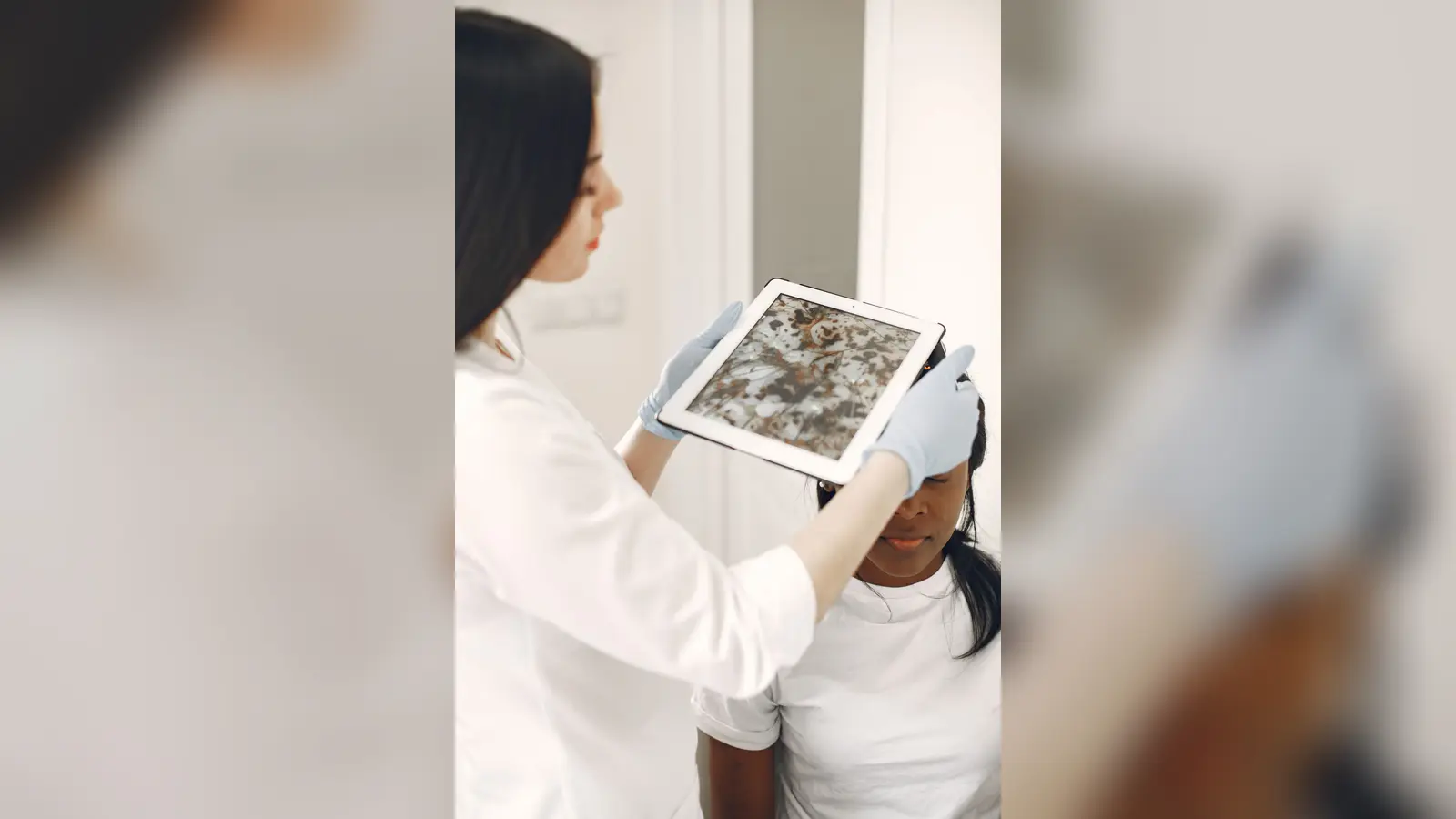
- No referral is needed. The evaluation includes a conversation and a trichoscopy examination with a FotoFinder device, which helps tell temporary shedding from inherited thinning, plus blood tests for iron and thyroid when needed.
- The trichoscopy examination takes one to two hours, and it is recommended to wash your hair beforehand. The consultation takes from 15 minutes to two hours.
- You receive an invoice for private insurance, and the consultation fee is offset against treatment if you go ahead.
Most women who come for an evaluation in this period get a reassuring answer, and those who do need treatment benefit from early detection. More about the clinic: Hair loss doctor in Tel Aviv.
Frequently asked questions
How long does postpartum hair loss last?
According to the American Academy of Dermatology, shedding peaks about four months after birth, and most women are back to normal fullness by the baby's first birthday. In a Japanese study, shedding began on average about three months after birth and ended on average after about eight months.
Is postpartum hair loss the same as balding?
No. Postpartum hair loss is temporary excess shedding of the telogen effluvium type, in which many hairs move into the shedding phase together. The follicles are not destroyed, so the hair grows back.
My hair is falling out in huge amounts. Is that normal?
At the peak, the amount of hair in the shower and brush can be alarming and still be part of the normal process. Less typical are well-defined bald patches, a painful or red scalp, or shedding that has not settled after a year; then it is worth getting checked.
Does breastfeeding cause hair loss?
In a Japanese questionnaire study, longer breastfeeding was associated with reporting postpartum hair loss. This is a statistical association from an observational study, not proof that breastfeeding causes hair loss, and it is no reason to stop breastfeeding.
Which vitamins should I take for postpartum hair loss?
A supplement helps mainly when there is a proven deficiency, such as low iron. There is no evidence that hair supplements improve shedding when nothing is lacking, and high-dose biotin can distort blood tests. It is better to test and correct what is missing.
Can I use minoxidil while breastfeeding?
Any medication during breastfeeding, including minoxidil, should be considered only with a doctor who knows both your situation and what is known about the drug passing into breast milk. In most cases postpartum shedding passes without medication.
What is the link between the thyroid and postpartum hair loss?
Postpartum thyroiditis affects about 5% to 10% of women, and an underactive phase usually appears 4 to 8 months after birth. Extreme tiredness, weight gain, constipation and dry skin alongside the shedding are reasons to test thyroid function.
What are the short hairs growing along my hairline?
They are usually new hairs starting to grow after the shedding. They are a sign of recovery and take several months to reach the length of the rest of your hair.
Can shed hair harm my baby?
Rarely, a hair wraps tightly around a baby's finger or toe. Tie your hair back while caring for the baby and check fingers and toes now and then. If there is crying that will not settle with redness, swelling or a groove around a finger or toe, see a doctor right away.
Sources
- American Academy of Dermatology. Hair loss in new moms: dermatologist tips (updated 2 October 2025). www.aad.org
- Galal SA, El-Sayed SK, Henidy MMH. Postpartum telogen effluvium unmasking additional latent hair loss disorders. J Clin Aesthet Dermatol. 2024;17(5):15-22. (PMID 38779373). pubmed.ncbi.nlm.nih.gov
- Guo EL, Katta R. Diet and hair loss: effects of nutrient deficiency and supplement use. Dermatol Pract Concept. 2017;7(1):1-10. doi:10.5826/dpc.0701a01. doi.org
- U.S. Food and Drug Administration. Biotin interference with troponin lab tests: assays subject to biotin interference (21 June 2022). www.fda.gov
- American Thyroid Association. Postpartum thyroiditis. www.thyroid.org
- DermNet. Telogen effluvium. dermnetnz.org
- Hirose A, Terauchi M, Odai T, et al. Investigation of exacerbating factors for postpartum hair loss: a questionnaire-based cross-sectional study. Int J Womens Dermatol. 2023;9(2):e084. doi:10.1097/JW9.0000000000000084. doi.org
- Mirallas O, Grimalt R. The postpartum telogen effluvium fallacy. Skin Appendage Disord. 2016;1(4):198-201. doi:10.1159/000445385. doi.org
- Blumeyer A, Tosti A, Messenger A, et al. Evidence-based (S3) guideline for the treatment of androgenetic alopecia in women and in men. J Dtsch Dermatol Ges. 2011;9 Suppl 6:S1-57. doi:10.1111/j.1610-0379.2011.07802.x. doi.org
- Treister-Goltzman Y, Yarza S, Peleg R. Iron deficiency and nonscarring alopecia in women: systematic review and meta-analysis. Skin Appendage Disord. 2022;8(2):83-92. doi:10.1159/000519952. doi.org
- Hirose A, Terauchi M, Odai T, et al. Postpartum hair loss is associated with anxiety. J Obstet Gynaecol Res. 2024;50(12):2239-2245. doi:10.1111/jog.16130. doi.org
- Rebora A. Telogen effluvium: a comprehensive review. Clin Cosmet Investig Dermatol. 2019;12:583-590. doi:10.2147/CCID.S200471. doi.org
- Cleveland Clinic. Hair tourniquet syndrome. my.clevelandclinic.org
Related reading
Telogen effluvium
Why many hairs shed at once, and when they grow back.
ReadHair loss in women
Causes, tests and what helps.
ReadTrichoscopy (scalp analysis)
What the magnified scalp examination shows.
ReadPRP for women
How PRP is used for thinning hair in women.
ReadHair loss doctor in Tel Aviv
Diagnosis and treatment at Beit HaRofim, Ramat HaHayal.
ReadHair loss while breastfeeding (Hebrew)
Shedding during and after breastfeeding.
ReadThe information on this page is general and for education only. It does not replace an examination, diagnosis or personal medical advice. Any decision about treatment is made only after an examination.