

In short
- What they are: tiny dome-shaped or thread-like bumps, skin-colored, in rows around the rim of the head of the penis. A normal and common finding1.
- Not an STD: they are not caused by a virus, are not passed to a partner and are not related to genital warts12.
- How to tell them apart: pearly penile papules are uniform, arranged in a row and symmetrical. Warts are usually rough, uneven, and can also appear on the shaft of the penis23.
- Treatment: not required. If you want removal for cosmetic reasons, you can choose methods such as freezing or cautery, after an explanation of the risks45.
- When to get checked: when you are not sure what it is, or when the bumps are new, changing, itchy, painful or bleeding.
- Who performs it: the treatment is performed by Dr. Dana Buchbut herself, physician (M.D.).
What are pearly penile papules?
A row of small, smooth bumps around the rim of the head of the penis. The bumps are very small, skin-colored, whitish or pinkish, and dome-shaped or shaped like a thin thread. They are usually arranged in a ring around the rim (the corona) of the head of the penis, in one row or several rows. They do not cause pain, itching or discharge1.
Pearly penile papules are very common. They usually appear after puberty or in early adulthood, are more common in uncircumcised men, and tend to become less prominent with age12. Medically, they are a normal anatomical variation, like freckles or small moles elsewhere on the body1.
Are pearly penile papules an STD? Are they contagious?
No, and no. Pearly penile papules are not caused by a virus or bacteria, are not transmitted through sexual contact, and are not related to cleanliness or to sexual activity. They are also not an early stage of cancer1. A review of the diagnosis and treatment of PPP emphasizes that they have no connection to sexually transmitted diseases, and that the distress they cause comes mainly from their resemblance to genital warts2.
That is also why it is worth having a doctor examine you once and confirm the diagnosis. The diagnosis is usually made by looking and by examination under magnification, without further tests1. Once the diagnosis is clear, you can stop worrying and decide calmly whether you want to do anything about the appearance.
How do you tell pearly penile papules from genital warts?
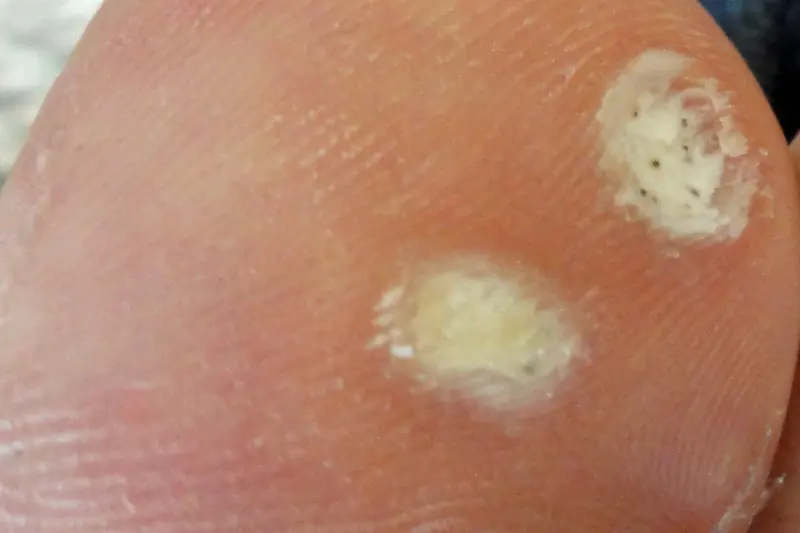
By location, arrangement and texture. Pearly penile papules are uniform in size, arranged in rows around the rim of the head of the penis, and symmetrical on both sides. Genital warts are caused by a virus (HPV), and the NHS describes them as small, rough lumps that can appear on their own or in groups that look like a cauliflower, in different shades, anywhere in the genital area32.
| Finding | What it looks like | Where | Contagious? |
|---|---|---|---|
| Pearly penile papules | Tiny, smooth, uniform skin-colored bumps in rows | Around the rim of the head of the penis | No1 |
| Genital warts | Rough, uneven lumps, single or cauliflower-shaped | Anywhere in the area: the head and shaft of the penis, the scrotum, around the anus | Yes, through sexual contact3 |
| Fordyce spots | Small yellowish or white spots, flat or slightly raised | The shaft and head of the penis, and also on the lips | No6 |
| Molluscum | Smooth bumps with a small dimple in the center | Anywhere on the skin, including the genital area | Yes7 |
The table helps you understand, but it is not a substitute for an examination. When in doubt, a doctor can distinguish between these conditions at an examination and, if needed, refer you for STD testing3.
When should you see a doctor?
Whenever you are not sure, and whenever something changes. Pearly penile papules do not change much over time. It is worth getting checked when:
- The bumps appeared recently, especially after a new sexual relationship.
- They are rough, of different sizes, or are also found on or around the shaft of the penis.
- There is itching, pain, burning, bleeding or discharge.
- There is an open sore that does not heal.
- The worry itself is affecting your daily life or your relationships.
The NHS recommends going to a sexual health clinic when lumps or growths appear in the genital area and it is not clear what they are3. If the examination shows it is something other than pearly penile papules, you will be referred for the appropriate treatment.
Do pearly penile papules need to be removed?
Not medically. The reviews describe reassurance and explanation as the first step: once it is clear that this is a normal finding, most men do not ask for treatment41. Even so, for some men the appearance causes embarrassment, worry about a new relationship or real distress. A 2020 review notes that the appearance can be very bothersome both to the patient and to his partner, and so there is room to consider removal for cosmetic reasons4.
The decision is entirely personal. Before deciding, it is worth knowing that this is a cosmetic treatment, that it has possible side effects, and that the bumps sometimes partially come back21.
What removal methods are there?
Local removal of the bumps, under local anesthesia. A 2025 systematic review collected all the publications on the treatment of pearly penile papules. All of them were case reports or case series, and no controlled trials were found. The methods described were ablative laser (mainly CO2), freezing with liquid nitrogen, and electrocautery, alone or combined with an acid. In most reports no infections or scars were reported, but the researchers note that the evidence is limited5.
- Freezing with liquid nitrogen: local cooling of the bumps. One review described freezing and laser as two accepted options, with a low recurrence rate2.
- Electrocautery: removal of each bump with a fine cautery device4. About the method itself, see electrocautery for lesion removal.
- Ablative laser: described in the literature as the method studied more than the others45.
DermNet points out that any method that destroys the bumps can leave a scar, so it is important to treat gently and at the right depth1. The appropriate method is chosen after an examination, according to the number of bumps, their size and the area.
What happens after removal?
A few days of sensitivity, then gradual healing. After the treatment the area is red and sensitive, and sometimes small scabs or a blister form. Healing usually takes from a few days to a few weeks, depending on the method and the number of bumps. What is usually asked of you:
- Keep the area clean and dry, and apply ointment as instructed.
- Wear comfortable underwear that does not rub.
- Avoid sexual intercourse until the skin has fully healed.
- Get in touch if there is worsening pain, fever, pus-like discharge or spreading redness.
Temporary changes in skin color in the area are possible, and sometimes a touch-up treatment is needed for individual bumps25.
How is it done at Dr. Dana Buchbut's clinic?
Discreetly, without pressure, and starting with a diagnosis. At the consultation, Dr. Dana Buchbut, physician (M.D.), examines the area, including under magnification, and makes sure these are pearly penile papules and not something else. When in doubt, she refers you for the appropriate evaluation before any treatment. For many men, the examination and explanation are enough. If you choose removal, you will get an explanation of the method, the side effects and the healing. At the clinic, removal is done by electrocautery: each papule is removed separately, under local anesthesia. The treatment is performed by Dr. Dana Buchbut herself, at the clinic in Ramat HaHayal, Tel Aviv, and the healing is checked at a follow-up visit. The treatment is for men aged 18 and over. You can make the first contact on WhatsApp, in English.
Frequently asked questions
Are pearly penile papules an STD?
No. Pearly penile papules are a normal skin finding. They are not caused by a virus, are not transmitted through sexual contact and are not related to genital warts.
Are pearly penile papules contagious?
No. You cannot pass them on to a partner, and they are not related to cleanliness or to sexual activity.
How do you know whether it is pearly penile papules or warts?
Pearly penile papules are uniform, smooth and arranged in a row around the rim of the head of the penis. Warts are usually rough, of different sizes, and can appear anywhere in the area. When in doubt, it is worth getting checked by a doctor.
Do pearly penile papules go away on their own?
They usually do not go away, but they tend to become less prominent over the years.
Do pearly penile papules have to be removed?
No. There is no medical need for removal. If the appearance bothers you, you can consider removal for cosmetic reasons, after an explanation of the risks.
Can pearly penile papules be removed at home?
It is not a good idea. The skin in this area is very delicate, and home products or attempts to scrape or cut can cause sores, infection and scars.
How long does it take to heal after removal of pearly penile papules?
Usually from a few days to a few weeks, depending on the method and the number of bumps. Avoid sexual intercourse until the skin has fully healed.
Aesthetics for men
All the articles for men: girth, size, skin and hair.
Read moreSkin bumps
How to recognize common skin bumps and when to get checked.
Read moreElectrocautery
How small lesions are removed with cautery, and what healing is like.
Read moreWarts
What causes warts, how to recognize them and which treatments exist.
Read moreNormal penis size
What studies say about average size, and when it becomes a concern.
Read moreSkin lesions and their removal
An overview of benign lesions and the removal methods at the clinic.
Read moreThe information on this page is general educational information only and is not a substitute for an examination, diagnosis or personal medical advice. The decision on treatment is made only after an examination.