


In short
- Average girth is about 9.3 cm (3.7 in) flaccid and about 11.7 cm (4.6 in) erect, according to the largest meta-analysis on the subject1.
- The link between height and penis size is only weak to moderate: height does not reliably predict size1.
- Most men who seek an assessment of their size are within the normal range, and a consultation that presents normative data is often enough to reassure them23.
- A true micropenis is rare and is usually diagnosed in childhood, not in adulthood4.
- There is an important difference between size anxiety and penile dysmorphic disorder (PDD), and recognizing it sets the right direction for care45.
What is the average size according to research?
According to the largest and most rigorous meta-analysis on the subject, which included professional measurements of up to 15,521 men, average girth was 9.31 cm (3.7 in) flaccid and 11.66 cm (4.6 in) erect. Average length was 9.16 cm (3.6 in) flaccid, 13.24 cm (5.2 in) stretched, and 13.12 cm (5.2 in) erect1. The table summarizes the full data, including the spread around the mean (standard deviation). To see where your own measurement falls relative to these data, you can use the penis size calculator (Hebrew).
| Measure | Mean | Standard deviation |
|---|---|---|
| Flaccid length | 9.16 cm (3.6 in) | 1.57 cm (0.6 in) |
| Stretched length | 13.24 cm (5.2 in) | 1.89 cm (0.7 in) |
| Erect length | 13.12 cm (5.2 in) | 1.66 cm (0.7 in) |
| Flaccid girth | 9.31 cm (3.7 in) | 0.90 cm (0.4 in) |
| Erect girth | 11.66 cm (4.6 in) | 1.10 cm (0.4 in) |
Two limitations of these data are worth knowing. First, there are very few girth measurements worldwide taken during erection under true clinical conditions: only 381 such measurements were included in the entire meta-analysis, a relatively small number1. Second, the European Association of Urology frames the whole topic very cautiously: "normal penile size has not yet been clearly defined"4. In other words, these are statistical averages from a wide distribution, not a sharp borderline between normal and abnormal.
The difference in spread around the mean is also worth noting: the standard deviation of girth measurements (about 0.9 to 1.1 cm) is relatively small compared with that of length measurements (about 1.6 to 1.9 cm). In practical terms, most men's girth measurements cluster relatively close to the average, while the normal range for length is wider1.
Are there Israeli data?
We did not find an Israeli study with professional clinical measurement, so the most accurate data come from international meta-analyses. We did not find a published Israeli study on this topic with professional clinical measurement. The most accurate data available today are based on international meta-analyses that pool measurements from different countries. There is no reason to think that the distribution in Israel differs significantly from the general data shown on this page, but this is a point worth being honest about.
How do you measure correctly?
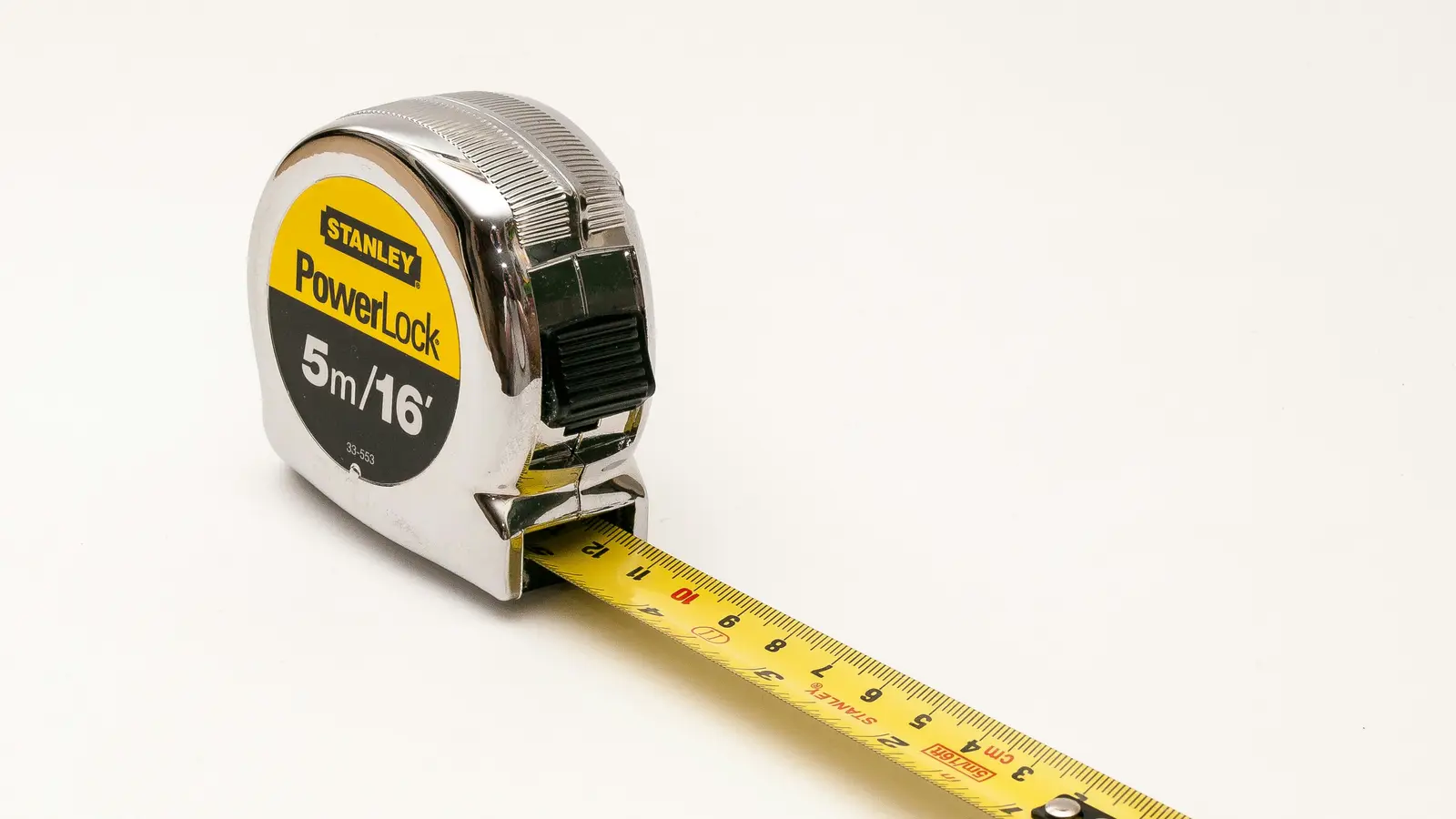
The measurement accepted in the medical literature is stretched length (not necessarily erect), from the pubic bone to the tip of the penis, using a ruler or tape measure. Gentle pressure at the base of the penis, down to the pubic bone, is needed for a consistent measurement, because part of the penis lies inside the body4. No illustration is needed to understand the principle: it is a simple distance measurement between two fixed points. When the measurement is normal but the penis looks short, the cause may be fat at the base or the viewing angle; details are on the page why the penis can look smaller (Hebrew). How to measure girth, at which point and in which state, is explained on the page how to measure penile girth (Hebrew).
What is a micropenis, and how rare is it?
A micropenis is defined as a stretched length more than 2.5 standard deviations below the mean for age, a relatively rare condition that is usually diagnosed and treated in childhood rather than discovered for the first time in adulthood4. The diagnosis is made against standard growth curves for age, usually as part of an endocrine assessment, not as the result of an occasional self-measurement in adulthood. This distinction matters: an adult man who worries about his size, and who was never diagnosed with micropenis, is almost always within the normal range, even if he is at its lower end.
Why are so many men sure they are "small"?
Many of the men who seek an assessment of their size overestimate what counts as "normal", rather than actually having an unusual size. In a classic study of 67 men who requested penile lengthening surgery, none had a length below the 2.5th percentile: all were in the normal range, but they had inaccurate expectations about what is normal2. A systematic review found a similar pattern: in most of the series examined the measurements were normal, and when structured counseling that included normative data was offered, it was effective. Most men understood that their size was normal and did not go on to request further treatment3.
The practical meaning: before any decision about a size-related treatment, a professional conversation that presents the real data, not just a "gut feeling", is often the most meaningful step. One question worth asking yourself: does the wish to improve come mainly from personal preference, or mainly from pressure or a remark by a partner? This question does not rule out treatment, but it helps you understand the real motive and make sure the decision is yours. This is also the reasoning behind building nomograms (normative tables) in the first place: a tool that lets you compare an individual measurement with the real distribution in a large population, rather than with an impression or a guess1.
What do partners think about size, according to research?
In a large survey, most women reported being satisfied with their partner's size, far more than the men who were satisfied with their own. In an online survey of more than 52,000 men and women (in heterosexual relationships), 85% of women reported being satisfied with their partner's size, compared with only 55% of men who were satisfied with their own. Most men (66%) rated themselves as "average", and satisfaction did not change between ages 18 and 656.
Limitations: this was an online survey distributed through magazine websites, with self-report rather than measurement, and without non-heterosexual groups, so the figures do not represent the whole population. Even so, the gap between partners' satisfaction and men's own dissatisfaction is consistent with the finding that most men who worry about their size are within the normal range23. What women said in studies about girth versus length is on the page girth or length: which matters more (Hebrew).

What is the difference between worry, size anxiety and dysmorphic disorder?
There is an important difference between occasional worry, small penis anxiety and penile dysmorphic disorder (PDD), and only the last is considered a defined psychiatric diagnosis. According to the European Association of Urology, PDD is characterized by excessive preoccupation with a perceived defect in a normally sized penis, together with significant psychological or functional impairment4. Size anxiety, by contrast, can be part of the ordinary experience of many men, and sometimes appears as milder social anxiety, without meeting the criteria for a clinical diagnosis5.
In everyday language this worry is sometimes also called "small penis syndrome". It is a general term, not the name of a medical diagnosis, and it usually describes an ongoing preoccupation with size in men whose size is within the normal range. When this preoccupation affects daily functioning or mood, it is better to start with a conversation with a professional rather than with an enlargement treatment.
The prevalence of body dysmorphic disorder in general (not only in the genital context) is estimated at about 1.8 to 9.5 percent of the population4. There is also a validated screening questionnaire specific to this topic, the 9-item COPS-P, which can help distinguish between dysmorphic disorder, size anxiety and a control group with no concern at all7. A recent review also proposes a broader assessment framework that considers anatomy, function, self-perception, social context and expectations of treatment8.
Why is it important to identify dysmorphic disorder before any treatment?
Because treating the body does not solve a problem rooted in perception, which is why professional societies explicitly recommend against injecting fillers in a man with penile dysmorphic disorder until appropriate assessment and treatment. The European Association of Urology makes this a strong recommendation: "Do not use HA, soft tissue fillers and autologous fat injection… in males with penile dysmorphic disorder"4. The Sexual Medicine Society of North America (SMSNA) also states that suspected PDD should be assessed before any procedure9. The International Consultation on Sexual Medicine (ICSM 2024) adds that suspected PDD calls for referral for psychiatric assessment and psychosexual counseling10.
Who should you see?
When thoughts about size are intrusive, recurrent or affect your functioning and relationships, start with a conversation with a family doctor, a urologist or a mental health professional. When thoughts about size become intrusive, keep coming back, or affect daily functioning and relationships, it is time to talk with a professional rather than only looking for a physical solution54. You can start with a family doctor or a urologist, who can rule out a physical cause and refer you on as needed. When dysmorphic disorder or significant anxiety is suspected, the usual referral is to a mental health professional familiar with the topic.
If this topic bothers you, you can talk about it, not only as part of a decision about treatment. Sometimes a professional conversation, not a physical procedure, is the step that really helps.
What does a consultation with Dr. Dana Buchbut look like?
The consultation is a discreet conversation that starts with the normative data and with understanding what bothers you, not with a treatment offer. Most men who seek an assessment on this topic are within the normal range, and sometimes this understanding alone is enough. If you want to consider girth enhancement, you can read about the method the clinic uses on the non-surgical girth enhancement page, and about the questions worth asking before any treatment on the choosing a doctor page (Hebrew). You can call or send a discreet message, in English if you prefer.
Frequently asked questions
Is it normal to want more self-confidence even if I am within the normal range?
Yes. Even a man who is clearly within the normal range can feel a meaningful improvement in self-confidence from treatment, and there is no contradiction in that. The conversation at the consultation is meant exactly for this: to understand the real goal and make sure expectations of treatment are realistic.
Is penis size related to height?
There is a link, but it is only weak to moderate, so height cannot serve as a reliable way to guess size. A tall man can be anywhere in the normal size range, and vice versa.
Are there Israeli data on average size?
We did not find a published Israeli study on this topic with professional clinical measurement. The most accurate data available today come from international meta-analyses that pool measurements from several countries, and there is no reason to assume the size distribution in Israel is significantly different.
Does excess weight affect visible length?
Fat in the pubic area can affect how much of the penis is visible, even without any change in actual anatomical length. Some professional guidelines address this and mention local fat removal in this area as a separate medical option, not as part of a girth enhancement procedure.
Can I measure myself at home, and how do I do it correctly?
The measurement accepted in the medical literature is taken fully stretched (not necessarily erect), from the pubic bone to the tip, with a ruler or tape measure. No picture or illustration is needed to understand the method: it is a simple distance measurement.
How many men have a true micropenis?
A micropenis is defined as a stretched length more than 2.5 standard deviations below the mean for age. It is a relatively rare condition that is usually diagnosed and treated in childhood, not in adulthood.
Do partners care about size?
In a large online survey (more than 52,000 participants), 85% of women reported being satisfied with their partner's size, compared with 55% of men who were satisfied with their own. It is a self-report survey and not a representative sample, but the gap is striking.
I think about my size all the time. Is that normal?
Occasional thoughts about size are very common and do not necessarily indicate a problem. But when the thoughts become intrusive, keep coming back, and affect daily functioning or relationships, it is a sign that it is worth talking with a professional, not only looking for a physical solution.
What is the difference between size anxiety and dysmorphic disorder (PDD)?
Size anxiety can be part of the ordinary experience of many men regarding a normally sized penis. Penile dysmorphic disorder (PDD) is a defined clinical diagnosis: excessive preoccupation with a perceived defect in a normal penis, together with significant psychological or functional impairment. The distinction matters because it sets the right direction for care.
Who should I see if concern about size affects my functioning?
You can start with a family doctor or a urologist, who can rule out a physical cause and refer you on if needed. When dysmorphic disorder or significant anxiety is suspected, the usual referral is to a mental health professional familiar with this specific topic.
What is small penis syndrome?
It is an everyday term, not a medical diagnosis, for ongoing worry about penis size, usually in men whose size is within the normal range. When the preoccupation with size is excessive and affects functioning or mood, it may be penile dysmorphic disorder (PDD), and the starting point is a conversation with a professional. The data on average size are presented above on this page.
Related reading
Non-surgical penile girth enhancement
Overview: what is possible, who it suits and what the risks are.
ReadHyaluronic acid girth enhancement
What the controlled trials showed, how long it lasts and what the risks are.
ReadFat grafting and other methods
Fat grafting, poly-L-lactic acid, surgery, and what must never be injected.
Read (Hebrew)How to choose a safe doctor
Red flags and questions worth asking before you book.
Read (Hebrew)Injection versus surgery
Filler injection versus lengthening surgery: anesthesia, recovery, reversibility, risks and the position of professional societies. A structured, source-based comparison.
Read (Hebrew)Recovery day by day
What happens day by day after a hyaluronic acid injection for penile girth enhancement: swelling, return to activity, and when the result stabilizes. Source-based information.
ReadMicropenis: when it is a medical diagnosis
Definition, causes and assessment by a urologist.
Read (Hebrew)What can be lengthened, and for whom
A review of the literature on surgery and traction devices.
Read (Hebrew)Penile curvature: when is it Peyronie's disease
The difference between congenital curvature and an acquired disease.
Read (Hebrew)Why the penis can look smaller
Fat at the base, measurement method and other reasons.
Read (Hebrew)How to enlarge the penis
What works, what does not and what is dangerous.
Read (Hebrew)How to measure penile girth
Method, common mistakes and the average girth.
Read (Hebrew)Girth enhancement by age
What is checked in younger men, in middle age and over 60.
Read (Hebrew)Girth or length: which matters more
What research says about partners' preferences, and what can actually be changed.
Read (Hebrew)Penis size calculator
Enter a length or girth and see where it falls relative to the average. Private, runs only in your browser.
Read (Hebrew)The information on this page is general and for education only. It does not replace an examination, diagnosis or personal medical advice. A decision about treatment is made only after an examination.